10
OPERATOR QUALIFICATIONS
• Operator must be trained, evaluated and authorized to drive
the forklift and must understand safety techniques and rules
for forklift operation.
• Under OSHA regulations in the U.S., all operators must be
formally trained and tested. These tests must be about basic
forklift knowledge and in the operators work environment.
Refer to OSHA regulations or you may also contact the
Industrial Truck Standards Development Foundation (ANSI/
ITSDF) 1750 K Street NW, Suite 460, Washington, DC 20006
and request a copy of B56.1 Safety Standard for Power
Industrial Trucks “Section for the User”.
!
WARNING
!
SAFETY RULES AND PRACTICES
PERSONAL PROTECTIVE EQUIPMENT FOR
OPERATING FORKLIFT
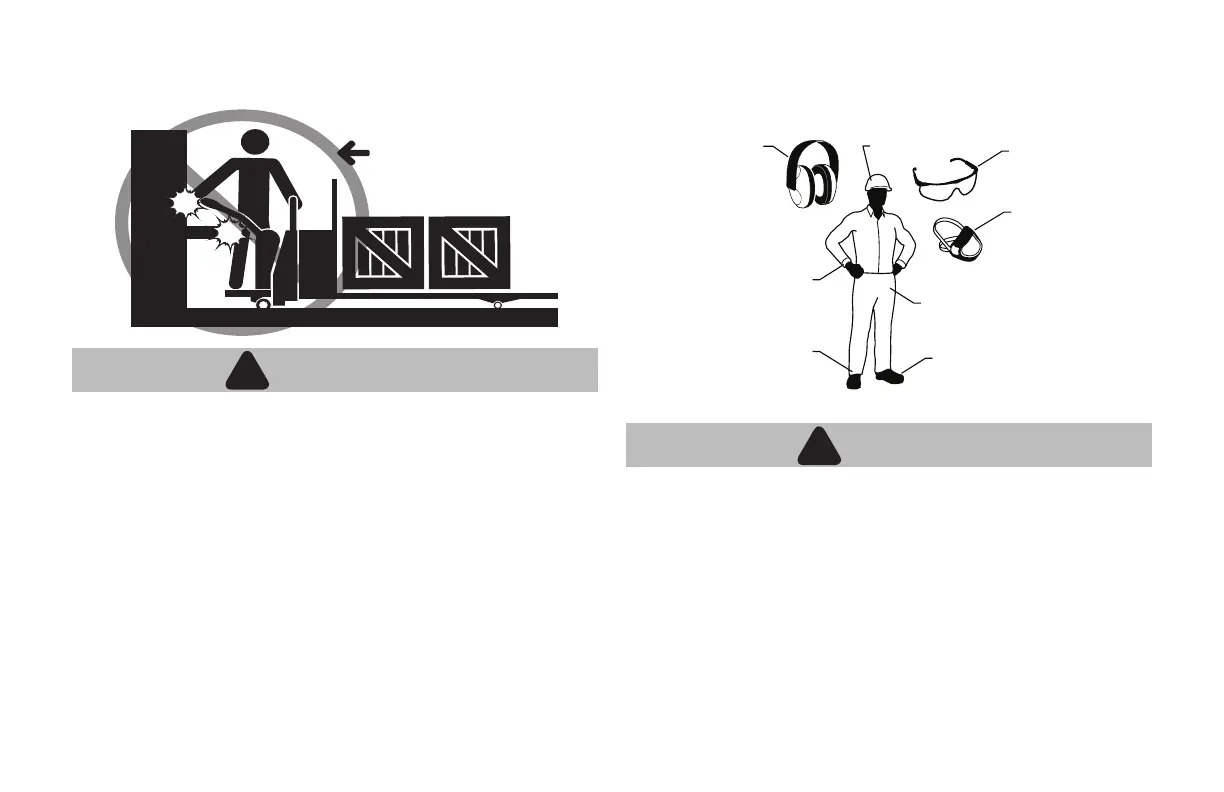
• For operation of the forklift, the protective equipment for the
operator shall be dependent upon the conditions of use and
the applicable provisions of the local laws and regulations.
• The working clothes worn by the operator shall be such
that sleeves and cuffs t snugly so as to prevent them from
getting caught on forklift levers, etc. Personal Protective
Equipment such as safety glasses, earmuffs, dust mask,
helmet (hard hat) and safety shoes should also be worn, as
required by the work environment, employer or local and
state regulations.
!
WARNING
!
Safety
Shoes
Working
Clothes
E
ar
Muffs
Safety
Glasses
Dust
Mask
Helmet
Snug Fitting
Sleeves
Snug Fitting
Pant Cuff


 To Next Page