54
BATTERY CHARGE CLASSIFICATIONS (cont’d)
• Equation battery charging is used to restore a battery to
its full potential. However, it should not be performed too
frequently. Frequent equation battery charging will result in a
greatly reduced battery service life.
NOTE:
• The battery consists of lead cells connected in series to one
another. Each cell has a capacity of approximately 2 volts. There are
several dozen cells. The connected cells are contained in the battery
case. When there is signicant variation in voltage and battery uid
specic gravity between individual battery cells, full charging will not
be possible.
• With some battery charging equipment, equation battery charging
occurs automatically after some specied number of charge/
discharge cycles. Manual selection of the equation battery charging
mode is not required.
CAUTION
!
GENERAL CARE AND MAINTENANCE
CHARGING PREPARATIONS
1. Move the forklift to the charging area
and park it.
2. Check the battery uid level.
Replenish the battery uid to the
specied level with distilled water as
required.
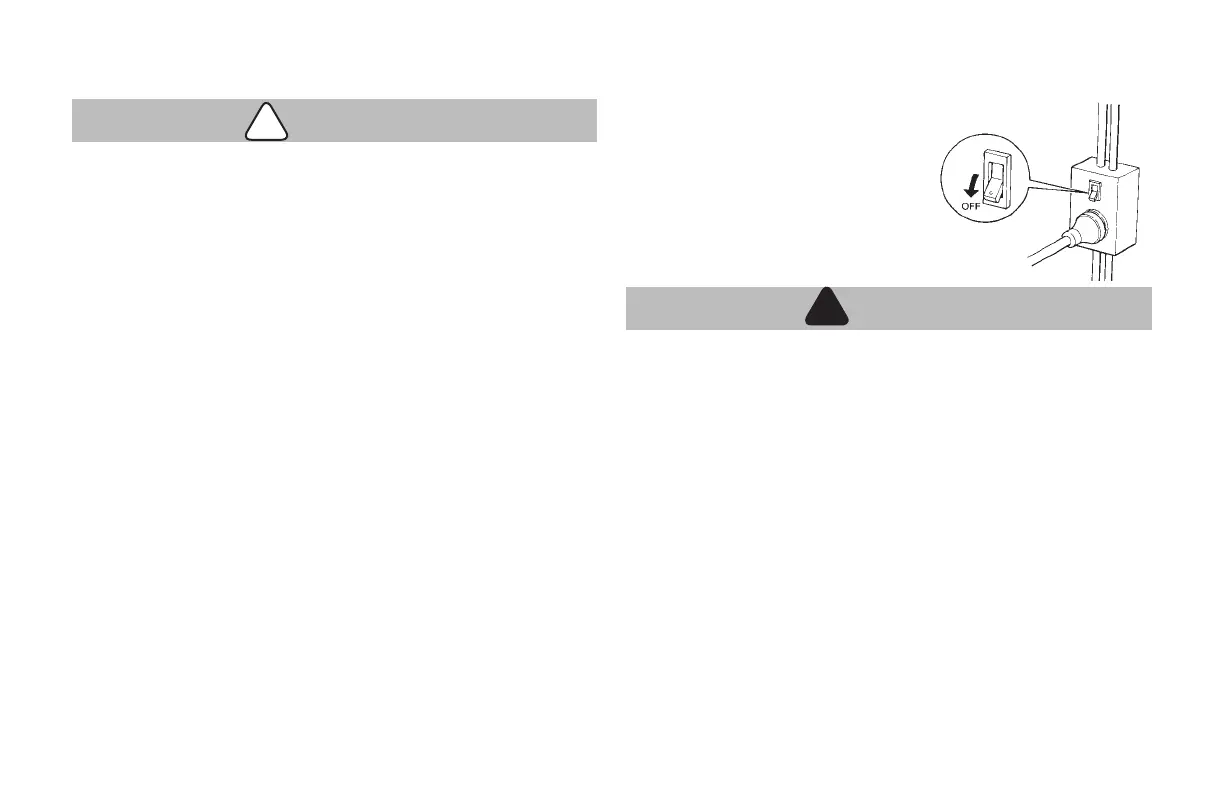
3. Check that the circuit breaker on the
AC power supply side is OFF.
• During battery charging, large quantities of highly-explosive
hydrogen gas may be released from the battery. To minimize
the danger of an explosion, battery charging should be
performed in a well-ventilated area protected from direct
sunlight. Remove all objects that might ignite the gas from
the immediate area before beginning charging.
NOTE:
Transformer tap selection is required before beginning
charging. Measure the charger power supply voltage. Select the
appropriate transformer tap.
Selection of the wrong tap will result in battery over-charging
or under-charging. Contact your Local Authorized Dealer if you
require more detailed information.
WARNING
!
!


 To Next Page