American-Lincoln 1-43
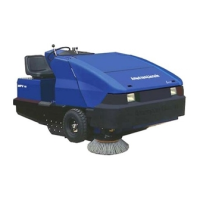
MPV 60
LP TANK CARE
TO BEGIN CHANGING THE LP TANK
- Park the machine in a designated safe area and set the parking brake.
- Close the tank valve.
- Remove the quick-disconnect coupling from the tank valve.
- Inspect the machine’s fuel lines and the quick disconnect coupling for damage or abnormal wear.
- Remove the empty tank from the holding device.
- Inspect the tank and tank fittings for damage or abnormal wear. Handle the tank carefully. It must not be
dropped or mishandled.
- Store the LP tank in a designated safe area.
- Select a filled LP tank and observe for damage or leaks.
- Carefully install the filled tank in the machine so that the tank centering pin enters the aligning hole in the
tank collar. This assures that the tank is positioned properly and allows for proper operation of the safety
relief valve, liquid level gauge, and service valves.
- Fasten the tank retaining bracket so that the tank is locked into position.
- Reconnect the fuel line to the tank servicing coupling.
- Open the service valve slowly and check for leaks. If a leak is found, close the valve immediately and
notify the appropriate personnel.
- If no leaks are detected, the engine is ready to start. Do not start the engine unless the operator is in
position with the directional control pedal in the neutral position.
STORAGE OF LP FUEL TANKS
Whether the storage is inside or outside, the LP tanks should not be in the vicinity of combustible materials or
high temperature sources such as ovens or furnaces. This may cause the heat to raise the pressure of the fuel
to a point where the safety relief valves would begin operation. Care should be taken to ensure that the cylinders
are stored in such a manner that if the safety relief valves are triggered, the vapor will be relieved rather than
any liquid.
Valves on empty tanks must be closed during storage and transportation.
Similar precautions should be taken in storing machines fitted with LP fuel tanks. They may be stored or
serviced inside buildings provided there are no leaks in the fuel system and the tanks have not been overfilled. If
machines are being repaired inside a building, the shutoff valve on the tanks must be closed except when the
engine must be on during servicing.


 To Next Page