9
1.3 I Electricity supply connecons
• Before any work inside the appliance, you must cut the electricity supply as there is a risk of
electric shock which may cause material damage, serious injury or even death.
• Poorly ghtened cabling terminals can cause the cables to overheat at the terminals and create
a re risk. Make sure that the terminal screws are fully ghtened. Incorrectly ghtened terminal
screws will cancel the warranty.
• Only a qualied and experienced technician is authorised to carry out cabling work within the
appliance or to replace the power cord.
• Do not disconnect the electricity supply when the appliance is running. If the electric power
supply is interrupted, wait a minute before restoring the power.
• The installer must consult the electricity provider if necessary and ensure that the equipment
is connected correctly to an electricity network with impedance under 0.095 ohm.
• The heat pump's electrical supply must be provided through a protecon and circuit breaking device (not supplied)
complying with the standards and regulaons in force in the country where it is installed.
• The appliance is provided for connecon to a general power supply with a TT and TN.S neutral regime.
• Electrical protecon: by circuit breaker (D curve, rang to be dened according to the table, see § “5.2 I Technical
data”), with a 30 mA dedicated residual-current protecon system (circuit breaker or switch).
• Addional protecon may be required during installaon to guarantee the overvoltage category II.
• The power supply must correspond to the voltage indicated on the appliance's informaon plate.
• The power cord must be insulated against any cung or hot elements that may damage or crush it.
• The appliance must be correctly connected to a suitable earth/ground circuit.
• The electrical connecon lines must be xed.
• Use the cable gland and cable clamp to pass the power cord into the appliance.
• Use the power cord (RO2V type) adapted for outdoor or buried use (or run the cable into a protecon duct), see
§”1.3.1 Cable cross secon” for more details.
• We recommend burying the cable at a depth of 50 cm (85 cm under a road or path) in an electrical duct (red ribbed).
• If this buried cable meets another cable or pipe (gas, water, etc.), there must be more than 20 cm between them.
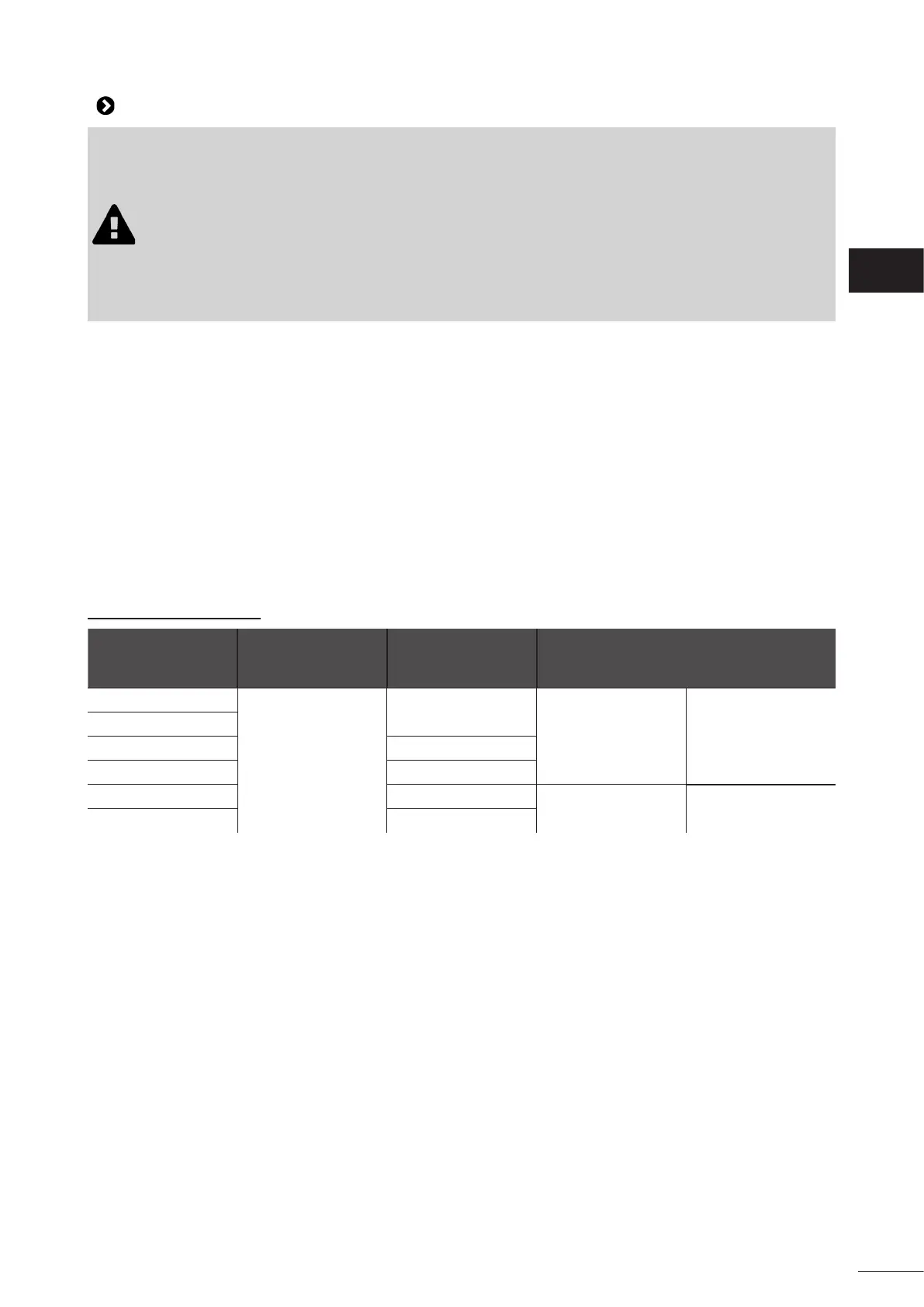
1.3.1 Cable cross secon
Model Electricity supply Max. current Cable diameter*
Thermal magnec
protecon
(D curve)
Eco Elyo-05
220 - 240 V
1 phase
50-60 Hz
8
RO2V 3x2,5 mm² 16 A
Eco Elyo-07
Eco Elyo-09 9
Eco Elyo-13 13
Eco Elyo-15 16
RO2V 3x4 mm² 20 A
Eco Elyo-20 19
* Cable cross secon suitable for max. lenght 10 meters. For longer than 10 meters, consult an electrician.
EN



 To Next Page