10-64
E
6.4 mV
1msec (1KHz)
POTENTIAL
INTERVAL
t
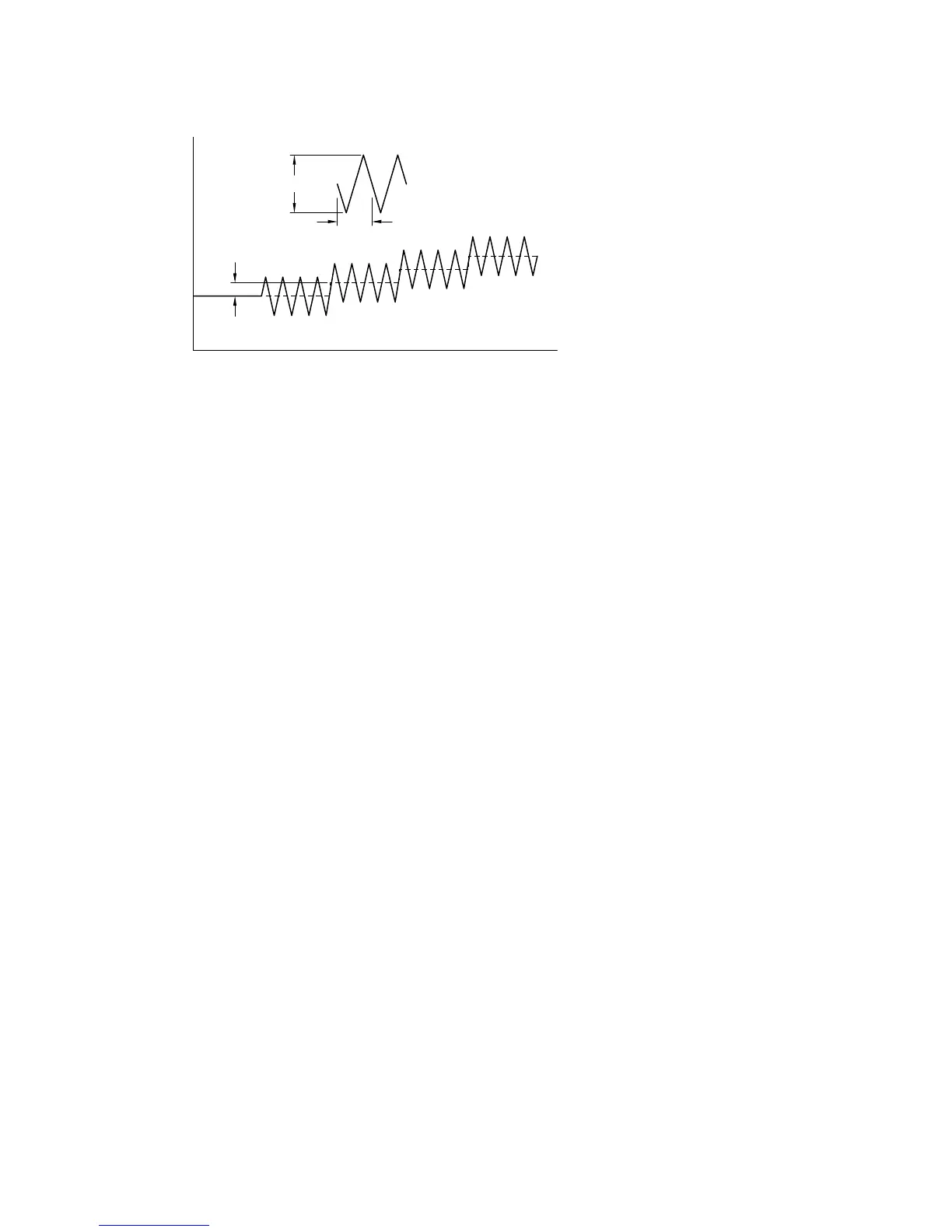
Figure 10-42.
Potential wave form for
ECM
.
The sampling time is 1 msec and the time required for the decision algorithm is 2
msec; that is, the time resolution is 3 msec. Once drop has been detected, the system
remains at the same potential (for multiple drop measurements) or it calculates and
sets the next applied potential. The drop time is displayed on the screen as a function
of the applied potential. The graphics operation is performed at the start of the drop
lifetime, and no current is measured during this operation (this does not affect the
accuracy of the experiment since no drop will fall at the very beginning of its
lifetime).
As with any experiment that uses a DME, proper maintenance of the electrode is
required for precision and accuracy of the
ECM
experiment. In particular, the
capillary should be routinely cleaned and coated with a polysiloxane film to ensure a
continuous mercury flow.
Mode = ECM
General Parameters
Initial E (mV) = 0 -3276 to 3276
Final E (mV) = 0 -3276 to 3276
Step E (mV) = 50 10 to 200
Sample Number = 1 1 to 20
Sensitivity = 1
µ
A/V 100 mA/V 100 nA/V (10 pA/V with the
Low Current Module)
Specific Parameters
Drop Ratio = 2 0 to 5
Comments
a) The
Sample Number
is the number of cycles averaged to determine one
current value.



 To Next Page