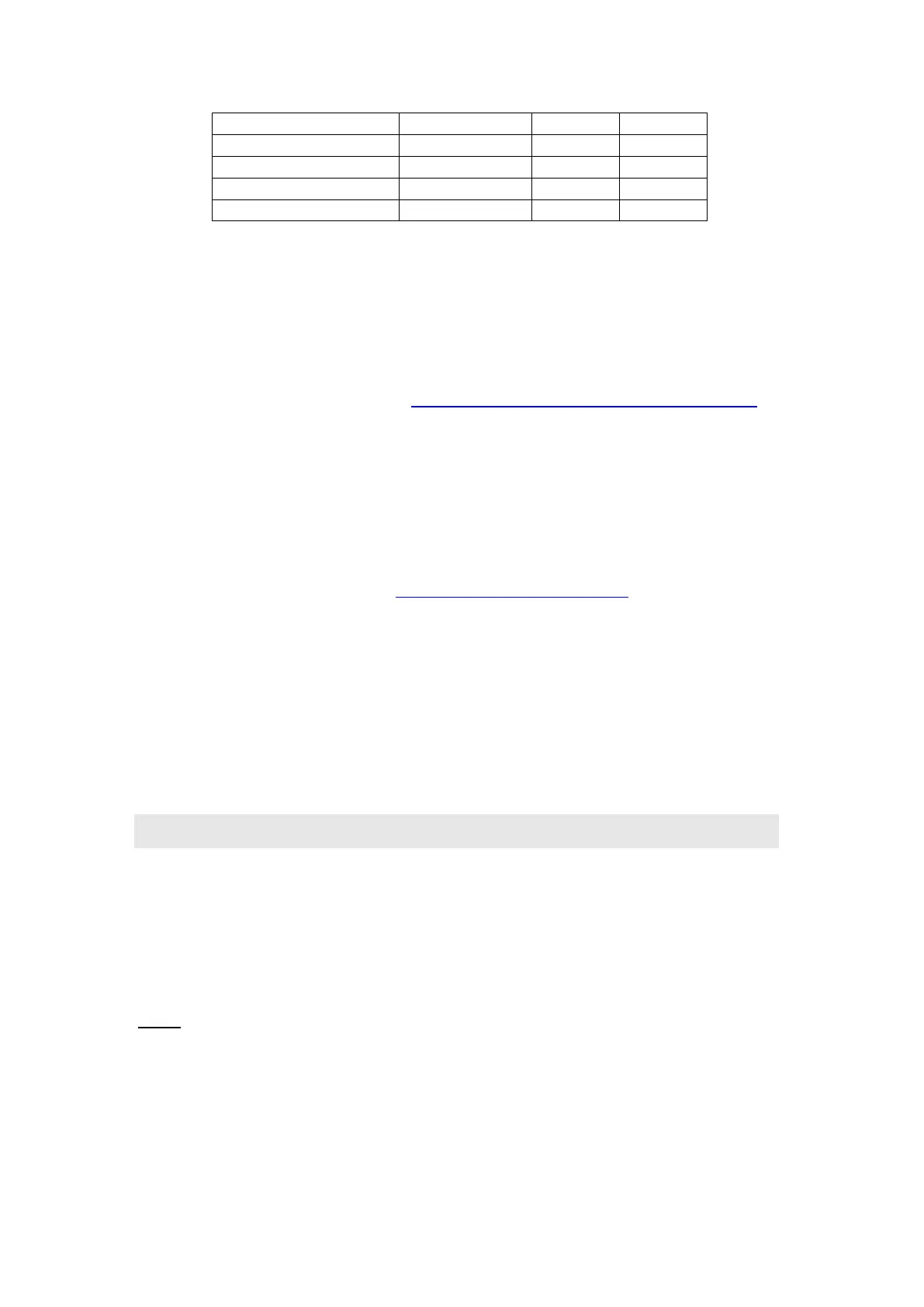
NOTE: The AC server Resource requirements may vary depending on the way the user’s
application controls the Bluetooth devices, number of Bluetooth devices, the frequency of
the connection setup requests, etc.
If you plan to use AWS EC2 to host your Cassia IoT AC, please select instance type T2 or
M4, which uses intel CPU. For example, you can use t2.medium for an AC that manages
less than 50 gateways. Please check https://aws.amazon.com/ec2/instance-types/ for all
the AWS instance types.
4.3.
Licenses Key and Developer Key/Secret
a)
Server License Key
If you want to manage more than three Cassia Bluetooth gateways by one Cassia IoT AC,
please send below information to support@cassianetworks.com to apply License Key. The
AC license key governs the number of Bluetooth gateways that can be managed by the AC
and the valid time.
AC information (customer name, AC URL, etc.)
Number of managed gateways (4 to 9999 gateways)
Device ID (please copy from AC setting page)
Below is an example of AC License Key:
b)
Developer Account Credentials
Before using Cassia’s RESTful API through the AC, end-users will now have to generate
their own Developer Key and Developer Secret. These credentials are also intended for
the end user's IoT application for OAuth 2.0 authentication towards Cassia’s AC.
NOTE: For the latest version of the AC, v2.1.1, the Developer Secret Key should be
between 8 to 60 characters, and must contain numbers, letters, and special characters.
For a 2.1.1 AC upgraded from older versions, the old Developer Secret key still
functions, but we are strongly recommending users generate new Developer Secret
Keys that match the new format stated above. Please update the Developer Secret Key
used in your IoT application as well.
Please see the screenshot below for inputting the License key, Developer Key and


 To Next Page