TRANSMIG 225, 255 MIG Power Source, 255 2R MIG Wirefeeder
14 Sep 16, 2008
SECTION 6: Resuscitation For Electric Shock Victims
Electric shock may kill immediately. Early resuscitation is required if a life is to be saved. Every Second Counts! Electrical currents may:
Stop the heart;
Cause contraction of the muscles of the body;
Paralyse breathing due to paralysis of the centre of respiration in the brain;
Cause burns.
The victims often cannot free themselves from the current and may not be able to breathe due to fixation of the chest.
6.01 Resuscitation
Efficient resuscitation requires training which is available from the St John‟s Ambulance Association, Red Cross and other
sources.
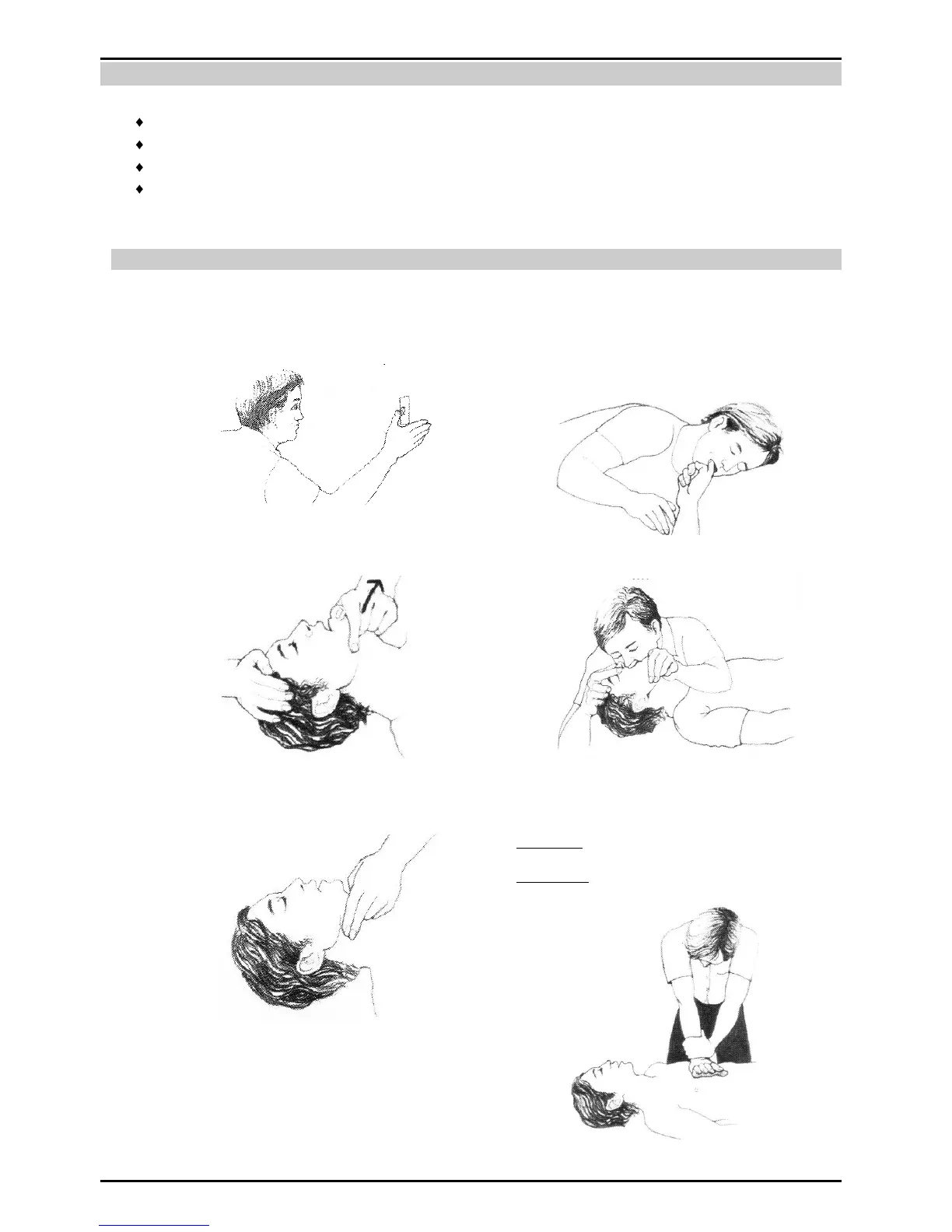
1 Don‟t become a victim. Switch off power if possible. If
not, remove victim from contact, using some insulating
material.
2 If unconscious, place victim on their side and clear vomit
and other foreign matter from mouth. Check for breathing
by look, listen and feel. If not breathing, commence
expired air resuscitation (E.A.R.). This should take no
longer than 3 or 4 seconds.
3 Place victim flat on their back on a hard surface, open
airway - using head tilt and jaw support as shown.
4 Begin artificial breathing - 5 full breaths in 10 seconds,
sealing nostrils with cheek or holding nose closed.
5 Check carotid pulse in neck. If pulse is present,
continue E.A.R.
15 breaths per minute for adults.
20 breaths per minute for children.
7 Check for return of pulse and breathing after 1 minute
and at least every 2 minutes. Continue uninterrupted
until trained assistance is available. When breathing
and pulse return, turn on side and continue
observation.
6 If pulse is absent and you have been trained, begin cardio
pulmonary resuscitation (C.P.R).
Cardiac Compression - depress lower end of breast bone
(sternum) 4cm to 5cm, less for small children.
One rescuer - 2 breaths, 15 compressions in 15 seconds,
i.e. 4 cycles per minute.
Two rescuers - 1 breath, 5 compressions in 5 seconds, i.e.
12 cycles per minute.



 To Next Page