TRANSMIG 225, 255 MIG Power Source, 255 2R MIG Wirefeeder
Sep 16, 2008 27
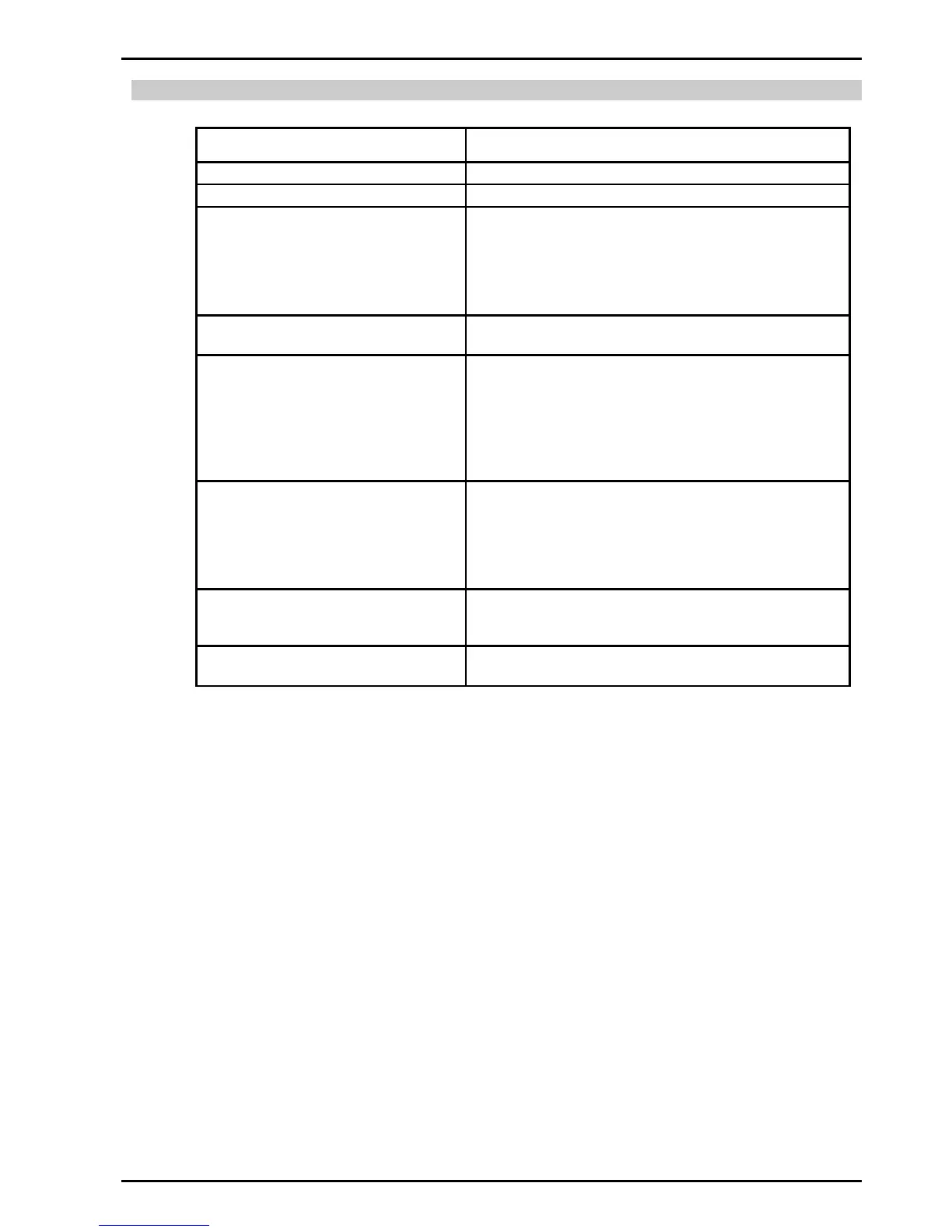
14.03 Solving Problems Beyond the Welding Terminals – Inconsistent Wire Feed
Wire feeding problems can be reduced by checking the following points.
Wire spool brake is too tight
Feed roller driven by motor in the cabinet will slip.
Wire spool brake is too loose
Wire spool can unwind and tangle.
Worn or incorrect feed roller size
Use 'U' groove drive feed roller matched to the aluminium wire
size you are welding.
Use 'V' groove drive feed roller matched to the hard wire size you
are welding.
Use „knurled V‟ groove drive feed roller matched to the flux cored
wire size you are welding.
Mis-alignment of inlet/outlet guides
Wire will rub against the mis-aligned guides and reduces wire
feedability.
Increased amounts of swarf are produced by the wire passing
through the feed roller when excessive pressure is applied to the
pressure roller adjuster.
Swarf can also be produced by the wire passing through an
incorrect feed roller groove shape or size.
Swarf is fed into the conduit liner where it accumulates thus
reducing wire feedability.
Incorrect or worn contact tip
The contact tip transfers the weld current to the electrode wire. If
the hole in the contact tip is too large then arcing may occur inside
the contact tip resulting in the wire jamming in the contact tip
When using soft wire such as aluminium it may become jammed in
the contact tip due to expansion of the wire when heated. A
contact tip designed for soft wires should be used.
Poor work lead contact to work piece
If the work lead has a poor electrical contact to the work piece
then the connection point will heat up and result in a reduction of
power at the arc.
This will cause friction between the wire and the liner thus
reducing wire feedability



 To Next Page