44-55
Cisco Catalyst Blade Switch 3130 and 3032 for Dell Software Configuration Guide
OL-12247-04
Chapter 44 Configuring IP Multicast Routing
Configuring Advanced DVMRP Interoperability Features
Rejecting a DVMRP Nonpruning Neighbor
By default, Cisco devices accept all DVMRP neighbors as peers, regardless of their DVMRP capability.
However, some non-Cisco devices run old versions of DVMRP that cannot prune, so they continuously
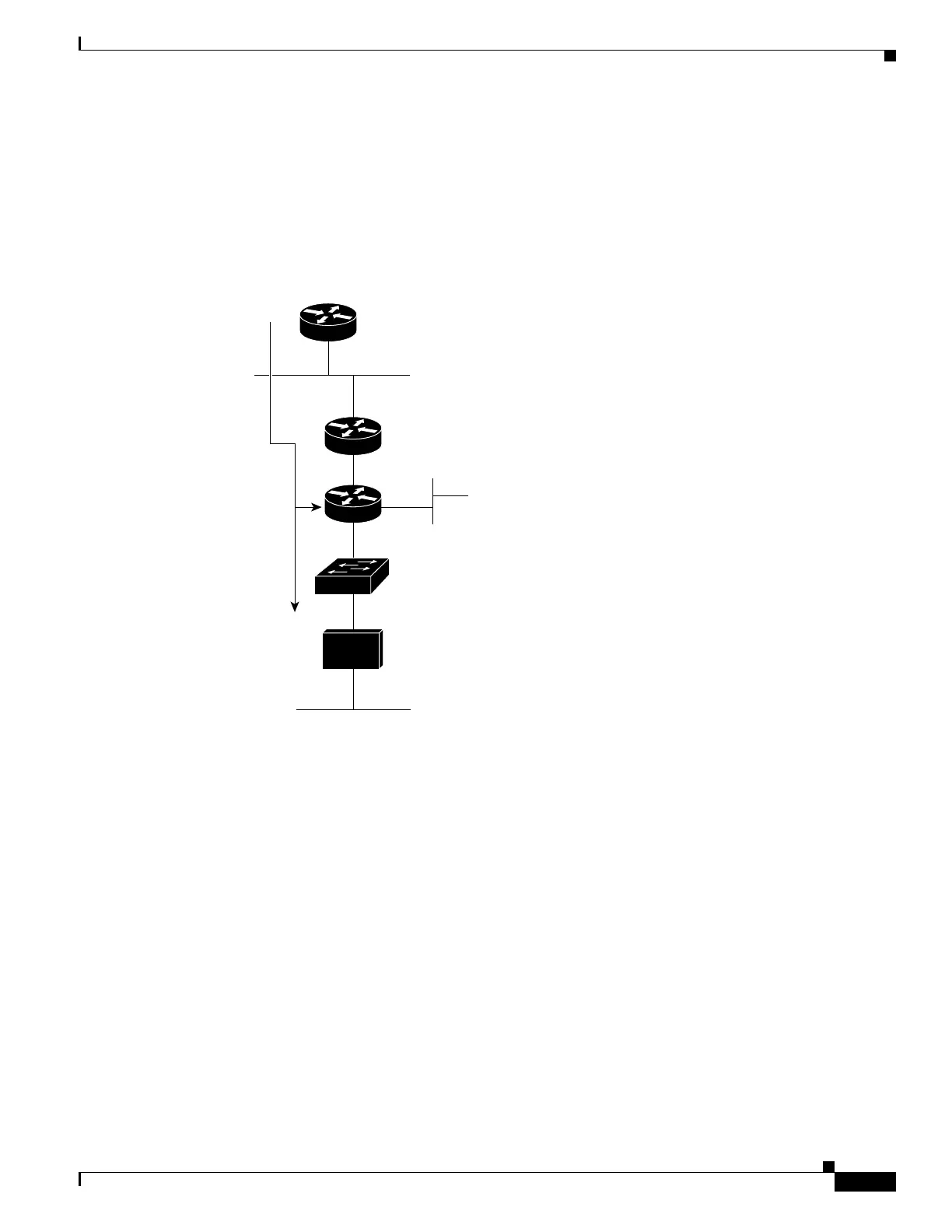
receive forwarded packets, wasting bandwidth. Figure 44-8 shows this scenario.
Figure 44-8 Leaf Nonpruning DVMRP Neighbor
You can prevent the switch from peering (communicating) with a DVMRP neighbor if that neighbor
does not support DVMRP pruning or grafting. To do so, configure the switch (which is a neighbor to the
leaf, nonpruning DVMRP machine) with the ip dvmrp reject-non-pruners interface configuration
command on the interface connected to the nonpruning machine as shown in Figure 44-9. In this case,
when the switch receives DVMRP probe or report message without the prune-capable flag set, the switch
logs a syslog message and discards the message.
101244
Router A
Router B
Layer 3 switch
RP
Valid
multicast
traffic
Unnecessary
multicast
traffic
Source router or RP
PIM dense mode
Leaf nonpruning
DVMRP device
Receiver
Stub LAN with no members


 To Next Page