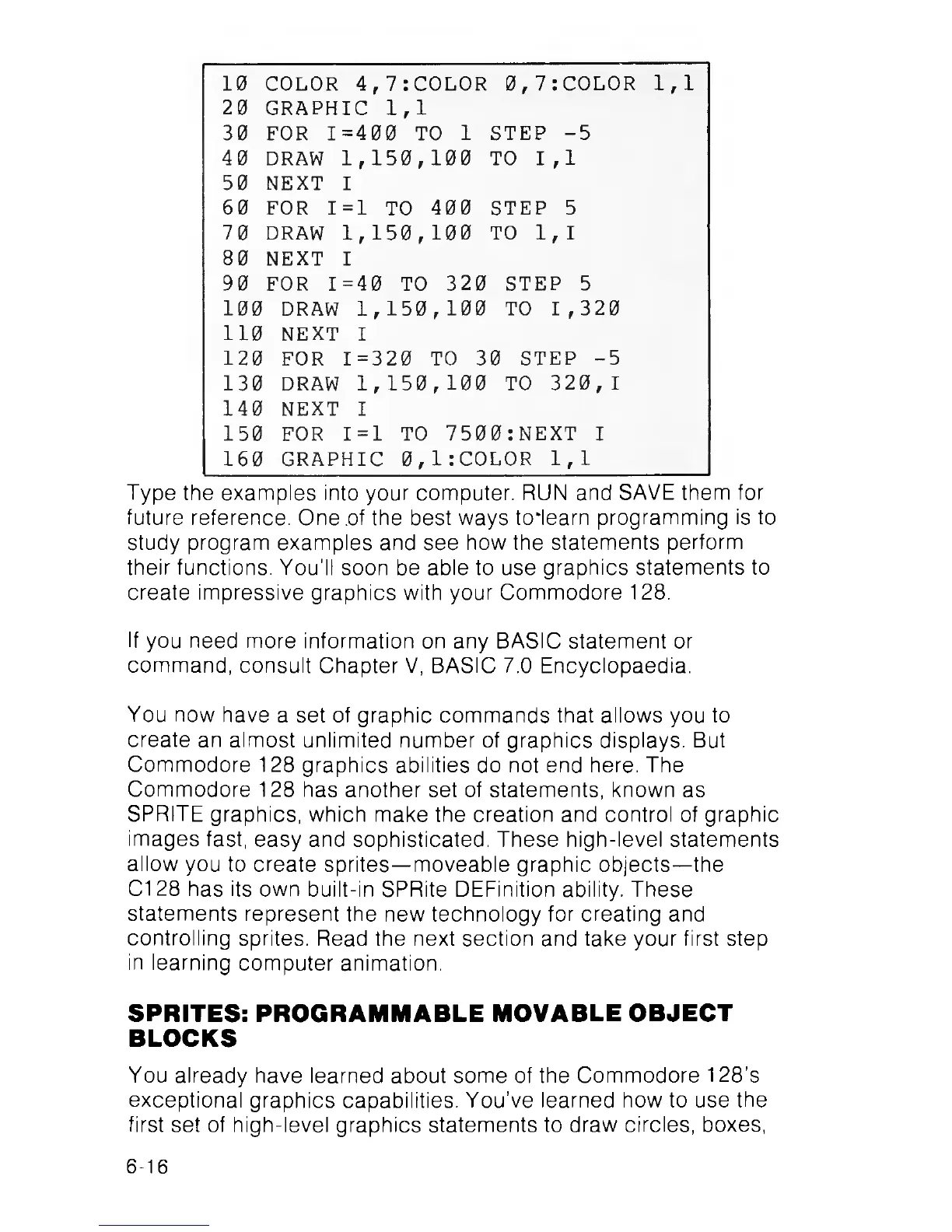
10 COLOR 4,7:COLOR 0,7:
COLOR 1,1
20
GRAPHIC 1,1
30
FOR 1=400 TO 1 STEP
-5
40
DRAW 1,150,100 TO I,
1
50 NEXT I
60 FOR 1=1 TO 400 STEP 5
70
DRAW 1,150,100 TO 1,
I
80
NEXT I
90 FOR 1=40 TO 320 STEP 5
100 DRAW 1,150,100 TO 1,320
110 NEXT I
120 FOR 1=320 TO 30 STEP -5
130 DRAW 1,150,100 TO 320,1
140 NEXT I
150 FOR 1=1 TO 7500:NEXT I
160 GRAPHIC 0,1rCOLOR 1,1
__________
Type the examples into your computer. RUN and SAVE them for
future reference. One .of the best ways tolearn programming is to
study program examples and see how the statements perform
their functions. You’ll soon be able to use graphics statements to
create impressive graphics with your Commodore 128.
If you need more information on any BASIC statement or
command, consult Chapter V, BASIC 7.0 Encyclopaedia.
You now have a set of graphic commands that allows you to
create an almost unlimited number of graphics displays. But
Commodore 128 graphics abilities do not end here. The
Commodore 128 has another set of statements, known as
SPRITE graphics, which make the creation and control of graphic
images fast, easy and sophisticated. These high-level statements
allow you to create sprites—moveable graphic objects—the
C128 has its own built-in SPRite DEFinition ability. These
statements represent the new technology for creating and
controlling sprites. Read the next section and take your first step
in learning computer animation.
SPRITES: PROGRAMMABLE MOVABLE OBJECT
BLOCKS
You already have learned about some of the Commodore 128's
exceptional graphics capabilities. You’ve learned how to use the
first set of high-level graphics statements to draw circles, boxes,
6-16



 To Next Page