ComNav 1500 / 1510 Autopilot - 50 -
10. PROBLEM SOLVING
10.1 General
Before you contact your ComNav dealer, and for them to give you better
service, please check the following points and make a list of:
• All connected instrument and transducers, including their software versions.
• NX2 Network ID numbers for each instrument (displayed at power up).
In most cases, the reason for faults in electronic equipment is poor installation.
Therefore, always first check for the following:
• Installation and connections are made per instructions for instruments and
transducers.
• Screw terminals are carefully tightened.
• There is no corrosion on any connection points.
• No loose ends in the wires, causing short cuts to adjacent wires.
• Cables for damage and that none are squeezed or worn.
• Battery voltage is sufficient, should be at least 11 V DC.
• The fuse is not blown and that the circuit-breaker has not opened.
• The fuse is of the right type.
• Two instruments do not have the same ID number.
10.2 Symptom - Cause - Action
In the table below, causes marked [ * ] are more likely to occur during installation or
when rewiring has taken place.
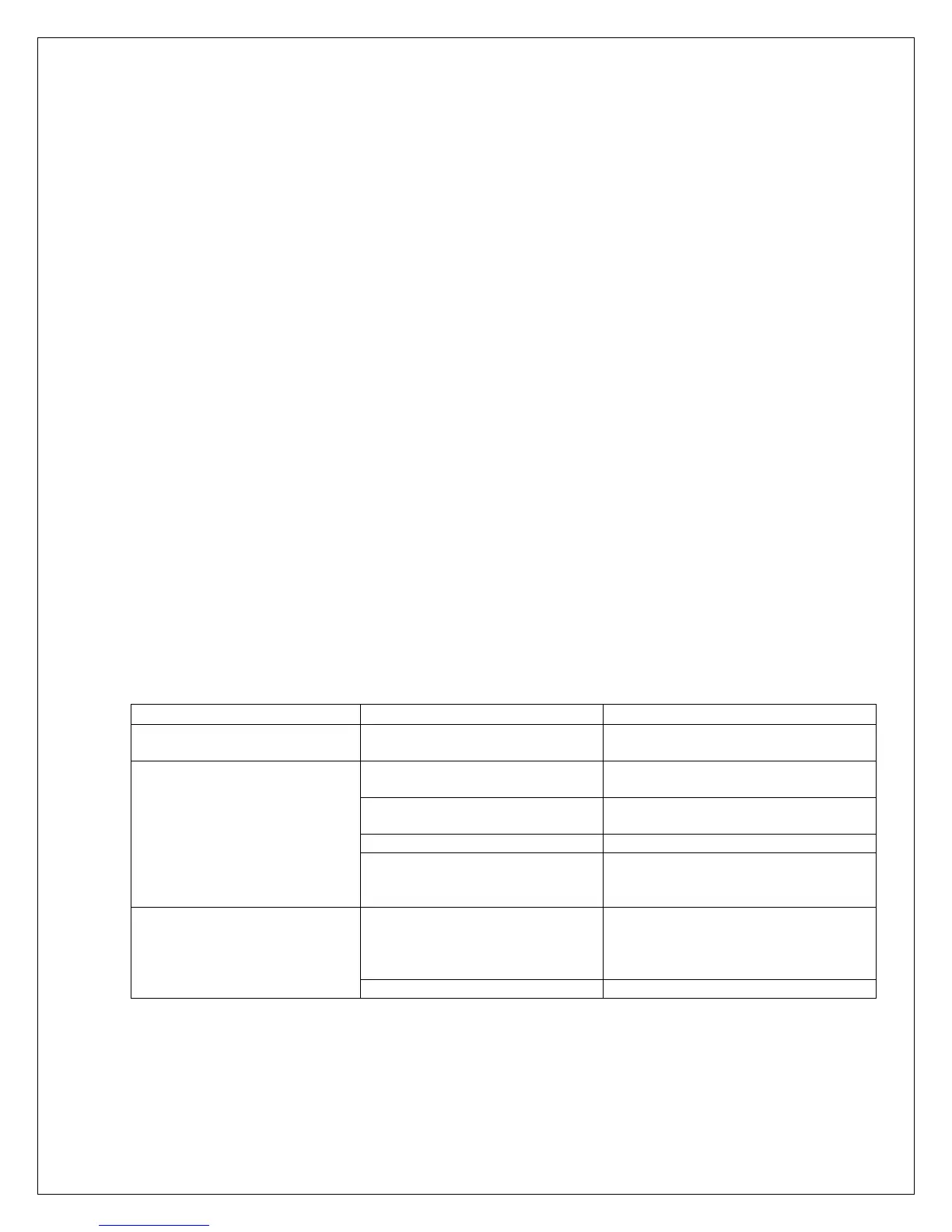
SYMPTOM CAUSE ACTION
Autopilot does not turn off. * Voltage below minimum. Make sure 12/24 volts is applied to
battery terminals in Distribution Unit.
* Voltage not applied. Make sure 12/24 volts is applied to
battery terminals in Distribution Unit.
* Voltage polarity is reversed. Make sure + and – is applied to
correct terminals.
* Boats safety switch is open. Close the safety switch.
Autopilot does not turn on.
* Fuse b
urned out. Check and replace fuse as
necessary, located in the Distribution
Unit.
Slow blow (high current) fuse in
Distribution Unit is blown.
Replace fuse. If fuse regularly blows,
check for excessive rudder load or
mechanical defects in steering
system.
Autopilot turns on, but the
Pumpset doesn’t run
Rudder speed set too low. Decrease RRS setting.


 To Next Page