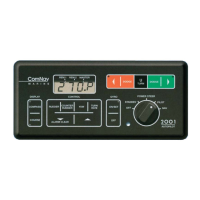
ComNav 1500 / 1510 Autopilot - 1 -
1. INTRODUCING THE COMNAV NX2 1500 AUTOPILOT
1.1 Capabilities
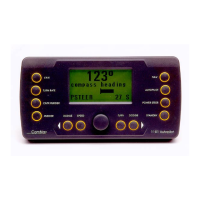
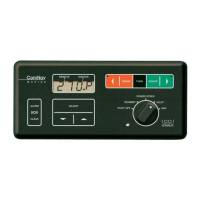
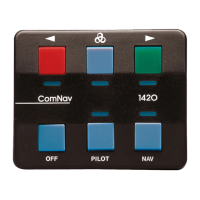
The ComNav NX2 1500 and 1510 Autopilots are designed for power and sailing
vessels from 26ft (8m) to over 160ft (50m) length. Design and manufacturing
techniques developed over many years have resulted in a versatile and heavy-duty
unit. Hydraulic drive units of the reversible motor variable speed (PWM) type provide
precise control while consuming low battery power. Connection can be made to
solenoid valves of electro-hydraulic steering systems, allowing use on very large
vessels. Hydraulic linear drives provide powerful and accurate control when
connected to mechanical steering systems and provide an independent hydraulic
steering for added safety.
No Autopilot can steer better than its compass stability will allow and the flux gate
compass excels in this characteristic. Silicone oil dampening of the flux gate
prevents compass instability even for high speed vessels slamming in heavy seas.
This combined with the high gimbal angle of +/- 45°, eliminates compass
disturbance with vessel heeling or rolling. A sensitive automatic gain design
provides improved compass operation especially in high latitudes and automotive
deviation compensation ensures accurate indication. As an alternative an NMEA
0183 output flux gate compass can be connected to this Autopilot for greater
interfacing flexibility. An optional fluid compass sensor may be used and slaved to
the vessel’s main magnetic compass if it is of the externally gimballed type. This is
particularly important on steel-hulled vessels. For larger vessels a gyro-compass
may be interfaced for even greater steering accuracy.
Power steering, either through the Control Head push buttons or an operational jog
steering level may be used to avoid heavy wheel effort when maneuvering.
Alarms for off course, off track or watch alarm and other faults are included with
provision for an optional loud remote alarm. Interface to radio navigational receivers
including GPS, Loran, Satnav, Decca and Plotters allows precise waypoint arrival
and multiple waypoint sequencing. Unique adaptive controls provide very powerful
and smooth steering control which automatically adjusts to changing operational
conditions.
A large number of Autopilot stations may be connected. Control techniques
developed over many years allow very stable course holding with minimum
corrections. Weather helm is automatically compensated for by an automatic trim
and counter rudder that provides enhanced response in quartering seas under large
course changes. Some Autopilot features described above may not be available
with the 1510 system.


 To Next Page