4
Piping Diagrams
52
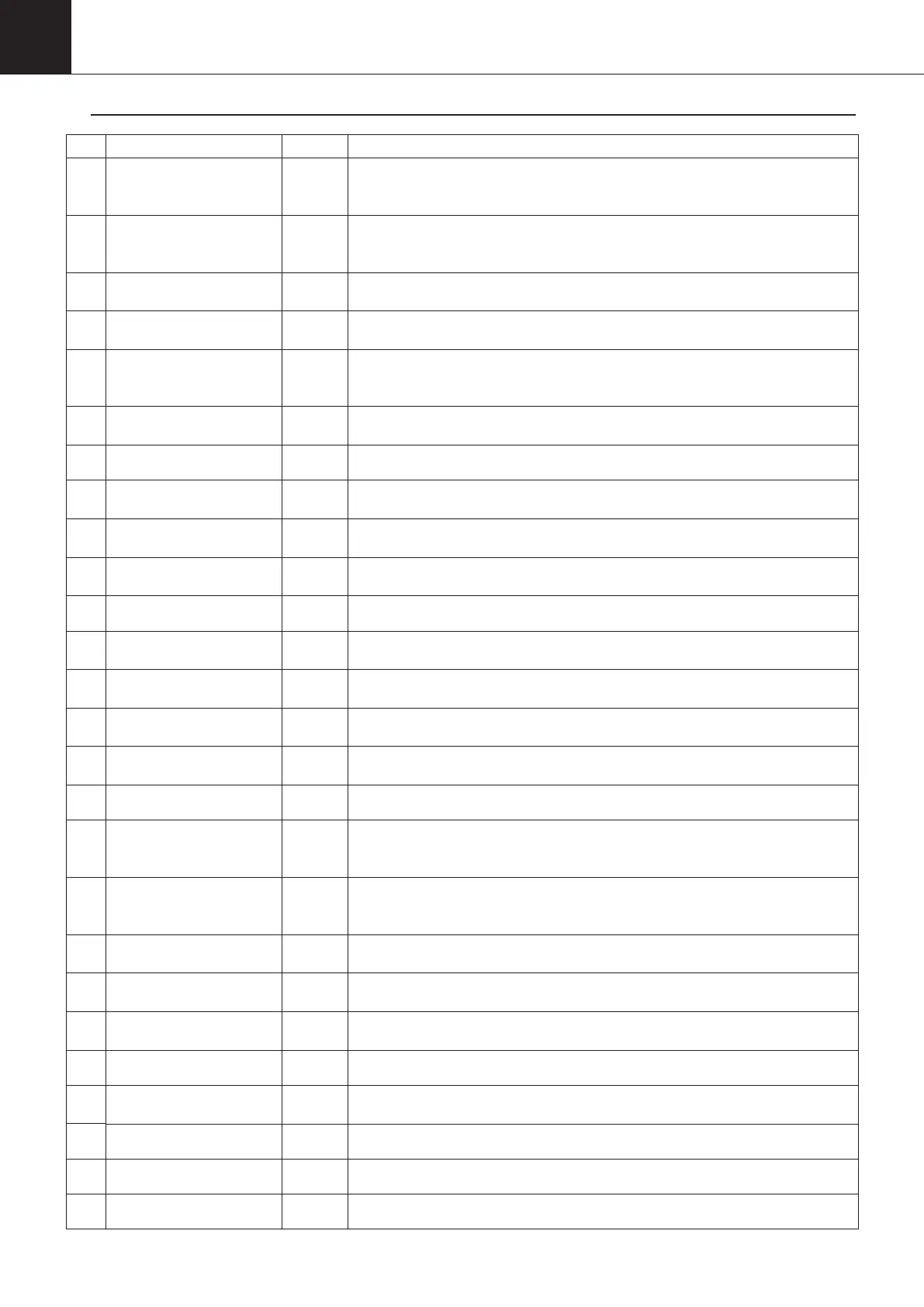
No. Part Name
Symbol
Function
① Compressor M2C
This compressor is a swing compressor with a built-in DC motor. The
compressor is driven under the inverter control by changing the operating
frequency according to values specified under the capacity control.
② Accumulator -
The accumulator is installed before the compressor suction and used
to prevent the entry of liquid refrigerant in the compressor and further
efficiently return lubricating oil to the compressor.
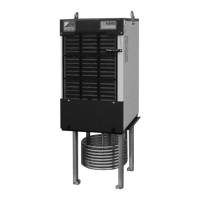
③ Condenser -
Used to air-cool the refrigerant to turn it from high-temperature and
-pressure gaseous state to high-temperature and -pressure liquid state.
④ Fan M3F
The feedback control of fan revolutions is performed for heat exchange
through the condenser.
⑤ Evaporator -
Used to heat low-temperature, low-pressure liquid refrigerant
decompressed through the electronic expansion valve (with oil being
cooled) to make it low-temperature, low-pressure gas.
⑥ Rubber hose -
Located at the entrance to and the exit of the oil pump and used to prevent the
vibrations of the oil pump from transmitting to the piping system and equipment.
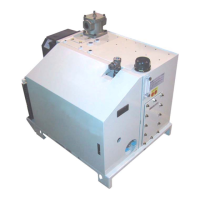
⑦ Oil pump M1P Used to circulate oil.
⑧ Relief valve -
The relief valve is a protective device to be activated when the pressure of oil piping system
reaches the specified level or higher, thus setting the pressure back to the normal level.
⑨
Electronic expansion valve
for main circuit (EEV)
Y1E
The valve varies its opening according to values specified under the
capacity control, thus making the control of refrigerant recirculation quantity.
⑩
Motor operated valve
for hot gas (MOV)
Y2E
This valve controls cooling capacity under low load by bypassing
refrigerant from the high pressure side to the low one.
⑪ Filter -
Used to prevent the entry of foreign matters in the valves (for both valves).
⑫
Compressor protection
thermostat
S2T
When the compressor body exceeds a temperature of 125℃, used to
display the alarm code “E5”, thus stopping the system due to malfunction.
⑬
Machine body thermistor
(optional)
Th-1
Used to detect the synchronization source temperature while in
temperature tuning control mode.
⑭ Outlet oil thermistor Th-2
Used to detect the oil outlet temperature (targeted control temperature)
from the evaporator.
⑮ Room thermistor Th-3
Used to detect the synchronization source temperature while in
temperature tuning control mode.
⑯ Inlet oil thermistor Th-4
Used to detect the oil inlet temperature (targeted control temperature) to the evaporator.
⑰ Discharge thermistor Th-6
Used to detect the discharge pipe temperature and, when the discharge
pipe temperature exceeds 115℃, thus displaying the malfunction code
“E5” to stop the system due to malfunction.
⑱ Condenser thermistor Th-7
Used to detect the condensing temperature and, when the condenser
temperature exceeds 62℃, thus displaying the malfunction code “E3” to
stop the system due to malfunction.
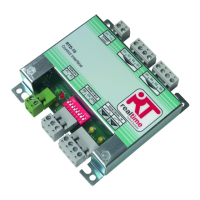
⑲
Electronic expansion
valve outlet thermistor
Th-8
While in zero point adjustment, used to detect variations in the electronic
expansion valve outlet temperature, thus recognizing the Fully Closed point.
⑳
Returned oil thermistor
(optional)
Th-9 Detect the oil temperature of the main engine oil pipe (returned pipe).
Oil drain (evaporator) -
Closed by plug Rc1/4. (The evaporator oil can be discharged from this oil
drain for maintenance.)
Oil drain (drain pan) - Used to drain oil from the bottom of the oil cooling unit.
Oil tank -
Used to store oil at all times, thus responding to a sharp fluctuation in oil
quantity in the piping system.
Oil charge port & Air breather
-
Used to fill oil into the oil tank and normally serve as a ventilation hole for the oil tank.
Oil level indicator - Used to indicate oil quantity in the oil tank.
Low-pressure gauge port
- Used to mount a gauge for maintenance.
*For the layout of parts, refer to information on pages 56 and 57.
AKZ56A/90A-T, AKZ56A/90AT500
6
00_PB00540A_M10.indb 52 2023/08/09 12:58:58


 To Next Page