Refrigerant System Diagram Si33-105
32 Function R407C PLUS Series Heat Recovery System
1. Refrigerant System Diagram
1.1 Outdoor Unit Refrigerant System Diagram
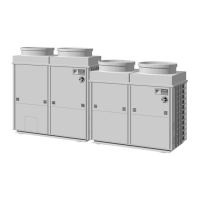
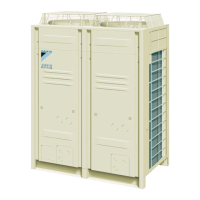
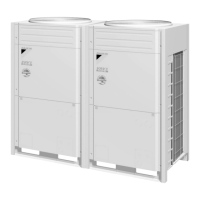
RSEYP16~20KJY1
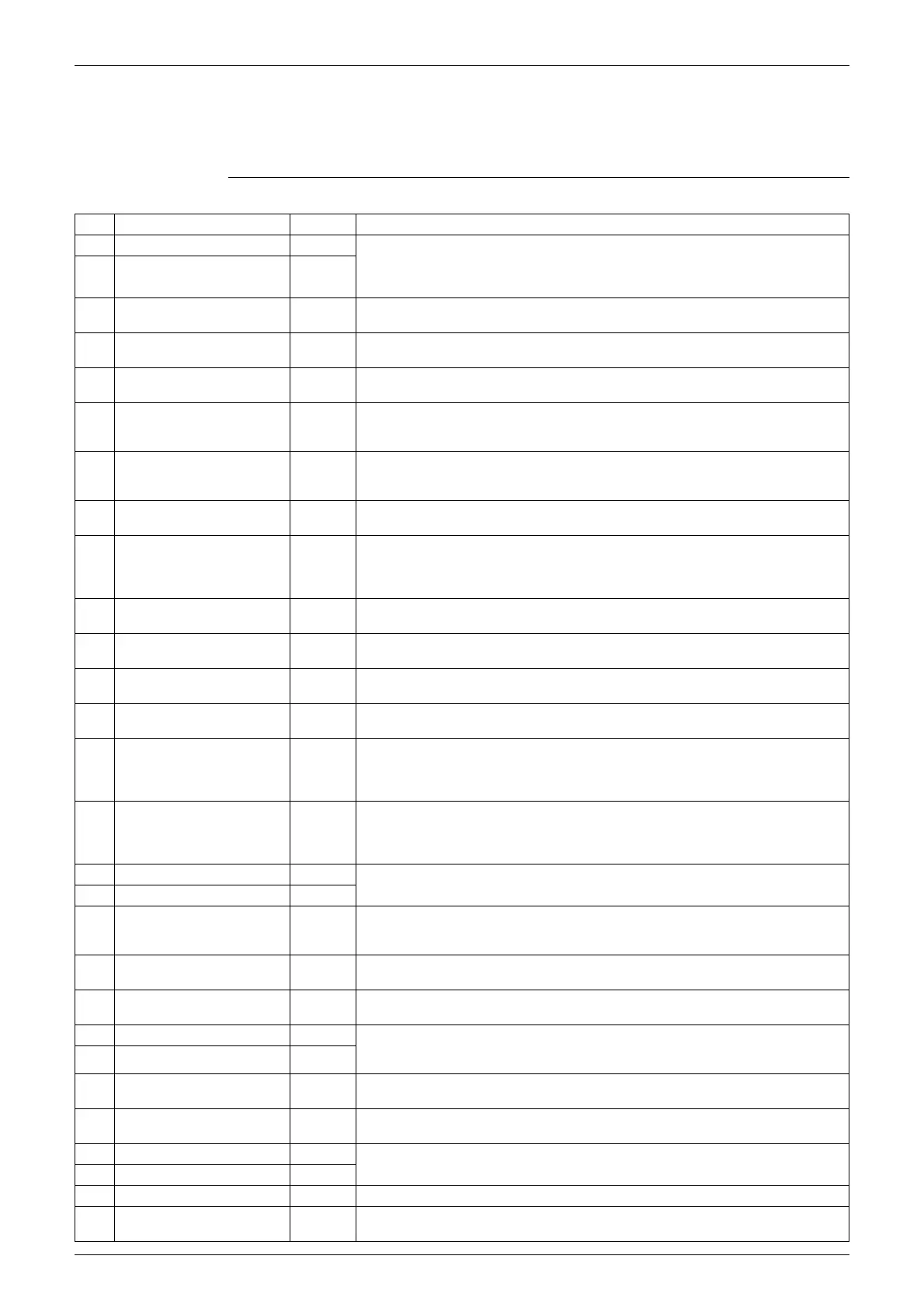
No. Name Code Function
A Inverter compressor M1C Combination of a compressor (inverter compressor) capable of operating at 29-
95Hz (79 Hz for RSEYP16KJ) with inverter drive and compressors (constant-
speed compressors) operable only on commercial power supply achieves multi
step control.
B Constant-speed
compressor 1
M2C
D 4 way valve Y1R Change the refrigerant flow to the main unit heat exchanger 1, to switch the
condenser↔evaporator.
E 4 way valve Y2R Change the refrigerant flow to the sub-unit heat exchanger to switch the
condenser↔evaporator.
F 4 way valve Y3R Change the refrigerant flow to the outdoor main unit discharge line to switch the
high temperature high pressure gas↔low temperature & low pressure gas.
J Electronic expansion valve Y1E (For main unit heat exchangers)
Provides PI control during evaporator to maintain constant superheated degree
(SH).
K Electronic expansion valve Y2E (For sub unit heat exchangers)
Provides PI control during evaporator to maintain constant superheated degree
(SH).
M Solenoid valve Y1S (For auxiliary condensers) Use for heat exchanger capacity control during
simultaneous cooling / heating operation.
N Solenoid valve Y2S (For hot gas bypass and pressure equalization)
Bypasses hot gas during transitional operation such as defrosting operation to
prevent sudden decrease of low pressure. Also equalizes pressure to reduce
startup load.
O Solenoid valve Y3S (For inverter unit liquid injection)
Provides liquid injection to prevent overheating operation.
P Solenoid valve Y4S (For receivers)
Use for pump-down refrigerant to receiver.
Q Solenoid valve Y5S (For liquid pressure control)
Use for maintaining liquid pressure during heat exchanger capacity control.
R Solenoid valve Y6S (For constant-speed unit liquid injection)
Provides liquid injection to prevent overheating operation.
S High pressure sensor SENPH Heating operation: Provides PI control for compressors and heat exchanger by
detecting high pressure.
Cooling operation: Controls compressors to ensure sufficient high pressure
when outside temperature is low.
T Low pressure sensor SENPL Cooling operation: Provides PI control for compressors and heat exchanger by
detecting low pressure.
Heating operation: Controls motorized valves to maintain constant evaporator
superheated degree.
U High pressure switch Q1PH Opens at set pressure of 2.94 MPa to stop operation.
V High pressure switch Q2PH
X Pressure regulating valve Pressure relief valve to protect liquid sealing in receiver piping during
transportation or storing.
It opens at 2.65 MPa.
Y Fusible plug Plug head melt at 70~75°C around receiver and high pressure and high
temperature refrigerant is relived.
1 Outside air thermistor R1T Detects outside temperature and uses it as a function in determining defrost IN
conditions during heating operation.
2
Heat exchanger thermistor 1
R21T Uses inlet temperature of each heat exchanger as a function (together with
outside temperature data) in determining defrost IN conditions during heating
operation.
4
Heat exchanger thermistor 3
R22T
5
Discharge pipe thermistor 1
R31T Detects discharge pipe temperature of inverter compressor and use it for
compressor discharge pipe temperature protection.
6
Discharge pipe thermistor 2
R32T Detects discharge pipe temperature of constant-speed compressor 1 and use it
for compressor discharge pipe temperature protection.
8 Header thermistor 1 R41T Detects outlet temperatures of heat exchangers and uses it in constant
superheated degree (SH) control (electronic expansion valve control)
9 Header thermistor 2 R42T
11 Suction pipe thermistor R6T Detect accumulator outlet temperature and protect compressor.
12 Liquid pipe thermistor R8T Detect liquid receiver outlet temperature and judge the Y5S open/close under
liquid pressure control.



 To Next Page