40
Cod.: 240.010.0042
DLS / DLS-C Series
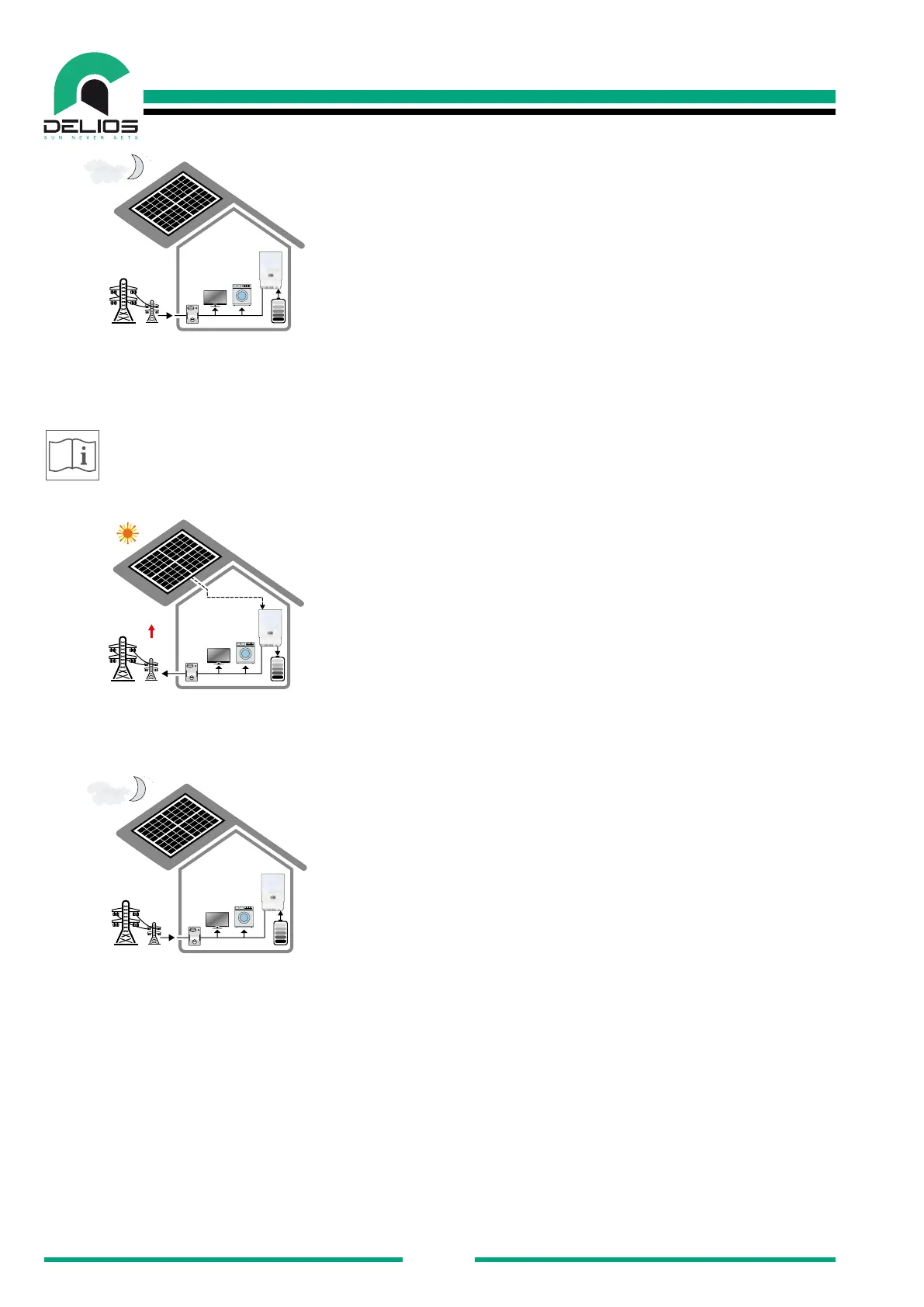
In the absence of energy from the photovoltaic eld, the battery is di-
scharged to supply domestic loads. If the energy required by the loads
is high and the energy from the battery is not enough, the missing part
is drawn from the network. The energy stored in the battery is never fed
into the grid but is used exclusively to supply the home loads.
3.2.2 "FEED-IN CONTROL" Mode
This operating mode is mainly indicated in installations where local regulations require a limitation on the
energy fed into the network.
In the presence of sunshine, the energy from the photovoltaic eld is
used primarily to supply the domestic loads and secondly to charge the
battery. Further energy in excess is transferred to the network with the
possibility to set a limit on the value of the maximum power fed into the
network. In this case, the inverter will limit the input power to the set value
by reducing the production of the photovoltaic eld until it completely
inhibits it if the set limit is zero and there is no demand for energy from
the loads. Therefore, by setting the input limit to 0W, the system will pre-
vent the transfer of energy to the grid. Moreover, If the energy required
by the loads is high and the available energy from photovoltaic eld and
battery is not enough, the missing part is drawn from the network.
In the absence of energy from the photovoltaic eld, the battery is di-
scharged to supply domestic loads. If the energy required by the loads
is high and the energy from the battery is not enough, the missing part
is drawn from the network. The energy stored in the battery is never fed
into the grid but is used exclusively to supply the home loads.
Pmax
0


 To Next Page