6.4. V-belts
The tension of the V-belts should be checked after every 2,000 hours of operation.
(1) Change the V-belts if necessary
If in the case of a multiple belt drive, wear or differing tensions are found, always replace the
complete set of belts.
(2) Checking condition
Check V-belts for cracks, oil, overheating and wear.
(3) Testing by hand
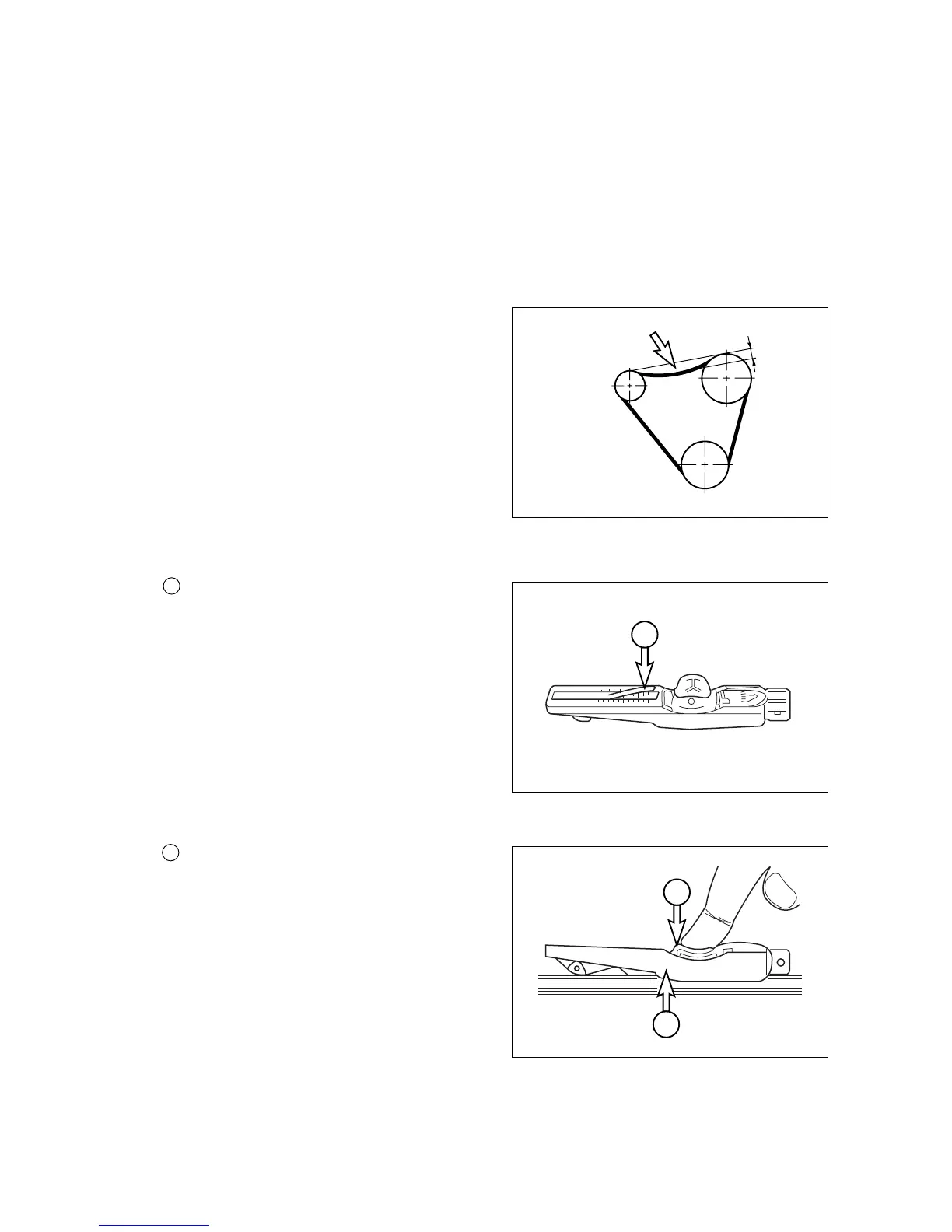
The tension is correct if the V-belts can be
pressed in by about the thickness of the V-
belt. (no more midway between the belt pul-
leys)
A more precise check of the V-belt tension is
possible only by using a V-belt tension tester.
(4) Measuring tension
Lower indicator arm (1) into the scale.
¥
Apply tester to belt at a point midway
between two pulleys so that edge of
contact surface (2) is flush with the V-
belt.
¥
Slowly depress pad (3) until the spring
can be heard to disengage. This will
cause the indicator to move upwards.
If pressure is maintained after the spring
has disengaged a false reading will be
obtained!
Reading of tension
¥
Read of the tensioning force of the belt
at the point where the top surface of
the indicator arm (1) intersects with the
scale.
¥
Before taking readings make ensure
that the indicator arm remains in its
position.


 To Next Page