Half/Pack
®
Issued April 2018
Compressed Natural Gas (CNG) Option
Copyright 2018, Heil Environmental
Printed in the U.S.A.
Compressed Natural Gas (CNG) Option
189
CNG FUEL MODULE MAINTENANCE AND PART REPLACEMENT (CONTINUED)
H.NGV1 Receptacle Replacement Procedure (Continued)
CAUTION
Be very careful not to cut or damage the new O-ring with the threads of the bulkhead fitting during installment of the O-
ring.
10.Install the new receptacle onto the corresponding fitting. Torque the receptacle to 24 ft.-lbs.
11.Return the portion of the dust cap that wraps around the receptacle to its original position.
12.Slowly OPEN one (1) supply tank valve.
CAUTION
Test the receptacle with the leak detector before opening all tank valves. If a leak is detected, check for debris and/or
replace the O-ring.
13.If a leak is detected, follow steps in Truck Preparation to relieve pressure in the unit.
14.Repair the leak and retest with leak detector.
15.Open remaining tank valves if no leak is detected.
16.Check the high pressure gauge to confirm a rise in fuel pressure.
Low pressure gauge may not register pressure until vehicle ignition is turned "ON".
I. Transit Fill Receptacle Replacement Procedure:
1. Follow directions in Truck Preparation to relieve pressure before performing any maintenance.
2. A check engine light or fault code may illuminate if the gas pressure is too low. This should resolve when gas
pressure is restored
3. Slide the portion of the dust cap that wraps around the fuel receptacle away from the face plate to expose the hex of
the fuel receptacle.
4. Use a 1-1/16” thin profile wrench (often referred to as a cylinder wrench or pump wrench) to support the flats of the
corresponding fitting.
5. Use a second wrench, 1-1/4”, to loosen the receptacle from the fitting. A small volume of gas may escape as this
connection is loosened.
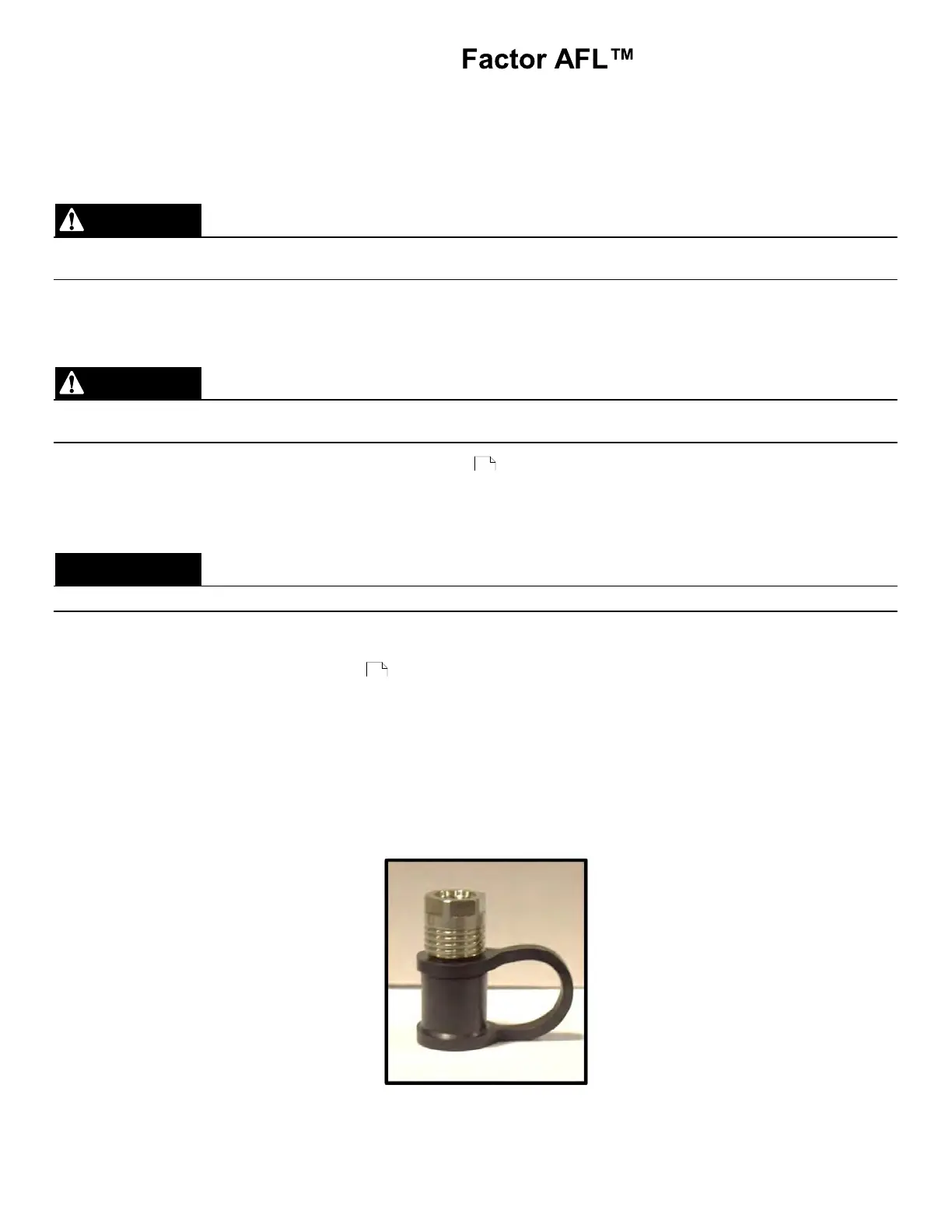
Figure 42. Transit (CL-50)
Receptacle
182
182


 To Next Page