Using the System
Calling a Speaker Station
All speaker stations have a three-, four-, or five-digit alphanumeric extension. The star
key (*) is used to dial alpha characters. See the examples below.
Note:
ATELs do not display the alpha characters when dialing.
103*2 = 103A
103**2 = 103B
103***2 = 103C
103*3 = 103D
When dialing, press each character within 15 seconds. If no dialing activity occurs within
this time, a reorder tone sounds to alert you to hang up and redial.
If your System has been networked to other Systems using a NIC, you can call any
speaker station in the networked Systems. If your System has not been networked, you
can only call the speaker stations in your own System.
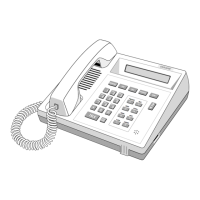
1. ATEL: Lift the handset for a private conversation or press SPKR PHONE for a
speaker/microphone push-to-talk conversation.
STEL, DTMF telephone, or CTEL: Lift the handset.
2. ATEL: Press and release #, then dial the extension number.
STEL, DTMF telephone, or CTEL: Same as ATEL.
3. ATEL ONLY: The display shows the extension. (P appears on the left side of the
display when a speaker station is in privacy mode and there is no listen audio from
the remote speaker station.)
4. ATEL: After hearing the connection tone, speak into the handset to switch to talk
mode. If you are using the speaker/microphone, press TALK and speak into the
microphone.
STEL, DTMF telephone, or CTEL: After hearing the connection tone, speak into the
handset.
5. ATEL: Stop speaking or release TALK to listen for a reply from the speaker station.
(You will not hear one if the speaker station is in privacy.)
STEL, DTMF telephone, or CTEL: Stop speaking to listen for a reply from the
speaker station. (You will not hear one if the speaker station is in privacy.)
continued
SCR+ Telephone Operation Manual
25
Section
4


 To Next Page