-
-
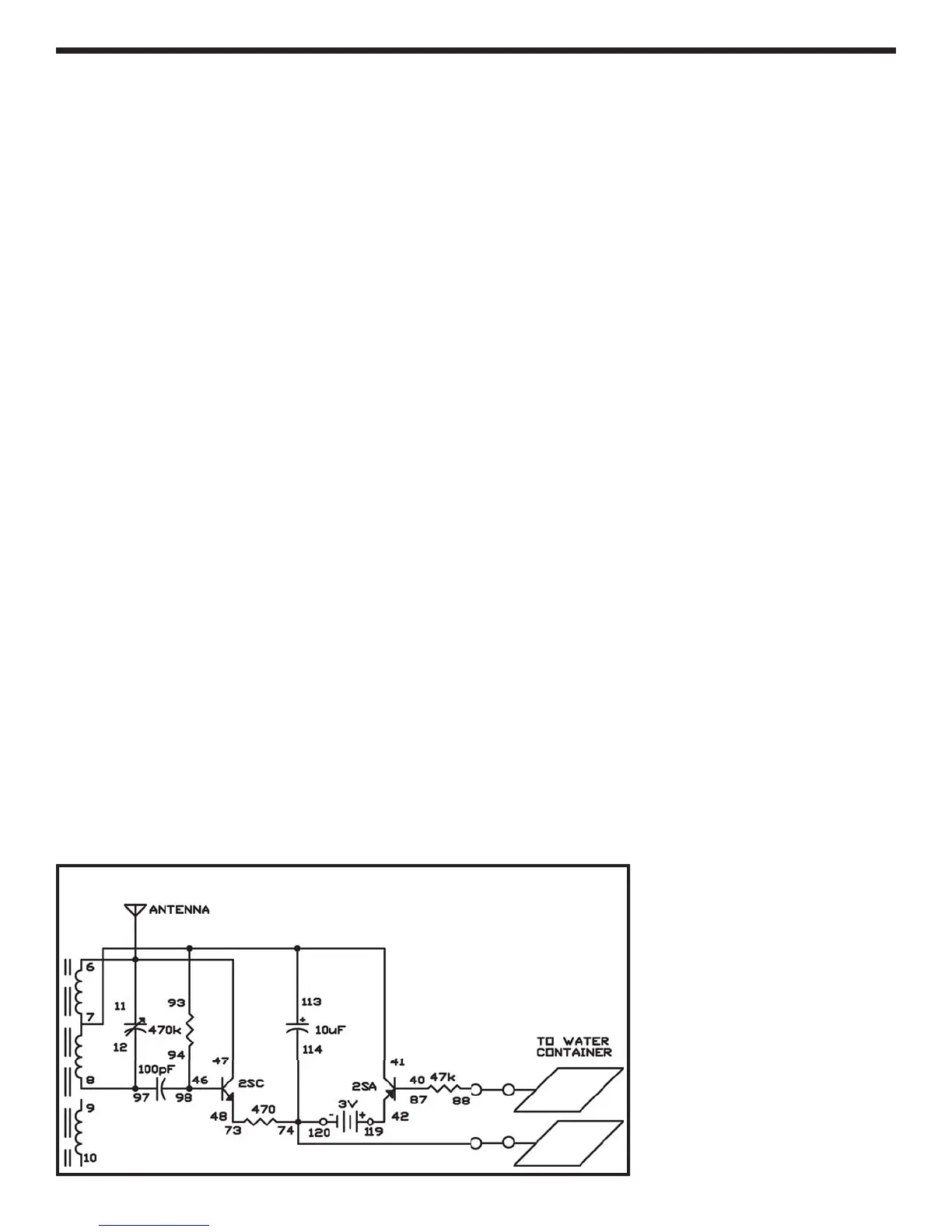
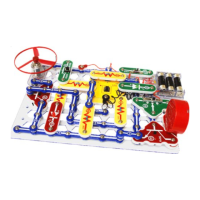
This circuit is a radio transmitter
alarm for monitorin
isin
water levels such as on rivers, dams, and
sp
ways, an
sen
s a
arm s
gna
s to a stan
ar
adio. When the water-contact plates or wires are ou
f the water, the circuit is not complete and nothin
appens. When the contacts are touching water, th
ircuit is activated and transmits a radio si
nal tha
an
e rece
ve
y a near
y
ra
o.
en t
e
a
o rece
ves t
e s
gna
, you
now t
at t
e wate
level has reached the hei
ht o
the contacts.
The emitter o
the NPN transistor in the radi
frequency (RF) oscillator circuit is connected to the
errite coil center terminal through the 10
apacitor. The capacitor acts as a short circuit at AM
adio
requencies. The radio si
nal is
ed back to the
ase throu
h the 100pF capacitor. The 470kΩ
es
stor supp
es t
e
ase current t
at turns on t
e
transistor
The battery current must
low through the PN
transistor to
et to the oscillator circuit and back
hen the wires are out o
the water, the PNP
transistor is turned o
, and so is the oscillator circuit.
hen the wires are in the water, current
lows
t
roug
t
e water to supp
y
ase current to t
e
transistor, turning it on. This allows current to
lo
t
roug
t
e
trans
stor
s em
tter an
co
ector t
t
o
tor
r
t w
t
tt
r
t
n
.
47
es
stor
m
ts t
e current; w
t
out
t excess
ve curren
ould burn out the PNP transistor, especially i
the
robes were accidentally touched directly together.
hen the transistor is on, the oscillator produces a
F si
nal. These probes can be
ormed o
almost
any insulated conductor, but large sur
ace areas
prov
e t
e qu
c
est resu
ts.
lace an AM radio receiver nearby and tune it to a
weak station. Next, adjust the oscillation frequenc
with the tunin
capacitor to a point where you ca
ear your water a
arm t
roug
t
e ra
o
Notes:
EXPERIMENT #11
: WATER LEVEL ALARM
chemati










 To Next Page