-
-
You have seen how a capacitor’s char
e
dischar
cycle can be used to delay certain circuit operations
ow
et
s s
ow t
e osc
ator act
on
n t
s pro
ect w
t
a
7
F capacitor
ress an
re
ease t
e
ey.
e c
rcu
t osc
ates,
u
slowly shuts down as the capacitor char
es up
When the capacitor is fully char
ed, no current ca
low to the oscillator, and it is o
. When
ou press the
key, it instantly dischar
es the capacitor, and the
osc
ator resumes wor
ng.
On its positive (+) and ne
ative (–) electrodes,
dischar
ed capacitor has an equal number of
electronics. Electrical charge is stored in a capacitor
by drawin
electrons from the positive electrode (t
actually make it positive
and addin
an equa
number of electrons to the ne
ative electrode (to
make it negative). Charging current or displacemen
current is the current that flows to char
e the
capacitor. The same amount o
current must
low in
the opposite direction when the capacitor i
sc
arg
ng.
s current
s
nown as
sc
arge
current or displacement current
With the voltmeter function if
ou have a V
M, use i
to measure the char
e on the capacitor. The
s
acement current can
e measure
w
t
t
e
current
unction.
s e
ectr
ca
-storage a
ty ma
es capac
tor
use
ul in many di
erent ways. However, this storag
ability can be dangerous in very high voltage circuits
due to possible shock i
you are not care
ul with it
You need to dischar
e capacitors be
ore touchin
them i
they use voltages above 50V.
t
:
EXPERIMENT #
:
L
W
H
T-
FF
ILLAT
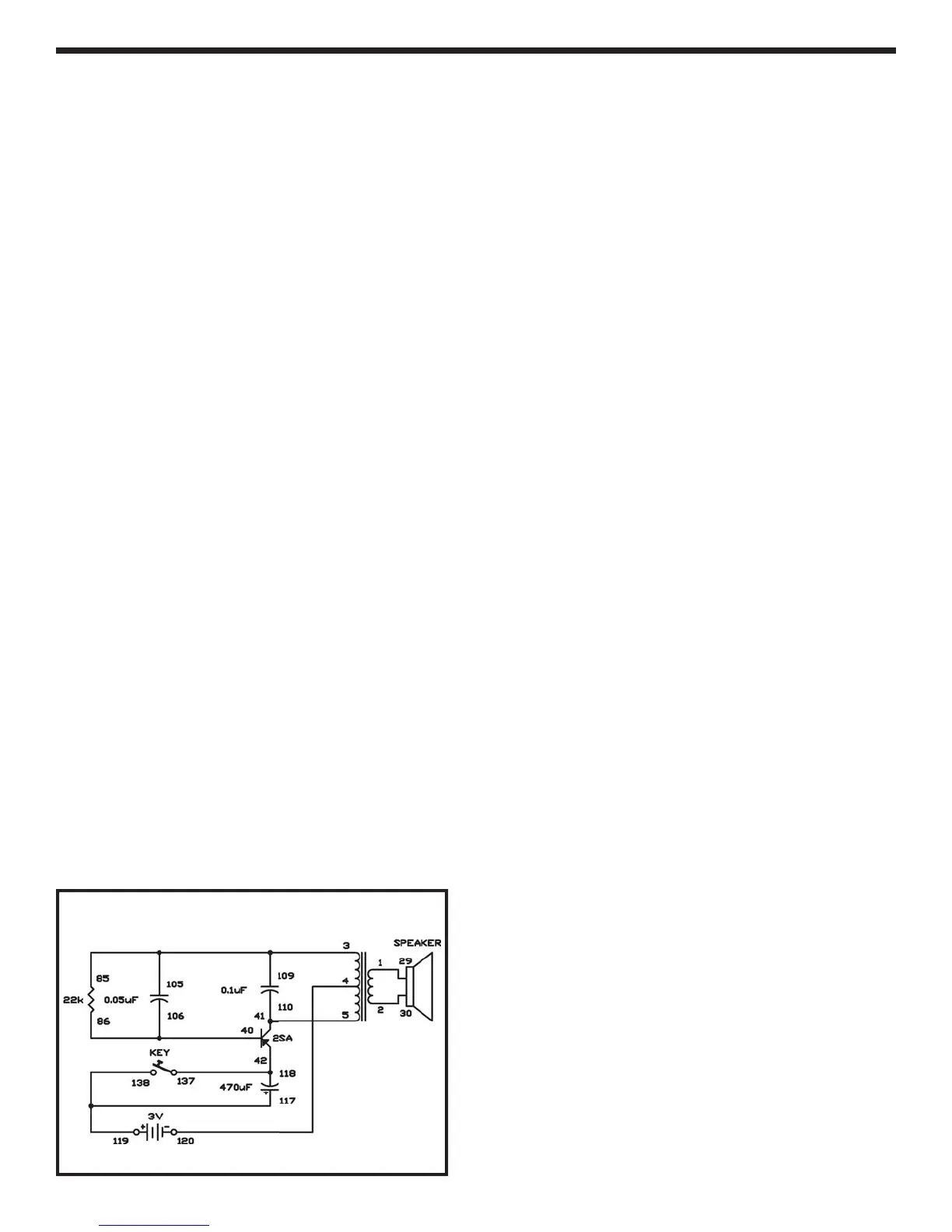
Schematic
Wiring Sequence
-
-30
-85-105-109
-120
-
-
0-106-86
-
-
7
17-138-119


 To Next Page