INNOVATION AND FLEXIBILITY
9.4 Bends in the Route.
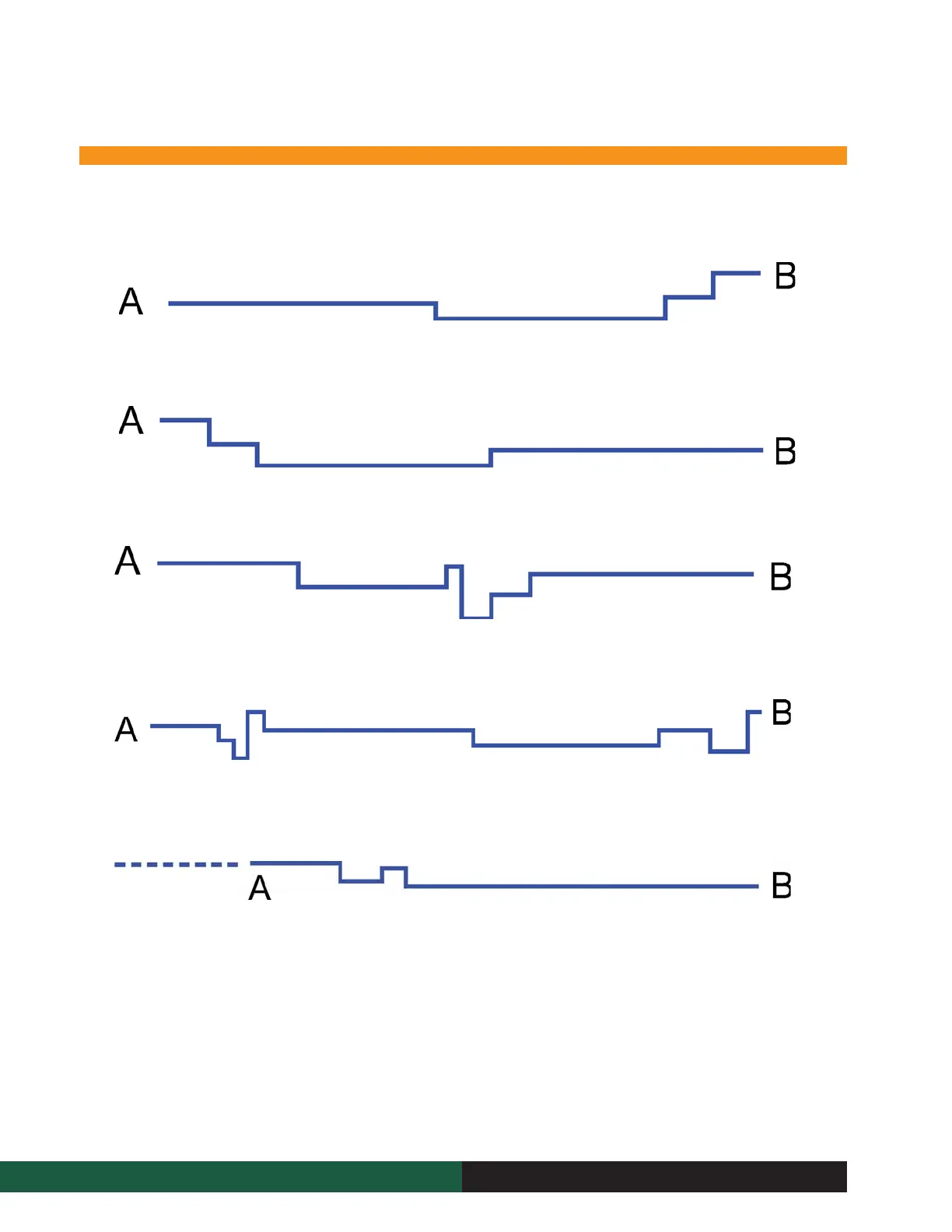
Note in each case where the worst bends are, and try to blow a good straight length before hitting the bends.
In this case, blow from A, and the bends at B should not even be noticed.
In this case, blow from B, same reason
Here the bends are a good way from either end, so blow from A or B
In this case there are bends at both ends. You may want to blow from a centre point, out to both A & B.
You’re asked to blow from B, but the customer will not permit access at B. This means you will have to blow from ‘A’, and come up against bends
at the near end. One idea is to take a straight length of spare m/d, maybe 20 or 30m (or more), and add it to the route at A. This will ‘delay’ and
reduce the impact of the bends. You may have to slow down at the bends in any case, until the FU picks up more air fl ow.
If the m/d is wound inside an access chamber, it could be unwound before attempting to blow the fi bre.
9 Fibre blowing
“This document is intended as a guide only. Whilst the information it contains is believed to be correct, Emtelle can take no responsibility for actions taken based on the information contained in this document. Emtelle reserves the
right to make changes to this document without notice. All sales of product are subject to Emtelle’s terms and conditions of sale only, which can be found on Emtelle’s website.”
75
INNOVATION AND FLEXIBILITY



 To Next Page