Preface/introduction
Engbo has experienced that over 90 % of our service-/problem enquiries, is related to power
supply. This document has been made to try to address and help avoid the most common and
known problems that can arise.
General
There are special considerations that must be taken into account regarding installation, use
and maintenance of high current consumption equipment. It is therefore especially important
that only persons with the appropriate knowledge are set to do this kind of work.
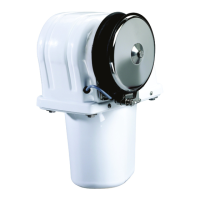
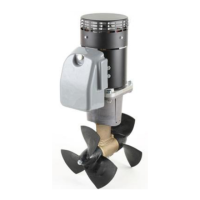
The most common products which this document applies to are electrical bow and/or stern
thrusters, windlasses and electrical starters for main and/or help engines.
(Similar precautions must also be taken with generators and charging systems for batteries).
Such equipment have, or can have for shorter periods, many hundreds of ampere of current
consumption.
In-rush current in an electrical motor of this kind will typically be around 2-3 times nominal
current and can easily exceed 1000 A for short periods.
Currents of these sizes will generate heat in all components, including cables.
It is therefore very important that all components, including the connections of these
components, are done correctly to keep the connection resistance and the total resistance in
the electrical circuit as low as possible.
All connections between cable-lug and components shall always be directly copper against
copper, (or copper against brass).
There shall never be any washers of any kind, or anything else, between the
connections.
Wrong or improper use or wrong connection of such high currents
components will generate a lot of heat which in worst case can cause fire.
Battery
The battery capacity must be related to the connected equipment and the use of this. For
recommended size and capacity, please refer to the product specifications. Generally will a
battery with higher capacity give better performance. Start-type batteries can generally give
higher currents, (for a short period), than leisure/standard type and is therefore better suited
for the kind of equipment mentioned above. It is important to understand the difference
between battery voltage and battery capacity. An old or damaged big battery can have rest-
capacity equivalent of a small motorcycle battery while it is still possible to measure a correct
charging voltage of approx 14,4V DC and apparently a good no-load voltage of approx 12,8 V
DC. (No-load voltage must be measured directly on the battery-posts after a couple of hours
without charging from motor or land based supply.
Special “high-start-current” and similar kind of batteries are normally suited for only the
smallest thruster models and windlasses as they normally have too little capacity (Ah).



 To Next Page