Page 6 of 43 ST-SM8l
SES 2000 AUTOCLAVE
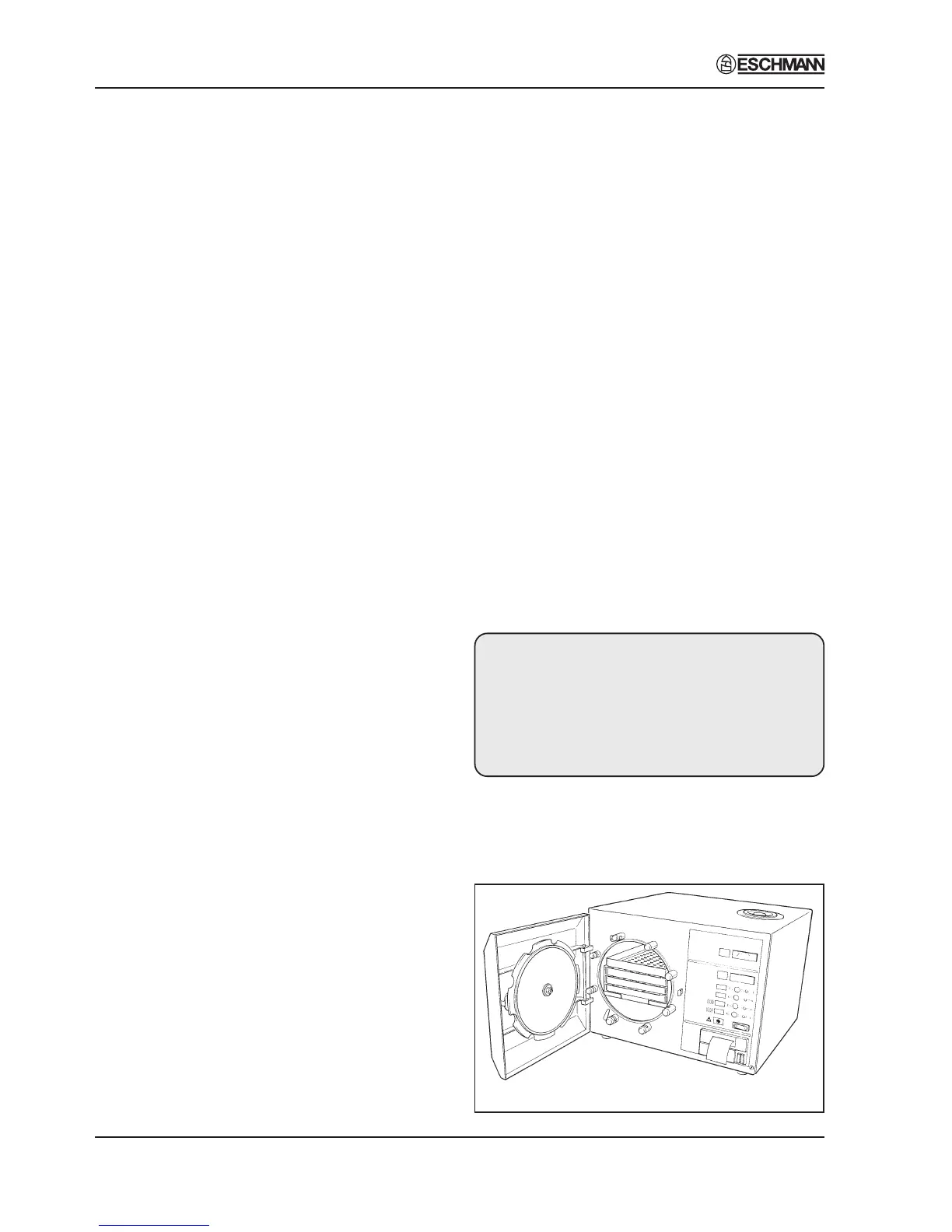
GENERAL (Fig. 1)
1.1 This Manual contains descriptive,
maintenance and spare parts information for the
SES 2000 Autoclave.
1.2 The autoclave is a portable, electrically
operated steam unit designed for sterilizing
unwrapped instruments, utensils and other items.
It operates automatically at the touch of a single
programme selector touch button, and has four
programmes 134°C and 121°C, both with and
without drying.
1.3 The autoclave is available with short or long
chambers and with or without an integral printer
for recording details of the sterilizing cycle. Details
of the printer are given in Appendix A.
1.4 Some of the information in this manual refers
to models built to comply with the Medical Devices
Directive and carry the CE mark to indicate
compliance. Where the section of this manual refers
only to these models it is marked ‘CE ONLY’
ASSOCIATED PUBLICATION
1.5 Separate installation and user instructions
are given in the SES 2000 Autoclave Instructions
for Use, ST-IM30.
SERVICING
1.6 Ensure that routine servicing is carried out
at regular intervals by either Eschmann trained
personnel or suitably trained engineers only,
otherwise the warranty could be infringed.
1.7 Keep the Instructions for Use and this Service
Manual readily accessible for reference purposes
prior to and during operation, cleaning and
servicing of the autoclave.
CAUTION
In common with other systems containing
static water reservoirs, water used in this unit
can become contaminated over a period of
time, or following an aborted cycle, and should
be treated as a potential risk of infection.
1.8 Eschmann recommend filling the reservoir
with ‘Sterile Water for Irrigation’. This is low in
dissolved solids and has a low microbial count. In
the U.K. the Department of Health recommend that
‘Sterile Water for Irrigation’ is used in bench-top
Autoclaves (NHS Estates document HTM2031).
If ‘Sterile Water for Irrigation’ is not being used then
Eschmann strongly recommend the use of either
distilled water, deionized water, purified water or
water treated by the reverse osmosis process.
These types of water are low in dissolved solids
and can help reduce the effects of tap water
detailed below.
DO NOT USE TAP WATER, this is high in dissolved
solids and can deposit lime scale, block filters and
cause damage to the pressure vessel.
Eschmann also recommend that the reservoir is
drained, allowed to dry and is refilled on a weekly
basis, with the type of water detailed in ‘a’ (or ‘b’)
above. At every service interval the reservoir must
be removed, be thoroughly cleaned and dried,
and then refilled. This will reduce the build-up of
contaminants in the water that may cause blocked
filters and/or damage to the pressure vessel. Your
local Health Authority may suggest that you change
the reservoir water more frequently. Eschmann
advise you to follow your local Health Authority’s
recommendations.
1.9 Check the drain tap is not damaged or leaking
and return the tube and drain tap into its location
under the autoclave to prevent damage or
accidental opening.
IMPORTANT NOTE
If the drain tap is found to be damaged or
leaking, replace it as soon as possible (order
Part No. 380010 directly from Eschmann).
When fitting the new tap, drain the reservoir
first and ensure it is placed on the drain tube
correctly, see Fig. 3.
PART 1 INTRODUCTION
Fig. 1 SES 2000 Autoclave
Part 1


 To Next Page