(LNG Fuel System: Ensure that the LNG fuel
tank is secured to the mounting brackets and
that the mounting brackets are secured to the
frame. Ensure all rubber isolator straps are se-
cure around the LNG fuel tank.
2.
Check for the presence of all required decals
present in the following locations:
•
Gas detection system overhead console;
•
Above the door handle on both doors;
•
Left front bumper;
•
End-of-frame crossmember;
•
LNG fuel tank fill port (maximum psi), if
equipped.
3.
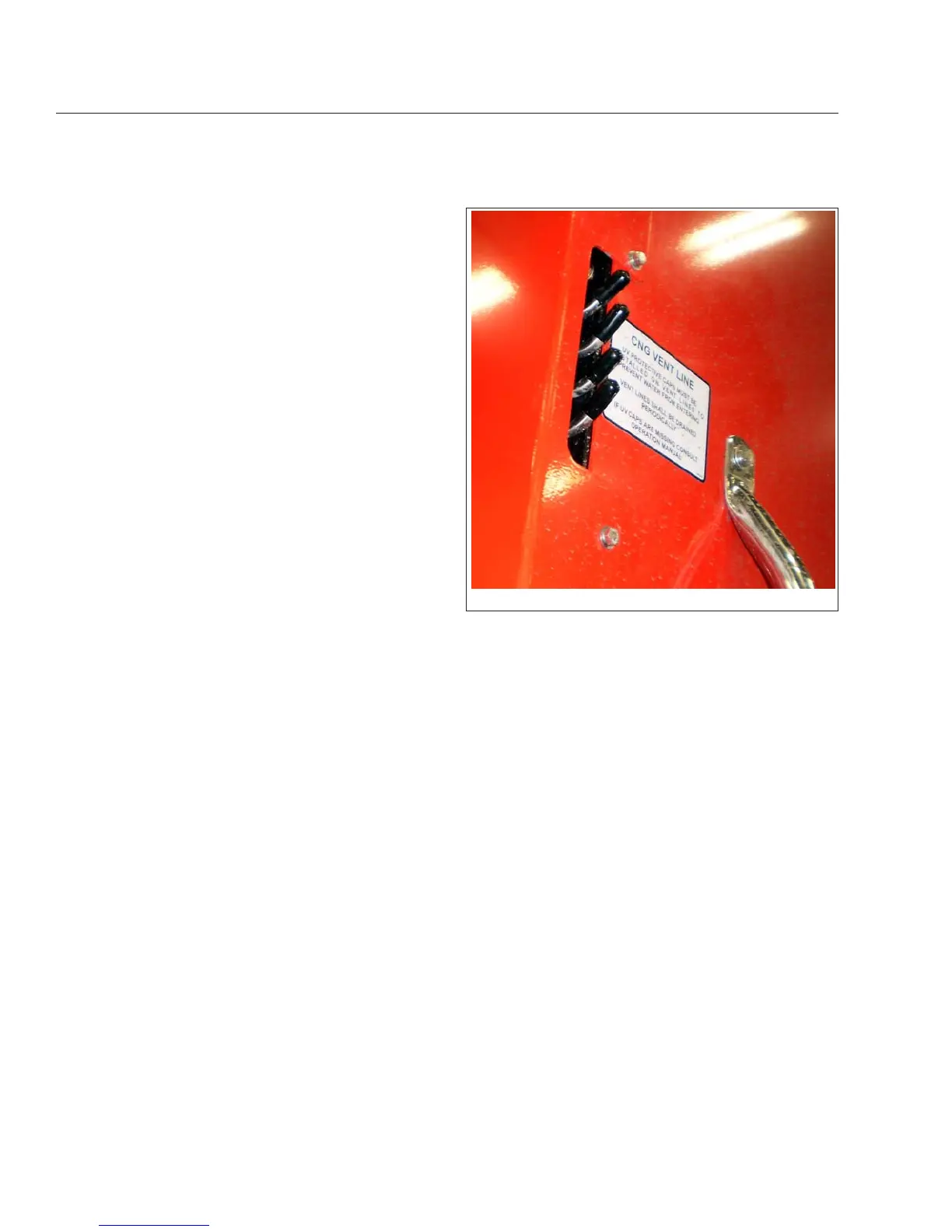
Check for the presence of vent caps on pressure
relief valves and devices. See Fig. 21.8.Ifany
caps are missing, have the fuel system inspected
by a qualified technician.
CNG Fuel System: Each fuel cylinder should
have two caps (one on each end), which are vis-
ible on the back of the CNG fuel cylinder storage
box. One additional cap is located on the pres-
sure relief valve on the inboard side of the CNG
fuel box, next to the fuel outlet line. If equipped
with saddle tanks, there are also two vent tubes
with caps between the back of the cab and the
back-of-cab fuel tanks.
LNG Fuel System: A red cap should be present
on the secondary relief valve. See
Fig. 21.9.
4.
Inspect all plumbing components, including the
fuel shutoff valve(s), primary and secondary relief
valves, and the LNG vapor shutoff and excess
flow valves, if equipped, for signs of damage or
leaks. See
Fig. 21.9 or Fig. 21.10.
Inspect the fuel fill fitting for signs of damage or
leaks.
Inspect all lines for signs of leaks or damage,
and check all threaded connections.
5.
Inspect all fuel gauge components for signs of
leaks or damage. Inspect the fuel level sender
cable and wiring.
6.
Inspect all coolant hoses for signs of chafing,
kinks, or leaks. The CNG fuel system utilizes
coolant hoses between the engine and the pres-
sure regulator inside the fuel panel. The LNG
fuel system utilizes coolant hoses between the
engine and the vaporizer.
7.
If equipped with an LNG fuel system, check the
fuel tank pressure gauge to ensure that pressure
is within the normal range of 120 to 150 psi (827
to 1034 kPa). If tank pressure exceeds 230 psi
(1586 kPa) and the pressure relief valve does
not open automatically, vent the tank immedi-
ately.
8.
Inspect the LNG vaporizer for signs of damage
or leaks. See
Fig. 21.9. Inspect the vaporizer
mounting brackets for signs of looseness.
9.
On CNG systems, check the low pressure fuel
filter(s) at the engine for contamination.
9.1
Turn the engine off and remove the key
form the ignition.
9.2
Slowly open the drain petcock and drain
any fluid into an appropriate container.
10.
When fluid stops, close the drain petcock.
11.
Examine the fluid.
02/05/2014 f470618
Fig. 21.8, CNG Vent Line Caps
Pre- and Post-Trip Inspections and Maintenance
21.9




 To Next Page