kph) is necessary, prepare the side extenders as
follows:
•
If middle brackets are installed on the side
extenders, as shown in Fig. 24.7, remove
the rubber flex extenders.
•
If middle brackets are not installed on the
side extenders, remove the side extenders
from the cab.
2.
If the vehicle is equipped with cab air suspen-
sion, and reverse towing at speeds above 45
mph (70 kph) is necessary, hold down the cab as
follows:
2.1
Drain the air from the cab air springs.
2.2
Loop a 2-inch (5-cm) ratchet-style tension
strap (rated 2000 lb [900 kg] minimum
work load) over the top of the cab shock
and under the frame rail. See
Fig. 24.8.
Tighten the strap for a snug fit. If the cab
is equipped with two or more shocks, re-
strain the aftmost shock on each side of
the vehicle.
3.
Place the front tires straight forward and secure
the steering wheel in this position.
4.
Disconnect the battery ground cables.
NOTICE
Failure to protect the frame rails from the chains
could cause damage, leading to eventual frame
failure.
5.
On dual drive axles, using protection to keep the
chains from damaging the vehicle frame, chain
the forward-rear drive axle to the frame.
6.
Attach the towing device.
NOTE: Due to the many variables that exist in
towing, positioning the lifting and towing device
is the sole responsibility of the towing-vehicle
operator.
7.
Lift the vehicle and secure the safety chains. If
extra clearance is needed, remove the bumper
extension if equipped.
07/05/2007
OK
OK
1
1
2
f880793
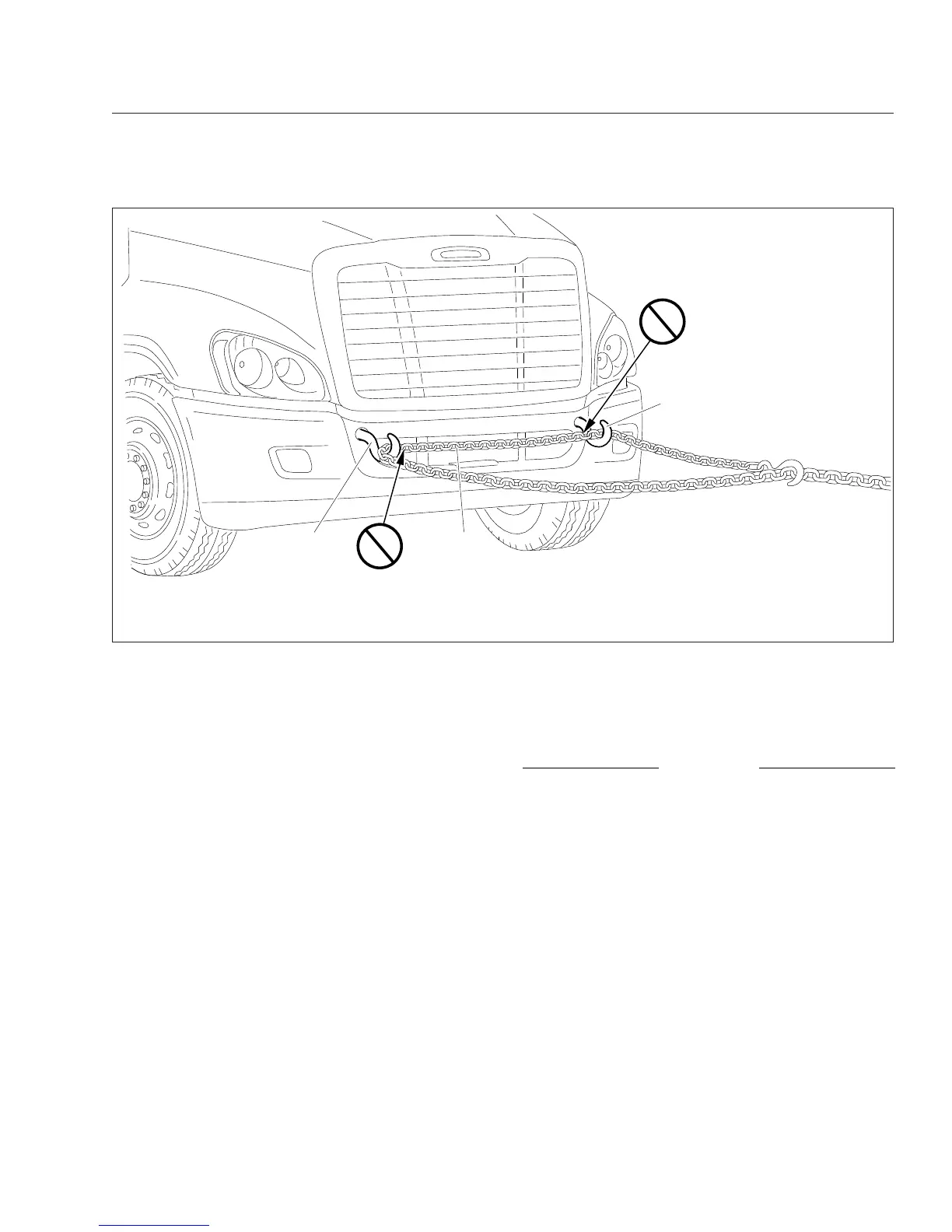
IMPORTANT: Do not reeve when towing.
1. Tow Hook 2. Chain
Fig. 24.6, Reeving
In an Emergency
24.6



 To Next Page