• The FullClean Plus controller can be powered by 115/230 V AC or 24 V AC/DC,
depending on the PCB
• The outputs of the FullClean Plus controller that control high power devices like
vacuum pumps, should in their turn, control (be connected to) the high-power motor-
switch in the control box of those devices
• Inputs I1...I4, outputs 05...012 and alarm output are free contacts, which means that
power must be provided
• If some inputs like the delivery line are not used, in the software these should be set
to "neither"
9.2. Relay Contact Protection
Any relay contact that switches a load, especially an inductive load, will gradually wear, and
eventually fail. The relay contacts of the FullClean Plus are not protected by default. To reduce
wear to the relay contacts of the FullClean Plus, relay contact protection tailored to the
connected load is recommended.
Depending on the type of the connected devices (solenoid valves, pulsators, motors, AC or
DC powered) a different contact protection method is required. Consult the manufacturer of
the connected device for the best relay contact protection. If the load is non-inductive, such
as light bulbs or (heating)-resistors, no additional protection is needed. The operating voltage
of the connected device should never exceed 230 V (Alarm contact max. 24 V).
Some suggestions of contact protection methods are provided here. The most effective
solution is a shunt protection over the device itself, as close to the device as possible.
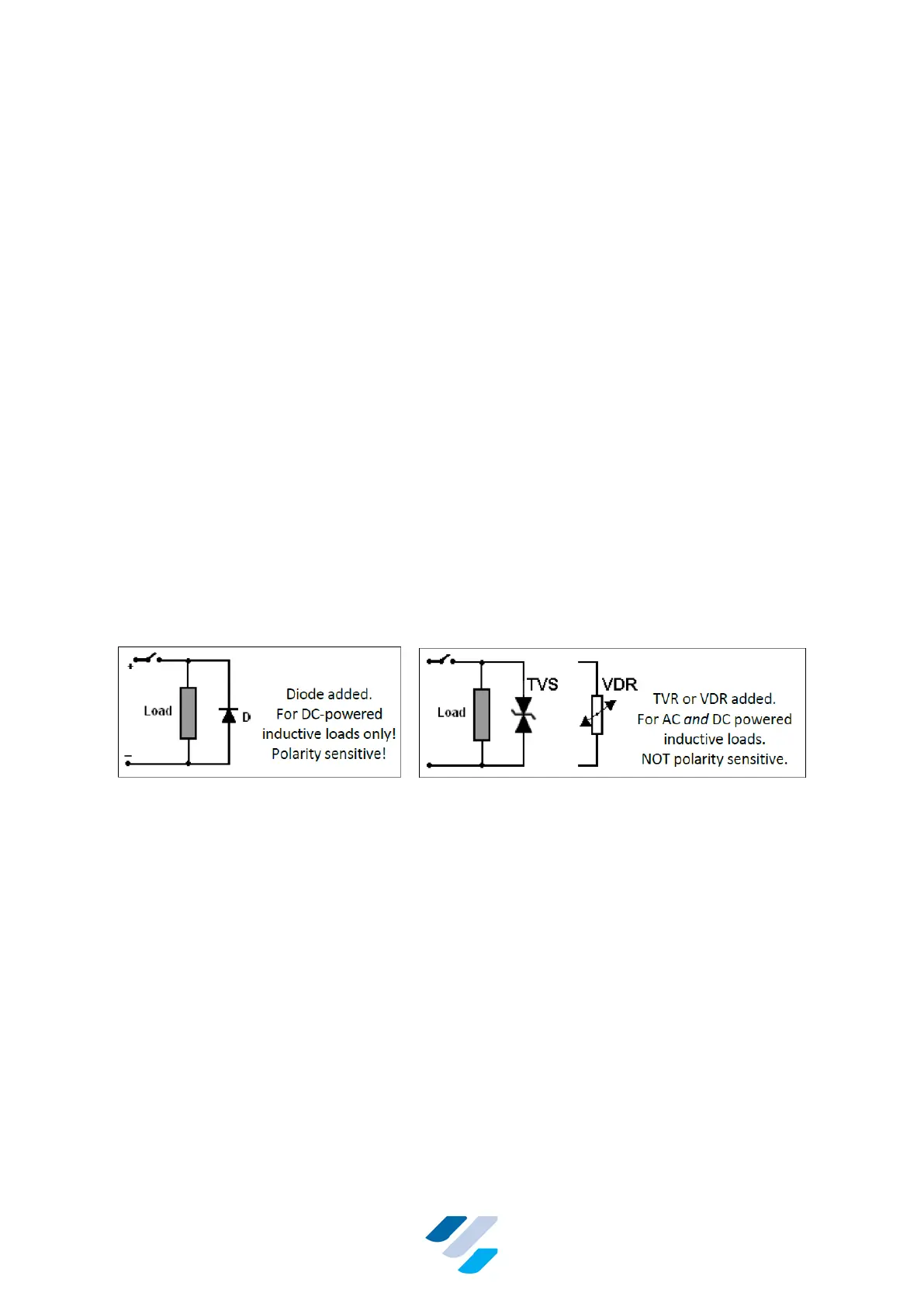
Figure 4 Examples of Relay Contact Protection
For DC loads, the most effective contact protection is a suitable diode placed in the right
direction parallel to the load. The right diode direction is the non-conducting direction: with the
cathode connected to the ‘+’ and the anode connected to the ‘-‘ terminal of the load. A
transzorb or varistor of the right voltage can also be used for DC loads, but it is slightly less
protective.
For AC loads, a regular diode cannot be used. Instead, a transzorb = Transient Voltage
Suppressor (TVS) should preferably be used. A varistor = Voltage Dependent Resistor (VDR)
can also be used.
Both should be of the right voltage and power rating. Recommended minimum TVR/VDR
voltage (VDR):
• DC – Maximum load voltage multiplied by 1.1
• AC – Maximum load voltage multiplied by 1.5


 To Next Page