32
Ways of setting the Alarm and Pre-alarm thresholds of each analogue input:
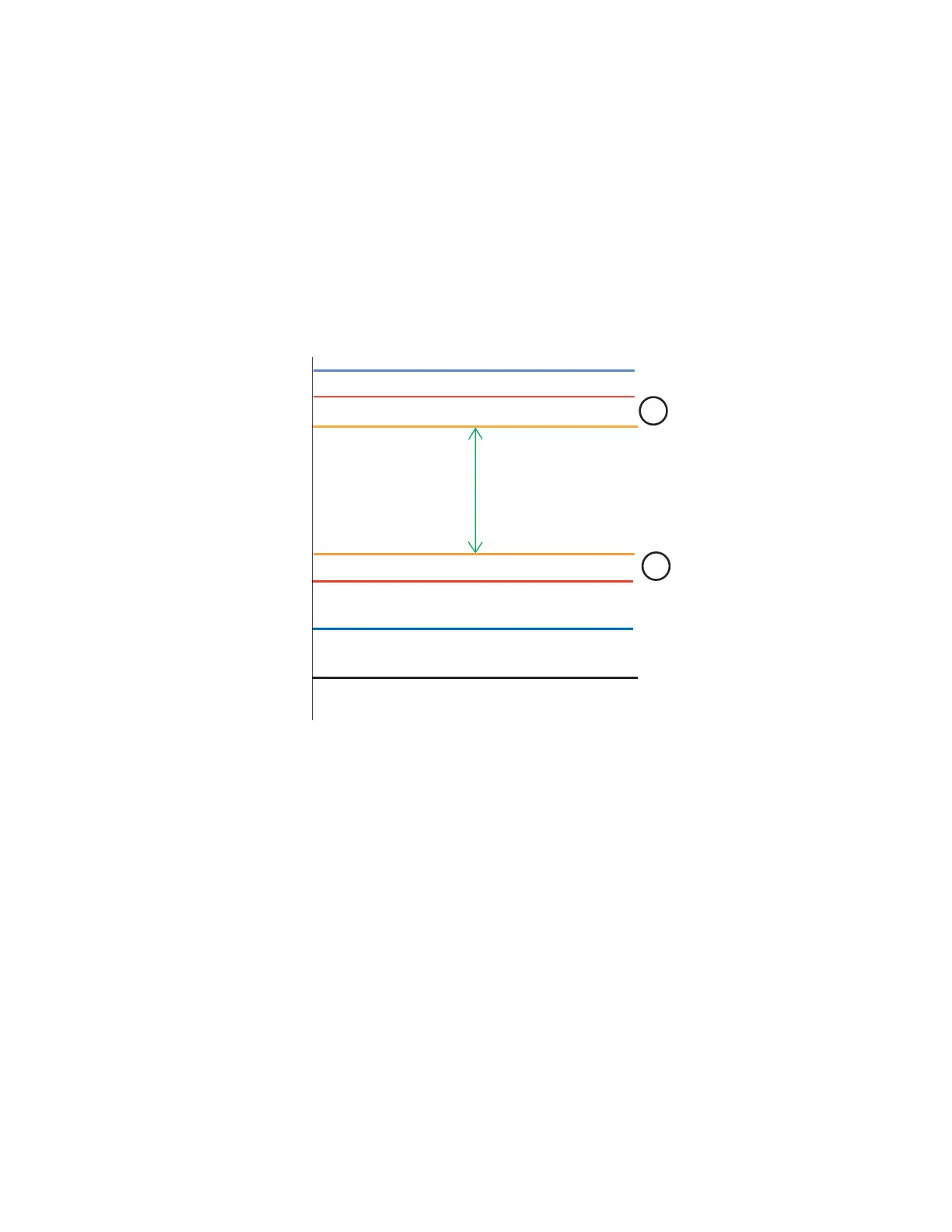
Case A: High Level Alarm (Condition – Alarm level set above Pre-alarm level)
If the input should rise above the Pre-alarm level and remain above this level for more the 10 seconds, then a Pre-alarm condition will be
generated by the system. This Pre-alarm condition will then remain until such time that the input level falls below the Pre-alarm level. Once
having risen above the Pre-alarm level, should the input return and fall below the Pre-alarm level before the 10 Second (time filtering
period) expires, then the system ignores the entire event.
The 10-second time filtering delay is only applied to the activation of the Pre-alarm condition, there is no delay imposed when a Pre-alarm
has been generated and the input falls below the Pre-alarm level. Therefore, the deactivation of a Pre-alarm state is immediate.
Once the input has passed the Pre-alarm level and continues to rise to exceed the Alarm level, an Alarm condition will be generated; again
providing the high level remains for a continuous duration of 10 seconds.
20mA
(100%)
4mA
(0%)
3.5mA
Line Detection
Fault Level
ALARM
PRE-ALARM
PRE-ALARM
ALARM
Normal Input Values
A
B
Case B: Low Level Alarm (Condition – Pre-alarm level set above Alarm level)
If the input should fall below the Pre-alarm level and remain below this level for more the 10 seconds, then a Pre-alarm condition will be
generated by the system. This Pre-alarm condition will then remain until such time that the input level rises above the Pre-alarm level.
Once having fallen below the Pre-alarm level, should the input return and rise above the Pre-alarm level before the 10-second (time
filtering period) expires, then the system ignores the entire event.
The 10-second time filtering delay is only applied to the activation of the Pre-alarm condition, there is no delay imposed when a Pre-alarm
has been generated and the input rises above the Pre-alarm level. Therefore, the deactivation of a Pre-alarm state is immediate.
Once the input has passed the Pre-alarm level and continues to fall to exceed the Alarm level, an Alarm condition will be generated; again
providing the low level remains for a continuous duration of 10 seconds.
The above Alarm and Pre-alarm operational descriptions are for the systems default functionality (Non-latching alarms).
The user can select ‘Latching’ operation independently for either or both the Pre-alarm and Alarm conditions (changing the ALMLATCH and
PREALMLATCH parameters located in the same list of the alarms). In the event that this ‘Latching’ option is selected, then an operator can
ONLY reset any Alarms that are generated manually.
By default the 12 inputs Alarms and Pre-alarms are disabled until the user changes their values. If one of the input signals falls below 3.5
mA a system fault will be shown and a logging entry done.
Please note that all Pre-alarm, Alarm and fault events of the Analogue Input module are stored in the E-series Logging System and can be
accessed via the E-series Monitor Program.



 To Next Page