EasyManua.ls Logo

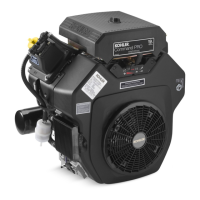
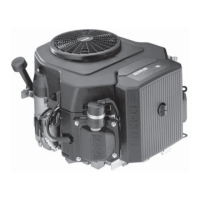
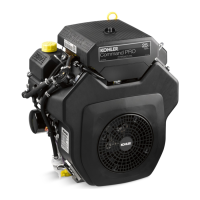
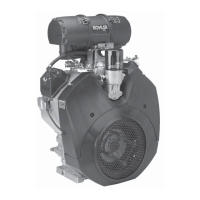
Kohler Comand Pro CH1000 - User Manual

Kohler Comand Pro CH1000
142 pages
Print Icon
To Next Page IconTo Next Page
Loading...
SERVICE MANUAL
HORIZONTAL CRANKSHAFT
CH940-CH1000

Questions and Answers

  • S
    Scott GrayAug 17, 2025
    What to do if Kohler Comand Pro CH1000 starts but does not keep running?
    • M
      Michael GarrettAug 17, 2025
      If your Kohler Engine starts but then dies, consider these possibilities: * A restricted fuel tank cap vent may be the cause. Unclog the fuel tank cap vent. * Poor fuel, or contaminants in the fuel system, can lead to this issue. Replace the fuel and clean the fuel system. * The choke or throttle controls may be faulty or misadjusted. Adjust or replace them as needed. * Loose wires or connections might be shorting the ignition module. Secure any loose wires and connections. * A faulty cylinder head gasket could be the problem; replace it. * A faulty carburetor may need replacing or repair. * An intake system leak should be repaired.
  • E
    emilyphillipsAug 21, 2025
    How to fix Kohler Comand Pro CH1000 that overheats?
    • K
      Kyle HowardAug 21, 2025
      If your Kohler Engine is overheating, consider the following: * The air intake, grass screen, cooling fins, or cooling shrouds may be clogged. Clean these components. * The engine load may be excessive. Reduce the engine load. * The crankcase oil level may be low. Add oil to the crankcase. * The crankcase oil level may be too high. Drain excess oil from the crankcase. * The carburetor may be faulty. Repair or replace the carburetor. * The fuel mixture may be too lean. Adjust the fuel mixture to ensure proper combustion.
  • D
    davedoyleAug 28, 2025
    What causes Kohler Comand Pro CH1000 to not crank?
    • J
      Jonathon RobinsonAug 28, 2025
      If your Kohler Engine won't crank, consider these possible causes: * The PTO drive may be engaged. Disengage the PTO drive. * The battery might be discharged. Charge or replace the battery. * The safety interlock switch could be engaged. Disengage the safety interlock switch. * Loose or faulty wires or connections might be present. Secure or replace them. * The key switch or ignition switch could be faulty. Replace it. * The electric starter or solenoid might be faulty. Replace it. * Internal engine components may be seized. Disassemble and repair or replace seized components.
  • B
    Brandy DavisSep 1, 2025
    Why does my Kohler Engine run but miss?
    • B
      Brittany CaldwellSep 1, 2025
      If your Kohler Engine runs but misses, here are potential causes: * Dirt or water may be in the fuel system. Replace the fuel and clean the fuel system. * A spark plug lead might be disconnected. Reconnect the spark plug lead. * The fuel quality might be poor. Use better quality fuel. * The spark plug(s) could be faulty. Replace them. * Loose wires or connections may intermittently ground the ignition kill circuit. Secure loose wires and connections. * The engine may be overheated. Check and repair any overheating issues. * The ignition module could be faulty, or the air gap incorrect. Check and replace the ignition module. * The carburetor may be adjusted incorrectly. Adjust the carburetor correctly.
  • J
    John HoSep 4, 2025
    What causes Kohler Comand Pro CH1000 Engine to not idle?
    • H
      Heather ClaySep 5, 2025
      If your Kohler Engine will not idle, consider these potential causes: * Dirt or water in the fuel system. Replace fuel and clean the fuel system. * Stale fuel and/or gum in the carburetor. Replace stale fuel and clean the carburetor. * Faulty spark plugs. Replace faulty spark plugs. * Inadequate fuel supply. Check and increase fuel supply. * Improperly set idle fuel adjusting needles. Adjust the idle fuel adjusting needles. * Improperly set idle speed adjusting screw. Adjust the idle speed adjusting screw. * Low compression. Increase engine compression. * Restricted fuel tank cap vent. Unclog the fuel tank cap vent. * Engine overheated due to cooling system/air circulation problem. Check and repair cooling system.
  • R
    Rhonda RiceSep 8, 2025
    How to stop oil leaks from Kohler Comand Pro CH1000 Engine oil seals and gaskets?
    • B
      Brenda JonesSep 8, 2025
      To address oil leaks from oil seals and gaskets in your Kohler Engine, consider the following: * A clogged, broken, or inoperative crankcase breather. Repair or replace the crankcase breather. * Loose or improperly torqued fasteners. Tighten loose or improperly torqued fasteners. * Piston blowby or leaky valves. Inspect and replace worn components. * Restricted exhaust. Unclog the exhaust system.
  • C
    Colton Williams Jr.Nov 12, 2025
    How to fix Kohler Engine that cranks but won't start?
    • J
      Jerry MayNov 12, 2025
      If your Kohler Engine cranks but refuses to start, there are several potential causes and solutions: * The fuel tank might be empty. In this case, fill the fuel tank. * The fuel shut-off valve could be closed; open it. * Poor fuel quality, dirt, or water in the fuel system could be the issue. Replace the fuel and clean the fuel system. * A clogged fuel line could be the culprit; clear it. * Spark plug leads might be disconnected; reconnect them. * The kill switch might be in the OFF position; switch it to ON. * Faulty spark plugs could be the problem; replace them. * Faulty ignition modules might need replacement. * A malfunctioning carburetor solenoid should be replaced. * A backwards connected battery needs to be reconnected correctly. * The safety interlock system...
  • K
    Kristen TaylorNov 23, 2025
    Why Kohler Engine starts hard?
    • M
      Mary BrennanNov 23, 2025
      If your Kohler Engine is hard to start, here are some potential reasons: * The PTO drive might be engaged. Disengage the PTO drive. * There might be dirt or water in the fuel system. Replace the fuel and clean the fuel system. * The fuel line could be clogged. Clear the clogged fuel line. * There may be loose or faulty wires or connections. Secure or replace them. * The choke or throttle controls might be faulty or misadjusted. Adjust or replace them. * The spark plugs could be faulty. Replace them. * There might be low compression. Increase engine compression. * The spark could be weak. Test and replace ignition components as needed. * The fuel pump may be malfunctioning, causing a lack of fuel. Replace the fuel pump. * The engine might be overheated due to restricted...

Summary

Section 1 Safety and General Information

Safety Precautions

General safety guidelines and warnings for engine operation.

Explosive Fuel

Hazard of gasoline ignition and safe storage/handling procedures.

Engine Identification Numbers

Engine identification numbers for ordering parts and communication.

Oil Recommendations

Importance of using correct oil type and weight for engine longevity.

Fuel Recommendations

Guidelines for purchasing, storing, and using gasoline for optimal performance.

Periodic Maintenance Instructions

Schedule for routine engine maintenance tasks based on frequency.

General Specifications

Key technical specifications for the engine model.

Section 2 Tools & Aids

Separate Tool Suppliers

List of suppliers for specialized tools and their contact information.

Tools

Description and source/part numbers for various engine service tools.

Aids

List of consumable aids and lubricants with source/part numbers.

Special Tools You Can Make

Instructions for fabricating specific tools for engine service.

Section 3 Troubleshooting

Troubleshooting Guide

General guide to identifying common engine problems and their potential causes.

Engine Cranks But Will Not Start

Potential causes for an engine that cranks but fails to start.

Engine Overheats

Potential causes for engine overheating.

Engine Knocks

Potential causes for abnormal knocking sounds from the engine.

Engine Loses Power

Potential causes for a reduction in engine power output.

Crankcase Vacuum Test

Method for testing crankcase vacuum or pressure.

Cylinder Leakdown Test

Method for assessing component wear via cylinder leakdown test.

Section 4 Air Cleaner and Air Intake System

Air Cleaners

Overview of air cleaner types used on these engines.

Heavy-Duty Style Air Cleaner

Description and service procedures for the heavy-duty air cleaner.

Low-Profile Air Cleaner

Description and service procedures for the low-profile air cleaner.

Air Intake;Cooling System

Maintenance of air intake and cooling system components.

Section 5 Fuel System and Governor

Fuel System Components

List of typical carbureted fuel system components.

Fuel Recommendations

Guidelines for selecting and using appropriate fuel for the engine.

Fuel Pump

Description of mechanical and electric fuel pumps used on these engines.

Carburetor

General information about the Keihin two-barrel carburetor.

Troubleshooting - Carburetor Related Causes

Common carburetor-related issues and their probable remedies.

Carburetor Adjustments

Procedures for adjusting carburetor settings like idle speed and fuel mixture.

Governed Idle System

Explanation of the system that maintains a stable idle speed.

High Speed (RPM) Adjustment

Procedure for setting the engine's high speed (no-load) RPM.

Section 6 Lubrication System

Oil Recommendations

Importance of correct oil type, weight, and regular changes.

Checking Oil Level

Procedure for checking engine oil level and maintaining proper fill.

Changing Oil and Oil Filter

Procedures for changing engine oil and oil filter.

Oil Sentry

Information on the optional Oil Sentryâ„¢ switch for low oil protection.

Section 7 Electrical System and Components

Spark Plugs

Information on spark plug type, gap, and common issues.

Battery

General information about 12-volt batteries and their requirements.

Battery Maintenance

Routine maintenance procedures to prolong battery life.

Electronic Ignition Systems

Overview of the two types of electronic ignition systems used.

Troubleshooting CD Ignition Systems

Troubleshooting information for CD ignition systems.

Test Procedure for Fixed Timing CD Ignition Systems

Steps to isolate and verify ignition system issues.

Battery Charging System

Overview of the engine's regulated charging system.

Troubleshooting Guide 15;20;25 Amp Battery Charging Systems

Guide for diagnosing battery charging system problems.

No Charge to Battery

Troubleshooting steps when the battery is not charging.

Electric Starting Motors

Information on solenoid shift starters used in these engines.

Starting Motor Precautions

Safety precautions to prevent damage to the starter motor.

Solenoid Test Procedure

Procedures for testing the starter solenoid's electrical functions.

Section 8 Disassembly

WARNING: Accidental Starts!

Critical safety warning about disabling the engine before work.

Typical Disassembly Sequence

Suggested order for complete engine disassembly, adaptable for options.

Drain Oil from Crankcase and Remove Oil Filter

Procedures for draining oil and removing the oil filter.

Remove Electric Starter Motor

Steps for removing the electric starter motor assembly.

Remove Air Cleaner Assembly

Steps for removing the air cleaner assembly.

Remove Carburetor

Procedure for removing the engine carburetor.

Remove Baffles and Intake Manifold

Procedures for removing engine baffles and intake manifold.

Remove Flywheel

Steps for removing the engine flywheel, with precautions.

Remove Stator, Rectifier-Regulator, and Wiring Harness

Steps for removing the stator, rectifier-regulator, and wiring harness.

Remove Valve Covers and Fuel Pump

Procedures for removing valve covers and the mechanical fuel pump.

Remove Cylinder Heads and Hydraulic Lifters

Procedures for removing cylinder heads and hydraulic lifters.

Disassemble Cylinder Heads

Steps for disassembling cylinder heads, including valve train components.

Remove Breather Assembly

Steps for removing the engine breather assembly.

Remove Connecting Rods with Pistons and Rings

Procedures for removing connecting rods, pistons, and rings.

Remove Crankshaft

Steps for removing the engine crankshaft.

Section 9 Inspection and Reconditioning

Camshaft

Inspection and service procedures for the engine camshaft.

Crankshaft

Inspection and service procedures for the engine crankshaft.

Crankcase

Inspection and service procedures for the engine crankcase.

Cylinder Head and Valves

Inspection and service for cylinder heads and valves.

Valve Guides

Inspection and clearance measurement for valve guides.

Pistons and Rings

Inspection of pistons and rings for wear or damage.

Install New Piston Rings

Step-by-step instructions for installing new piston rings.

Hydraulic Lifters

Inspection and bleeding procedures for hydraulic lifters.

Section 10 Reassembly

Typical Reassembly Sequence

Suggested order for complete engine reassembly, adaptable for options.

Install Flywheel End Oil Seal

Procedure for installing the flywheel end oil seal.

Install Governor Shafts, Seal, and Governor Gear

Procedures for installing governor shafts, seal, and gear.

Install Crankshaft

Procedure for installing the engine crankshaft.

Install Connecting Rods with Pistons and Rings

Procedures for installing connecting rod, piston, and ring assemblies.

Install Camshaft

Steps for lubricating and installing the engine camshaft.

Install Closure Plate Assembly

Steps for installing the closure plate assembly onto the crankcase.

Install Breather Assembly

Steps for installing the engine breather assembly.

Install Hydraulic Lifters

Procedures for installing hydraulic lifters after preparation.

Assemble Cylinder Heads

Steps for assembling cylinder heads with valves and springs.

Install Push Rods and Rocker Arms

Procedures for installing push rods and rocker arms.

Install Valve Covers

Steps for installing valve covers and seals.

Install Spark Plugs

Procedure for installing and gapping spark plugs.

Install Intake Manifold

Procedure for installing the intake manifold.

Install Oil Filter Housing Assembly

Reassembly of the oil filter housing assembly.

Install Backing Shroud Assembly

Steps for installing the engine's backing shroud assembly.

Install Stator, Wiring Harness, and Rectifier-Regulator

Procedures for installing stator, wiring harness, and rectifier-regulator.

Install Flywheel

Procedures and precautions for installing the engine flywheel.

Install Ignition Modules

Steps for installing ignition modules and setting air gap.

Install Carburetor

Procedure for installing the engine carburetor with linkages.

Install Control Bracket and Air Cleaner Assembly

Steps for installing the control bracket and air cleaner assembly.

Adjusting Governor

Procedure for adjusting the governor lever position.

Install Oil Sentry (If Equipped)

Procedure for installing the Oil Sentryâ„¢ switch.

Install Blower Housing and Cylinder Shrouds

Steps for installing the blower housing and cylinder shrouds.

Install Control Panel (If Equipped)

Procedure for installing the engine control panel.

Install Oil Filter and Add Oil to Crankcase

Procedures for installing the oil filter and adding engine oil.

Prepare the Engine for Operation

Final checks and preparations before operating the reassembled engine.

Testing the Engine

Recommended procedures for testing the engine after reassembly.

Kohler Comand Pro CH1000 Specifications

General IconGeneral
Fuel SystemElectronic Fuel Injection (EFI)
Cooling SystemAir-cooled
Oil Capacity2.0 qt (1.9 L)
Engine Type4-Cycle, Gasoline, OHV, Twin Cylinder
Displacement999 cc

Related product manuals