50 51
ENEN
Getting acquainted with your bike
Before taking to the road, make sure you
are familiar with your bicycle and how it works,
especially if its specicities and use are different to
your previous experience and directly affect your
safety.
If you are switching from at to clipless pedals or
changing your clipless system, practice engaging
and disengaging when stopped, and mentally
picture clipping in and out of the pedals every time
you stop, or in other situations which may require
putting a foot to the ground.
Braking systems
Our range of bicycles dened by conditions
of use A, B and C, are tted with two different types
of braking system.
Rim brakes, where two brake pads clamp around
the braking strip on the wheel rim. See page 71 for
specications and information.
Disc brakes, where two brake pads clamp
around a disc. See page 71 for specications and
information.
Please remember that braking distance increases
and that grip is reduced on wet roads. Always
adapt your speed to weather and traffic conditions.
Before every ride, ensure your brakes are tight
and the pads make contact with the wheel rims
or discs.
Safety precautions when cornering
Under certain conditions (foot length,
position of shoes on the pedals, width of tires,
steering angle), it is possible that the front of the
shoe may touch the front wheel and/or the ground
when moving the cockpit left or right to corner or
change direction.
To avoid any risk of contact with the wheel, please
pay attention to the following crank position:
- When turning left : cranks in vertical position with
right foot down (at 6 o’clock) and left foot up (at
12 o’clock).
- When turning right : cranks in vertical position
with right foot up (at 12 o’clock) and left foot down
(at 6 o’clock).
Beware of potentially hazardous parts
Some parts of your bicycle must be
handled with care or caution to avoid the risk of
pinching, cuts, injury, burns etc. Moving parts
(discs, wheels...)can also cause injury.
Examples :
Pinching due to wheels blocking suddenly.
Cuts/ injuries from the sharp teeth of chainrings.
Cuts/ injuries when repositioning the chain after
dropping it.
Burns from touching a disc which is hot from sharp
or prolonged braking.
Check if there are cable end crimps on the front
and rear derailleur cables and brake cables (if
present). Without end crimps, you may prick
yourself on the jagged cable ends.
Riding your bicycle
If you feel the bike vibrating or experience
a « speed wobble », stop immediately. Check
the tire pressure and tightness of the wheels. If
you cannot nd the source of the problem, we
recommend you do not continue riding and get
your bicycle checked by your retailer as soon as
possible.
!
!
!
!
!
BEFORE YOUR FIRST RIDE
Measuring and tting your bike
The following information is provided on a theoretical basis.
Depending on your body type (example: bust longer than
inseam or vice versa, long or short arms), please contact
your retailer for bike tting advice.
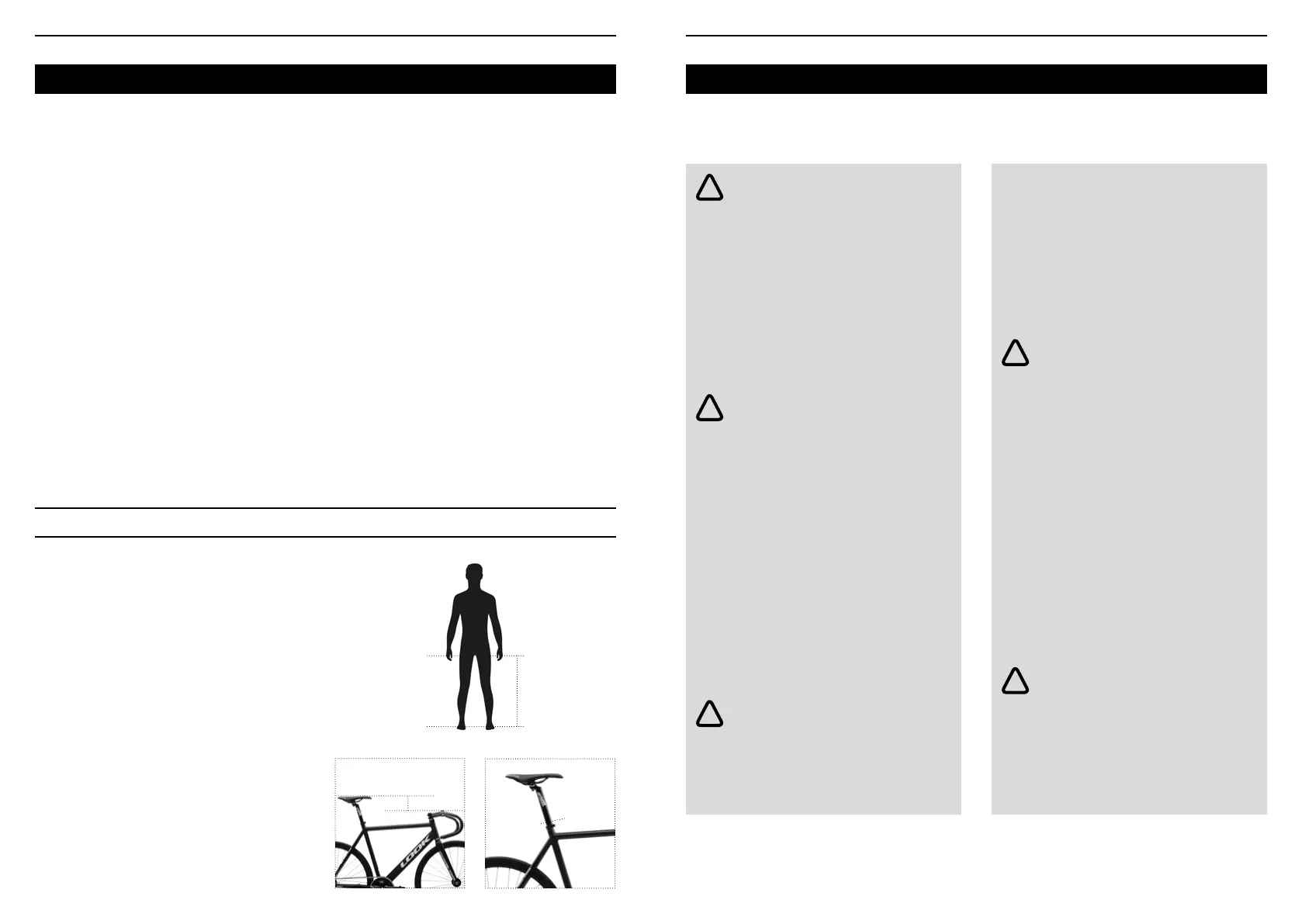
To determine which frame size you need, simply
multiply your inseam (A) by 0.66.
(Example: 78cm X 0.66 = 51.48, meaning a size 51
frame will t you).
To determine your saddle height, multiply your
inseam (A) by 0.88.
(Example: 78cm x 0.88 = 68.64cm from center of
bottom bracket to top of saddle).
Once you have determined the saddle height, the
top of your stem will generally sit between 2 and 9
cm lower than your saddle.
Please note that the seatpost should never be
pulled out beyond the reference mark.
- Condition C : paths, rough roads, obstacles, high speed jumps and bumps, technical sections. DH (Down
Hill) style riding PROHIBITED
• Maximum cyclist weight: 100 kg.
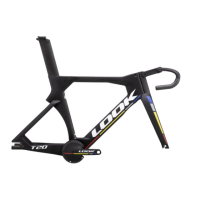
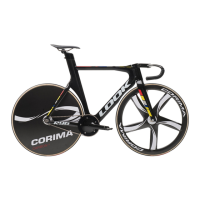
Condition D : conditions A, B and C are strictly PROHIBITED. Use only in a covered or open-air velodrome,
on a concrete or wooden track. Tires must not leave the ground. Jumping is forbidden. Fixed-gear bicycle
with no braking system. If you have never ridden a track bike, it is highly recommended that you follow
specic training under the supervision of specialized instructors.
• Maximum cyclist weight: 100 kg.
Use according to our bike models :
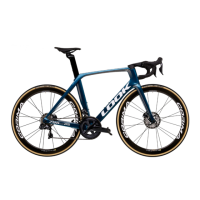
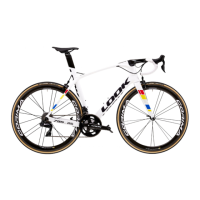
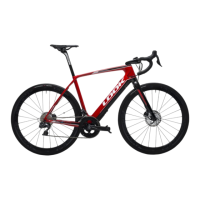
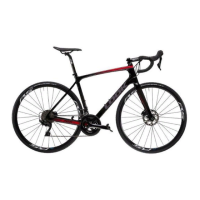
• AERO – ALTITUDE - ENDURANCE E-ROAD (electrically assisted bicycles)
- Condition A
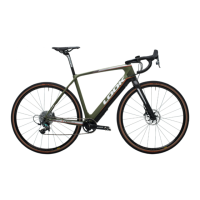
• GRAVEL – E-GRAVEL (electrically assisted bicycles)
- Conditions A and B
• MTB
- Conditions A and B plus C
• TRACK
- Condition D
h max
A
2 to 9 cm



 To Next Page