8.7 Permanent Shut-Down and Storage
Permanent Shut-
Down and Storing
See Section 8.6 Long Term Transportation.
Customers are advised to be knowledgeable of applicable local, state and
federal requirements, and the content of effluent streams, before disposing of
waste in public sewer systems or recycling decontaminated equipment.
Used reagents
Reagents mixed with potentially biohazardous material
Instrument and instrument components
Controls and calibration material
Manufacturer
Guidelines for
waste products
Place the instrument close to a waste container or drain suitable for disposal
of used reagents.
Check that the drainage is suitable for disposal of chemical and biological
waste.
Check that the waste tubing is securely fastened in the drain.
Always use protective gloves when working with the waste container, waste
tubing and when in contact with potentially biohazardous materials.
Instrument decontamination and disposal
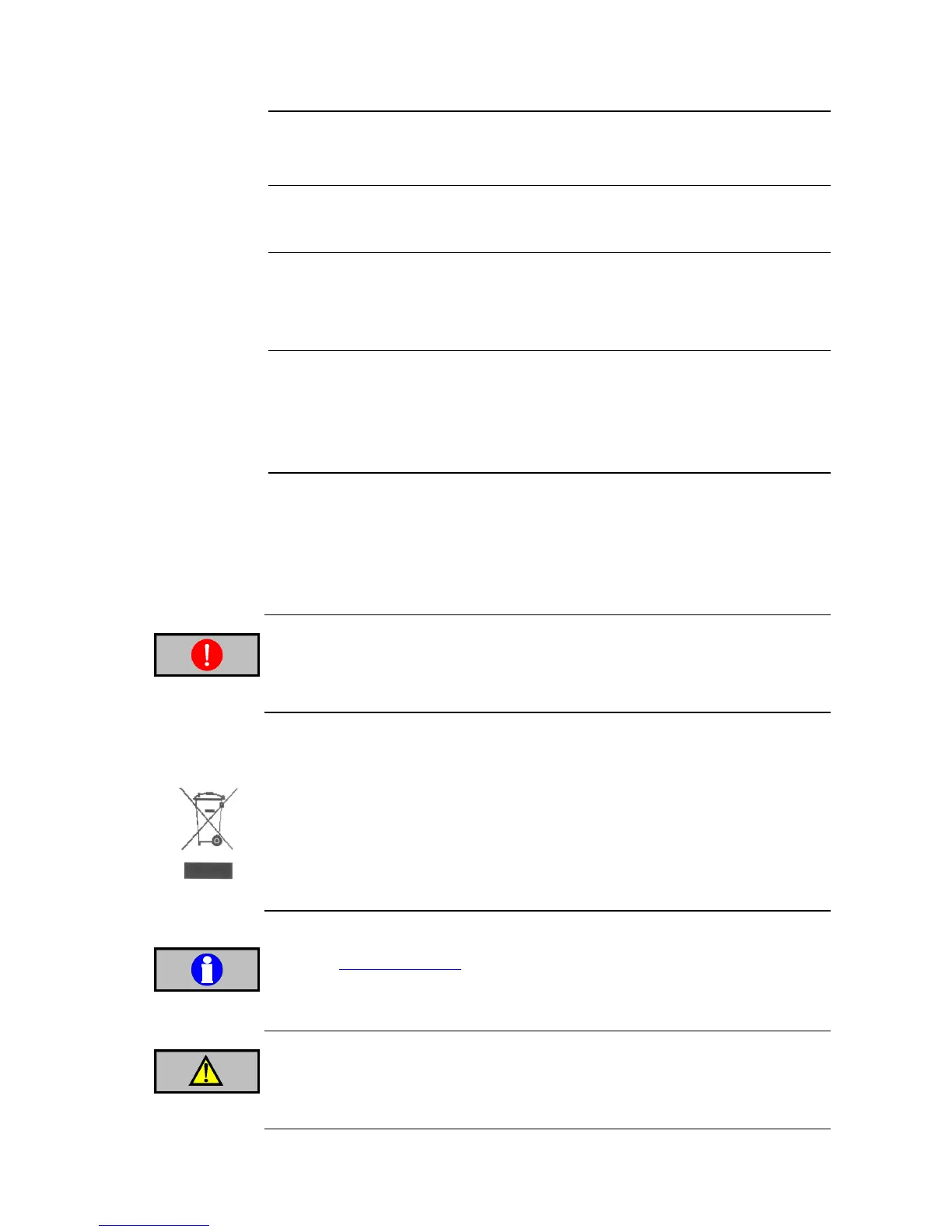
The European Directive 2002/96/EC on Waste Electric and Electronic
Equipment (WEEE) aims to minimize the impact on the environment by
prevention of waste. The Medonic M-Series hematology analyzer has been
labeled with the WEEE symbol (as given in the margin) and there is a
procedure to allow waste collection and recycling of the equipment at the end
of it’s life cycle.
The instructions for decontamination can be found on the Medonic home
page www.medonic.se under User Support.
If there are any question on how to follow this procedure, contact your
local distributor for more information.
The analyzer should be considered as infected and the end user must follow a
decontamination procedure before it is safe to hand over to a recycler.


 To Next Page