3 Performance specifications
9
3 Performance specifications
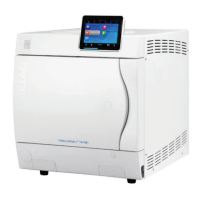
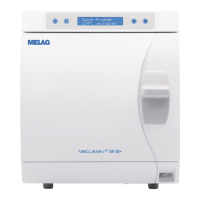
Intended use
This steam sterilizer is designed for application in a medical context, e.g. General Practitioners and dental
practices. According to DIN EN 13060, this steam sterilizer is a Class B sterilizer. As a universal steam
sterilizer, it is suited to highly-demanding sterilization tasks. It can be used to sterilize instruments with a
narrow lumen and transfer instruments - both wrapped or unwrapped - and large quantities of textiles.
WARNING
Any attempt to sterilize liquids can result in a delay in boiling. This can result in damage
of the steam sterilizer and burns.
n Never use this steam sterilizer to sterilize any fluids. It is not licensed for the sterilization of
fluids.
Sterilization procedure
The steam sterilizer sterilizes on the basis of the fractionated vacuum procedure. This guarantees the
complete and effective wetting/penetration of the sterilization material with saturated steam.
This procedure enables the sterilization of loads common to a doctor's practice.
The steam sterilizer uses the double-jacket technology to generate the sterilization steam, i.e. the steam
sterilizer is fitted with a separate steam generator combined with a double-walled sterilization chamber.
After heating, steam is held constantly available in the double-jacket. This gives the walls of the
sterilization chamber a defined temperature and protects the sterilization chamber from overheating. This
especially effective procedure supports the quick evacuation of the air from the sterilization chamber, the
sterilization packaging and instrument cavities. This permits the sterilization of large quantities of
instruments or textiles directly one after each other, thereby achieving excellent drying results.
Type of the feed water supply
The steam sterilizer works with a one-way feed water system. This means that it uses fresh feed water (i.e.
demineralized or distilled water) for every sterilization procedure. The quality of the feed water is subject to
permanent monitoring via integrated conductivity measurement. If combined with careful preparation of the
instruments, this serves largely to prevent stain accretion on the instruments and soiling of the steam
sterilizer.
Safety equipment
Internal process monitoring
An process evaluation system is integrated in the electronics of the steam sterilizer. It compares the
process parameters (such as temperature, time and pressure) during a program run. It monitors the
parameters in terms of their threshold values during control and regulation and guarantees safe and
successful sterilization. A monitoring system checks the device components of the steam sterilizer for their
functionality and their plausible interaction. If one or more parameters exceeds pre-determined threshold
values, the steam sterilizer issues warning or malfunction messages and if necessary, aborts the program.
In the case of a program abort, follow the instructions on the display.
The steam sterilizer uses an electronic parameter control. This enables the steam sterilizer to optimize the
total operating time of a program in dependence on the load.
Door mechanism
The steam sterilizer constantly checks pressure and temperature in the sterilization chamber and prevents
the door from being opened when over-pressure has built up in the chamber. The motor-driven automatic
door locking mechanism opens the door slowly by turning the locking spindle. This also holds the door



 To Next Page