Web Interface
The Leap Indicator (LI) is a two-bit binary number in the NTP packet header that provides
the following information:
n Advance warning that a leap second adjustment will be made to the UTC timescale at the
end of the current day. Leap seconds are events mandated by the world time authority
(BIPM) in order to synchronize the UTC time scale with the earth's rotation.
n Whether the NTP daemon is synchronized to a timing reference. The settings on the
NTP - Prefs (on page 50) page affect LI behavior.
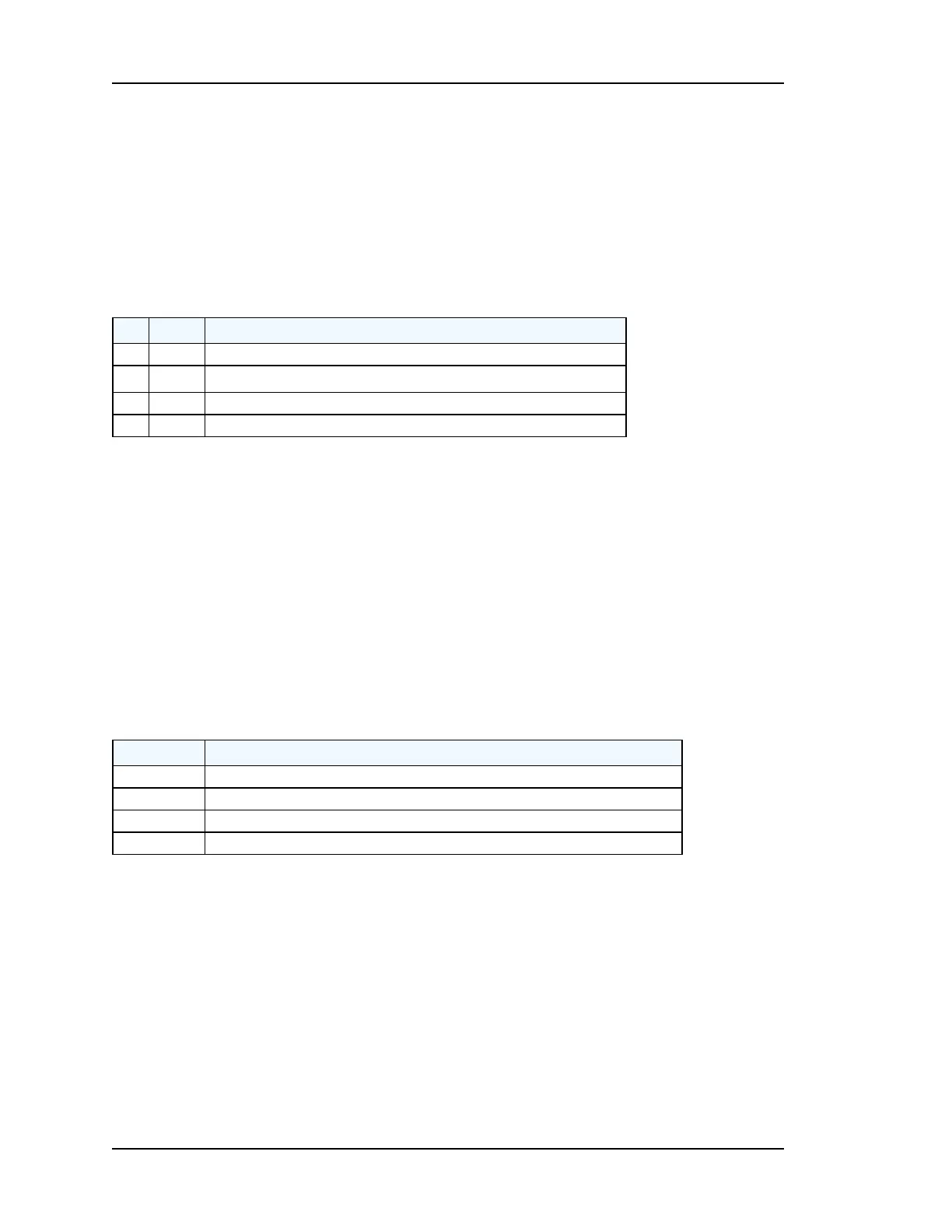
LI Value Meaning
00 0 No warning.
01 1 Leap second insertion: Last minute of the day has 61 seconds.
10 2 Leap second deletion: Last minute of the day has 59 seconds.
11 3 Alarm condition (Not synchronized)
When the SyncServer or NTP daemon is started or restarted, the leap indicator is set to "11",
the alarm condition. This alarm condition makes it possible for NTP clients to recognize that
an NTP server (the SyncServer) is present, but that it has yet to validate its time from its time
sources. Once the SyncServer finds a valid source of time and sets its clock, it sets the leap
indicator to an appropriate value. The NTP Leap Change Alarm on the ADMIN - Alarms
page can be configured to generate an alarm and send notifications each time the leap indic-
ator changes state.
stratum:
This is an eight-bit integer that indicates the position of an NTP node within an NTP timing
hierarchy. It is calculated by adding 1 to the stratum of the NTP system peer.
For the SyncServer, the stratum values are defined as follows:
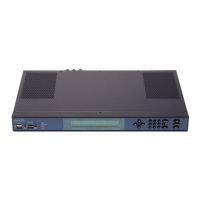
Stratum Definition
0 Hardware Clock when locked.
1 Primary server
2-15 Secondary server
16-255 Unsynchronized, unreachable.
For example, the SyncServer is:
n stratum 1 when the Hardware Clock (stratum 0) is synchronized to an input reference, in
holdover mode, or in freerun mode.
n stratum 2 through 15 when it is synchronized to a remote NTP server.
n stratum 16 when it is unsynchronized, indicating that it is searching for a valid source of
timing information.
The settings on the NTP - Prefs (on page 50) page affect stratum behavior.
precision: This is a signed integer indicating the precision of the selected peer clock, in
seconds to the nearest power of two. A typical value is -18 for a Hardware Clock where the
Page 40..........................................................................997-01520-02 Rev. F1


 To Next Page