Classic Manual Rev L
16 | P a g e 1 0 - 0 0 1 - 1 R E V L
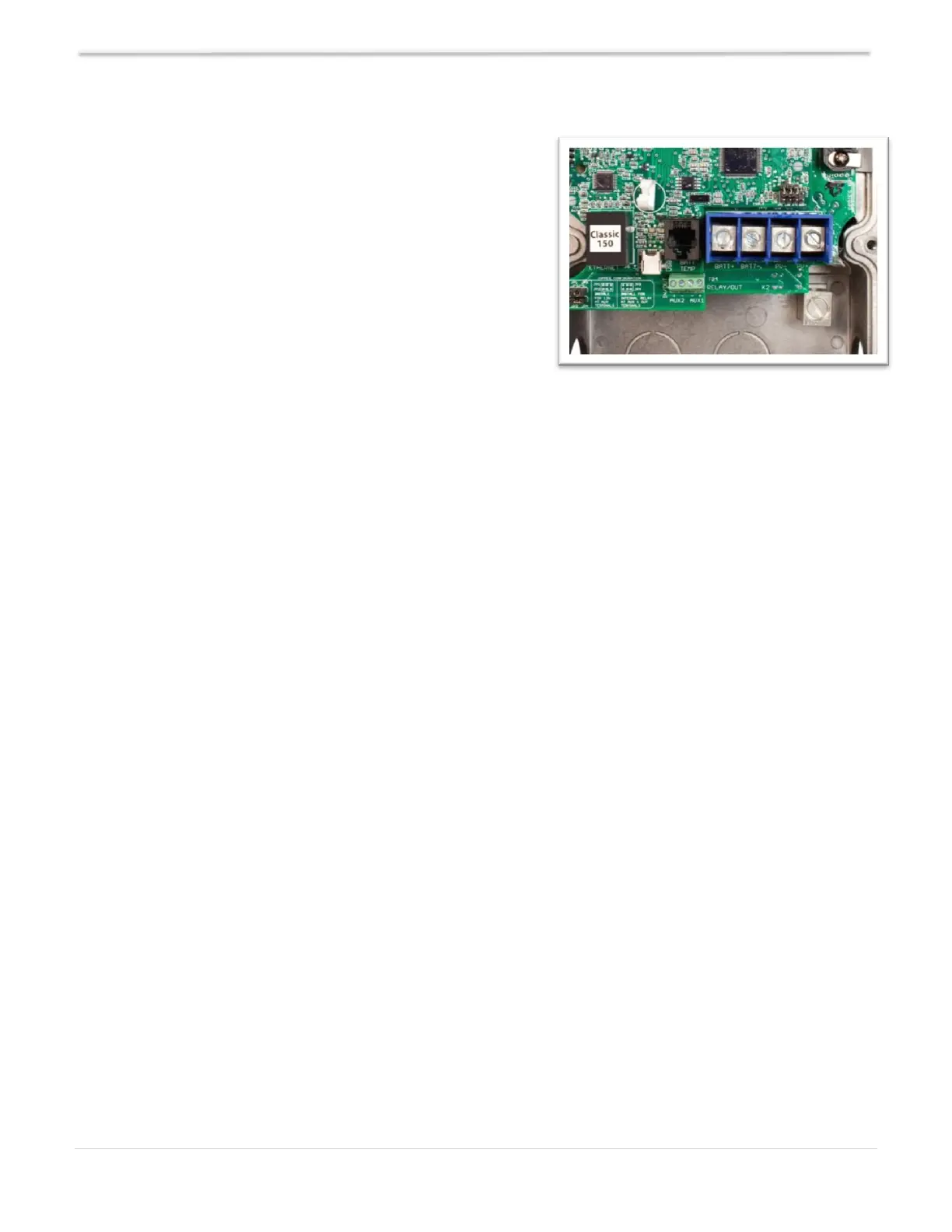
DC Terminal Connector
The Classic's DC terminal connector is located on the circuit
board as shown in Figure 9. The connector is rated for
copper conductors and will take up to a #4 AWG wire
(THHN). #4 AWG THHN when installed in the Classic and
MidNite E-Panel is rated for over 100A and is therefore
suitable for the highest power available from the Classic
150. After installing the wires for the last time, snap in the
blue cover that is included in the parts bag.
Current Rating
The Classic limits the output current based on the model:
Classic 150 – 96A maximum
Classic 200 – 79A maximum
Classic 250 – 61A maximum
Over-current Protection
The Classic must have over-current protection to protect wiring from over-current events. A means
of disconnect must be installed on the DC in and DC out of the Classic. Consult your local codes to
determine over-current ratings. The breaker between the battery bank and the Classic must
conform to UL489. The breaker between the DC source and the Classic must conform to UL1077or
UL489. The NEC requires 1.56 times short circuit current (Isc) for PV over-current protection. This
is reduced to 1.25 times when using a breaker rated for continuous duty. All MidNite Solar breakers
are rated for continuous duty (100% rating). No de-rating is required for the input or output
breakers when using MidNite Solar DC breakers.
Solar panels can produce more current than their name plate rating in extreme situations, so the
safe minimum wire size should be selected for the PV array maximum short circuit current. Please
consult your PV manufacturer for specifications. The US National Electrical Code requires 1.56
times the PV short circuit current for wire size on the PV input. Output wire size follows the NEC
guidelines. Typical wire size for output is #6 AWG for the Classic 250 and #4 AWG for the Classic
200 and 150; check all de-ratings for your wire type and installation method.
The over current devices, wiring, and installation methods used must conform to all electrical codes
applicable to the location of installation. Wiring needs to be protected with proper strain relief
clamps and or conduit. See Page 66 for a breaker and wire size chart.
The network cables, USB cable, BTS cable, and auxiliary input/output cables should run in a
different conduit to preserve their signal. When installing the Classic in a MidNite E-Panel, it is
acceptable to run all wiring through the same knockout hole. It is legal to run signal and power
wires together if all wiring is listed for the highest voltage to be encountered.
NOTE: Follow all local codes.
Figure 9 – Terminal Block


 To Next Page