EasyManua.ls Logo

Mitsubishi MR-JE-40A - User Manual

Mitsubishi MR-JE-40A
396 pages
Print Icon
To Next Page IconTo Next Page
Loading...
SH(NA)030150ENG-C(1708)MEE Printed in Japan Specifications are subject to change without notice.
This Instruction Manual uses recycled paper.
MODEL
MODEL
CODE
General-Purpose AC Servo
MR-JE-_A SERVO AMPLIFIER INSTRUCTION MANUAL(POSITIONING MODE)
HEAD OFFICE: TOKYO BLDG MARUNOUCHI TOKYO 100-8310
MODEL
General-Purpose Interface AC Servo
1CW707
MR-JE-_A
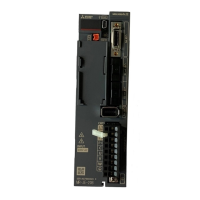
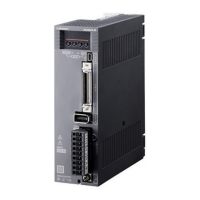
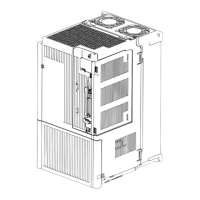
SERVO AMPLIFIER
INSTRUCTION MANUAL
(POSITIONING MODE)
MR-JE-A
INSTRUCTIONMANUAL(ITIGIME)
C
C

Table of Contents

Questions and Answers

  • R
    Rhonda SmithAug 9, 2025
    What to do if Mitsubishi MR-JE-40A Amplifier servo motor does not rotate?
    • L
      Lauren BoydAug 9, 2025
      If your Mitsubishi Amplifier's servo motor doesn't rotate, verify the on/off status of the input signal using the external I/O signal display, paying attention to LSP, LSN, and ST1. Also, examine [Pr. PA11 Forward rotation torque limit] and [Pr. PA12 Reverse rotation torque limit] if the torque limit level is too low for the load torque. If TLA (Analog torque limit) is usable, check the input voltage on the status display. Finally, check the on/off status of input signal DOG with the external I/O signal display if the proximity dog is set incorrectly.
  • D
    Dennis KingAug 15, 2025
    What to do if Mitsubishi MR-JE-40A Amplifier servo motor shaft is not servo-locked?
    • K
      Kyle RamirezAug 16, 2025
      If the servo motor shaft of your Mitsubishi Amplifier is not servo-locked, first check the display to see if the servo amplifier is ready to operate, as the SON (Servo-on) may not be input due to a wiring mistake. Next, check the external I/O signal indication to see if SON (Servo-on) is on, in case 24 V DC power is not supplied to DICOM.
  • V
    Valerie LambertAug 25, 2025
    How to fix large rotation ripples at low speed on Mitsubishi MR-JE-40A?
    • M
      Mary McknightAug 25, 2025
      If you observe large rotation ripples (speed fluctuations) at low speed in your Mitsubishi Amplifier, it might be due to a gain adjustment fault or a large load inertia moment causing the servo motor shaft to oscillate. To address this, make gain adjustments by increasing the auto tuning response level and repeating acceleration and deceleration several times to complete auto tuning. If the servo motor can be driven safely, repeat acceleration and deceleration three times or more to complete the auto tuning.
  • J
    Jeremy WaltersAug 31, 2025
    What to do if Mitsubishi Amplifier 7-segment LED display does not turn on?
    • J
      Jessica LewisAug 31, 2025
      If the 7-segment LED display on your Mitsubishi Amplifier does not turn on or blinks, it could be due to a power supply voltage fault or a malfunctioning servo amplifier. Also, the power supply of CN1, CN2 or CN3 cabling or encoder cabling could be shorted, or the encoder might be malfunctioning. Try disconnecting CN1, CN2 and CN3 connectors one by one to see if that solves the problem.

Summary

FUNCTIONS AND CONFIGURATION

SIGNALS AND WIRING

2.1 I;O signal connection example

Provides connection examples for I/O signals, detailing point table and program methods for wiring.

DISPLAY AND OPERATION SECTIONS

3.1.4 Alarm mode

Describes how to view current alarms, alarm history, and parameter errors on the display.

HOW TO USE THE POINT TABLE

4.1.3 Test operation

Details how to perform test operations on the servo motor and machine before actual use.

4.1.7 Troubleshooting at start-up

Provides guidance on identifying and resolving common startup faults and issues.

4.2.2 Automatic operation using point table

Details how to set and use point tables for absolute and incremental value commands.

4.3.1 JOG operation

Explains how to set and perform JOG operations for machine adjustment and positioning.

4.4 Home position return mode

Provides an overview of home position return methods and their selection criteria.

HOW TO USE THE PROGRAM

5.1.6 Troubleshooting at start-up

Lists common startup faults and their possible causes and solutions.

5.2.2 (1) Command list

Details the available commands for program language, including setting ranges and descriptions.

5.2.2 (2)(k) Home position return command (ZRT)

Explains the ZRT command for performing a manual home position return.

5.3.1 JOG operation

Explains how to set and perform JOG operations for machine adjustment and positioning.

5.3.2 Manual pulse generator operation

Explains the setup and operation of the manual pulse generator for manual control.

APPLICATION OF FUNCTIONS

6.2.2 Interrupt positioning function

Details the interrupt positioning function that changes remaining distance based on mark detection.

PARAMETERS

7.1 Parameter list

Provides a comprehensive list of all servo amplifier parameters with their initial values and control modes.

7.1.1 Basic setting parameters ([Pr. PA_ _ ])

Lists basic setting parameters for operation mode, regenerative options, and auto tuning.

7.1.2 Gain;filter setting parameters ([Pr. PB_ _ ])

Details parameters for adaptive tuning, vibration suppression, and resonance filters.

7.1.7 Positioning control parameters ([Pr. PT_ _ ])

Lists parameters essential for positioning control, including command modes and home position settings.

TROUBLESHOOTING

8.2 Alarm list

Provides a detailed list of alarm codes, their names, stop methods, and deactivation procedures.

8.3 Warning list

Lists various warnings, their detail numbers, names, and stop methods.

COMMUNICATION FUNCTION (MITSUBISHI ELECTRIC GENERAL-PURPOSE AC SERVO PROTOCOL)

Mitsubishi MR-JE-40A Specifications

General IconGeneral
TypeAC Servo Amplifier
ModelMR-JE-40A
SeriesMR-JE
Rated Output400 W
Position ControlYes
Speed ControlYes
Torque ControlYes
FeedbackIncremental encoder
Voltage Class200 V
CommunicationRS-422/RS-485
Protection FunctionsOvercurrent, overvoltage, overheating
Input VoltageSingle-phase or three-phase 200 V AC to 240 V AC, 50/60 Hz

Related product manuals