RISCHIDIRETTIALLEPERSONE
Inquestoparagrafoverrannoillustratiirischicheoperatore,manu
-
tentoreechisitrovanell’areadilavorodelsollevatore,possono
correreacausadiunusononcorrettodelsollevatorestesso.
RISCHIODISCHIACCIAMENTO
DELL’OPERATORE
dovutoadunaerrataposizione
dell’operatoreaddettoalquadro
comandi.
Durantelafasedidiscesadelle
pedaneedelveicolol’operatore
nondevemaiportarsisottole
partimobiliinfasedidiscesama
operaresoltantodallazonaco
-
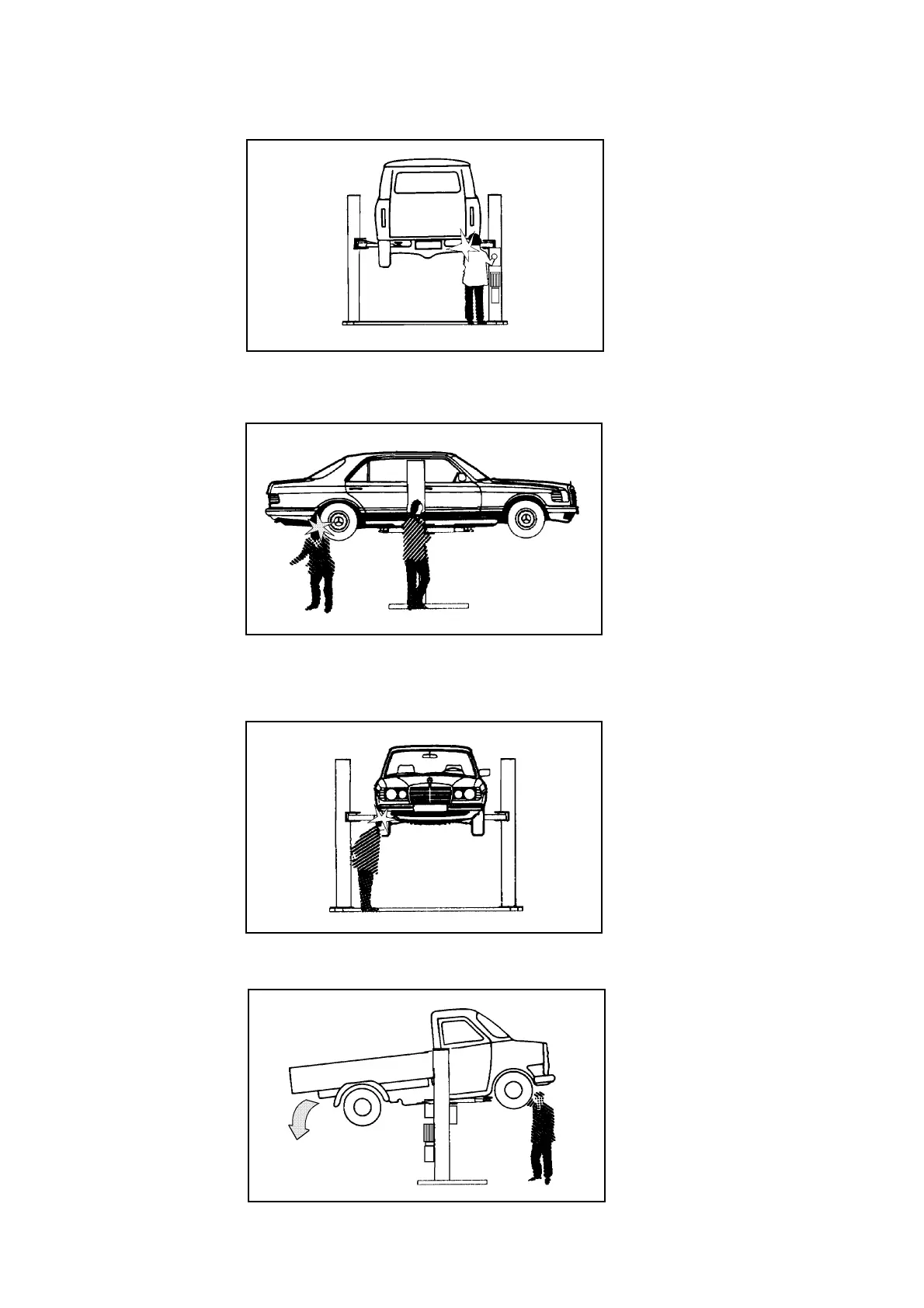
mando(fig.20).
Fig.20 Rischiodischiacciamentodell’operatore
RISCHIODISCHIACCIAMENTO
DELPERSONALEINGENERE
Durantelafasedidiscesadelsol
-
levatoreedelveicoloilpersonale
nondevesostareinzoneinteres
-
satedalletraiettoriedidiscesa
(fig.21).L’operatoredevemano
-
vraresolodopoessersiaccertato
chenessunapersonasiainposi
-
zionipericolose.
Fig.21 Rischiodischiacciamentodelpersonaleingenere
RISCHIODIURTO
Dovutoallepartidelsollevatoreo
delveicoloposizionateadaltezza
d’uomo.
Quando,perragionidilavoro,il
sollevatorevienefermatoaquote
relativamentebasse(inferioria
1,75mdalsuolo)vièilrischiodi
urtarecontrolepartinoneviden
-
ziatedaparticolaricolorazioni
(Fig.22).
Fig.22 Rischiodiurto
RISCHIODISPOSTAMENTO
DELVEICOLO
Dovutoadoperazionidacompiere
echegeneranospintesulveicolo
(fig.23).
Seilveicoloédidimensioniopesi
ragguardevoliunospostamento
puòrappresentareunasituazione
disovraccaricoosbilanciamento
nonprevistopertantoevitarein
manieraassolutatalimanovre.
Fig.23 Rischiodispostamentodel
veicolo
RISKSTOPERSONS
Thisparagraphillustratesriskstowhichtheoperator,maintenance
workeroranypersonneartheoperatingareaoftheliftmaybeex
-
posedinthecaseofimproperuseofequipment.
RISKOFCRUSHING(OPERATOR)
Possibleiftheoperatorcontrollingthelift
isnotinthespecifiedpositionatthe
commandpanel.Whentheplatforms
andvehiclearedescending,theoperator
mustneverbepartlyorcompletelyun
-
derneaththemovingstructure.During
thisphasetheoperatormustremainin
thecommandzone(fig.20).
Fig.20
Operatorcrushingrisk
RISKOFCRUSHING(PERSONNEL)
Whentheplatformsandvehiclearede
-
scendingpersonnelareprohibitedfrom
enteringtheareabeneaththemoving
partsofthelift(fig.21).Theliftoperator
mustnotstartthemanoeuvreuntilithas
beenclearlyestablishedthatthereareno
personsinpotentiallydangerousposi
-
tions.
Fig.21
Genericpeoplecrushingrisk
RISKOFIMPACT
Causedbypartsoftheliftorthevehicle
thatarepositionedatheadheight.
When,duetooperationalreasons,thelift
isimmobilisedatrelativelylowelevations
(lessthan1.75mfromtheground)per
-
sonnelmustbecarefultoavoidimpact
withpartsofthemachinenotmarked
withspecialhazardcolouring(Fig.22).
Fig.22Impactrisk
RISKSDUETOVEHICLEMOVEMENT
Movementmaybecausedduringopera
-
tionswhichinvolveforcesufficientto
movethevehicle(Fig.23).
Ifthevehicleisofconsiderabledimen
-
sionsorweight,movementmayleadto
overloadingorunbalancing;allmeasu
-
resmustbetakentoavoidsuchanoc
-
currence.
Fig.23
Vehiclemovementrisk
16



 To Next Page