Crocus CNV Installing and connecting the Crocus CNV
User manual 27
2.8.2 Power LED
This LED indicates that the Crocus CNV is connected to the power supply and is switched on.
2.8.3 Test LED
This LED indicates whether the Crocus CNV is in normal operation or in test condition (ET, AL, RDL, DL
or a combination of them). Four different test LED status modes can be distinguished:
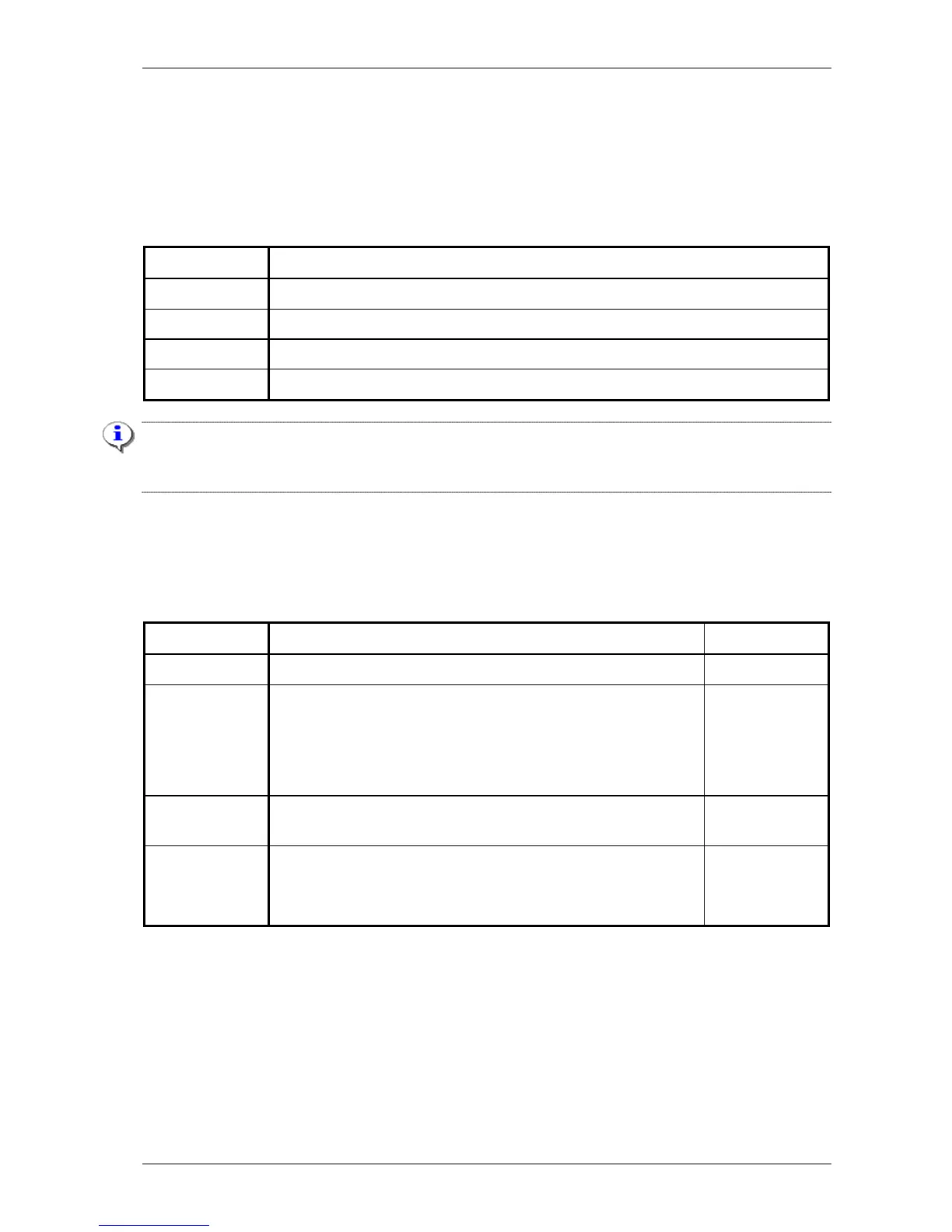
LED status Description
off No test is active.
continuously on A front panel or interface test is active.
blinking A test initiated by the management system is active.
flashing A front panel or interface test has been terminated by the management system.
Termination of an active test by the management system is necessary to prevent hang-up situations
caused by accidental activation of a test. Once the test indicator starts flashing, all active test conditions
should be removed first, before initiating a new test session.
2.8.4 Alarm Indication Signal / error LED
This LED indicates an error has occurred. The errors have different priority levels. I.e. when two errors of
different origin occur at the same time, one error will get priority over the other error. The different AIS /
error LED status modes and error priorities are displayed in the following table:
LED status Description Error priority
off No error has occurred. -
continuously on An Alarm Indication Signal (AIS) has been detected on the
incoming G.704 transmit data of the onboard G703 interface.
This means that the application has detected an error, and it
communicates this to the interface by setting all data bits to 1
(which is the AIS condition).
high
monitoring The Crocus CNV its internal error test pattern generator /
detector (ET) is active and received bit errors.
medium
flashing Alarm signalling is active and a local alarm has been detected.
For more information on alarm signalling, refer to Section 6.2 -
General configuration attributes.
low
l


 To Next Page