EasyManua.ls Logo

Panasonic AW-HS50E - User Manual

Panasonic AW-HS50E
398 pages
Print Icon
To Next Page IconTo Next Page
Loading...
РУССКИЙ
FRANÇAIS DEUTSCH ENGLISHITALIANOESPAÑOL
Operating Instructions
<Operations and Settings>
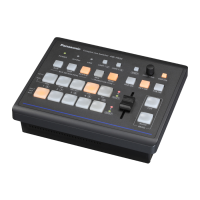
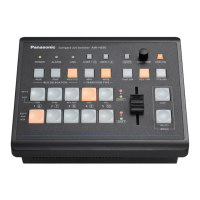
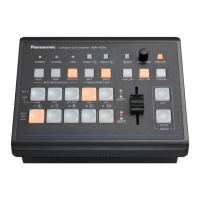
Compact Live Switcher
Model No. AW-HS50E
3TR006600BAA

Table of Contents

Question and Answer IconNeed help?

Do you have a question about the Panasonic AW-HS50E and is the answer not in the manual?

Summary

Before Use

Disclaimer of Warranty

Details Panasonic's liability limitations regarding product damage, misuse, and data loss.

Network Security Precautions

Highlights security risks associated with network connections and advises on protective measures.

1. Basic Operations

1-1. Background Transitions

Explains how to select buses and execute background transitions using mix, wipe, and cut methods.

1-3. Key Effects

Covers key combinations, priority settings, material selection, and adjustments for key effects.

2. Input;Output Signal Settings

2-1. Input Signal Settings

Covers configuring input modes, naming, freeze methods, and video process functions for various inputs.

2-1-1. Setting Input Mode

Explains how to set input modes like Normal, DbyD, UC, and Auto for SDI and DVI inputs.

2-2. Setting Output Signals

Covers assigning PGM, PVW, AUX, etc. to SDI OUT and DVI-D OUT connectors.

2-2-1. Assigning Output Signals

Lists available assignments for SDI OUT1, SDI OUT2, and DVI-OUT.

3. Setting the Multi View Display

3-1. Screen Layout

Describes how to set the multi view display layout using various split screen patterns.

4. System Settings

4-1. System Menu Settings

Covers system-wide settings like video format, high-resolution multi view, and aspect ratio.

4-1-1. Setting Video Format

Explains how to specify the unit's video format and start the system using button combinations.

4-1-4. Network Settings

Covers configuring IP address, subnet mask, and gateway for network connectivity.

4-2. Operation Menu Settings

Covers settings related to the OSD, including size, background, and other operational parameters.

5. External Device Control Interfaces

5-1. LAN Connection

Explains how to connect the unit to other devices and networks using LAN cables.

6. Connections with a Computer

6-1. Data Transmission Functions

Outlines data types (images, settings) that can be downloaded or uploaded via LAN.

6-5-1. Transferring Image Data from Computer to Unit

Step-by-step guide for uploading image files from a computer to the unit.

6-5-2. Transferring Unit Image Data to Computer

Step-by-step guide for downloading image files from the unit to a computer.

7. Function for Linking with Remote Camera Controller

7-1. Connecting Unit to AW-RP50

Explains how to connect the unit to the AW-RP50 and enable the link function.

7-2. Linkable Functions

Details various functions that can be linked and controlled between the unit and AW-RP50.

Summary

Before Use

Disclaimer of Warranty

Details Panasonic's liability limitations regarding product damage, misuse, and data loss.

Network Security Precautions

Highlights security risks associated with network connections and advises on protective measures.

1. Basic Operations

1-1. Background Transitions

Explains how to select buses and execute background transitions using mix, wipe, and cut methods.

1-3. Key Effects

Covers key combinations, priority settings, material selection, and adjustments for key effects.

2. Input;Output Signal Settings

2-1. Input Signal Settings

Covers configuring input modes, naming, freeze methods, and video process functions for various inputs.

2-1-1. Setting Input Mode

Explains how to set input modes like Normal, DbyD, UC, and Auto for SDI and DVI inputs.

2-2. Setting Output Signals

Covers assigning PGM, PVW, AUX, etc. to SDI OUT and DVI-D OUT connectors.

2-2-1. Assigning Output Signals

Lists available assignments for SDI OUT1, SDI OUT2, and DVI-OUT.

3. Setting the Multi View Display

3-1. Screen Layout

Describes how to set the multi view display layout using various split screen patterns.

4. System Settings

4-1. System Menu Settings

Covers system-wide settings like video format, high-resolution multi view, and aspect ratio.

4-1-1. Setting Video Format

Explains how to specify the unit's video format and start the system using button combinations.

4-1-4. Network Settings

Covers configuring IP address, subnet mask, and gateway for network connectivity.

4-2. Operation Menu Settings

Covers settings related to the OSD, including size, background, and other operational parameters.

5. External Device Control Interfaces

5-1. LAN Connection

Explains how to connect the unit to other devices and networks using LAN cables.

6. Connections with a Computer

6-1. Data Transmission Functions

Outlines data types (images, settings) that can be downloaded or uploaded via LAN.

6-5-1. Transferring Image Data from Computer to Unit

Step-by-step guide for uploading image files from a computer to the unit.

6-5-2. Transferring Unit Image Data to Computer

Step-by-step guide for downloading image files from the unit to a computer.

7. Function for Linking with Remote Camera Controller

7-1. Connecting Unit to AW-RP50

Explains how to connect the unit to the AW-RP50 and enable the link function.

7-2. Linkable Functions

Details various functions that can be linked and controlled between the unit and AW-RP50.

Panasonic AW-HS50E Specifications

General IconGeneral
Tally OutputYes
Control InterfacesRS-422, Ethernet
Format Support1080p, 1080i, 720p
EffectsWipe, Mix
Video Inputs4 x HD/SD-SDI, 1 x HDMI

Related product manuals