PreciseFlex_Robot
18
Controller Requirements
Early industrial robots were often large, powerful machines with payloads that could exceed 100kg. As a
result, the industrial robot safety standards such as ISO 10218-1 often specified a Category 3 control
system for these machines, see ISO 10218-1:2011 5.4.2 and 10218-2:2011 5.2.2. However, these
standards now recognize that not all robots are large, dangerous machines and include clauses that allow
less expensive controllers to be used if a risk assessment justifies this. 10218-1:2011 5.4.3 states “The
results of a comprehensive risk assessment performed on the robot and its intended application may
determine that a safety-related control system performance other than that in 5.4.2 is warranted for the
application”. 10218-2:2011 5.2.3 makes a similar statement. Note that in performing a risk assessment
under ISO 13849, the first determination, S1 or S2, is made based on whether an operator may sustain a
serious or non-recoverable injury. For large, heavy payload robots, S2 is typically selected and this
immediately directs the evaluation result to a PLr of c, d, or e, which indicate a Cat 3 controller. For low
payload robots, S1 is typically selected which directs the evaluation to a PLr of a, b, or c. In Appendix A
of this section an example risk assessment is provided for a PF400 robot with a 500 gram payload and
the PL is determined to be “a”. This does not require a Cat 3 controller or robot system.
Possible Precise Controller Faults and Controller Testing
Notwithstanding the above, Precise controllers are designed so that no single failure can disable the
safety features in the controller and cause an uncontrolled motion. However, the 500gm payload PF400
robots are not Category 3 robots as they cannot cause serious injury and the expense and complexity of
100% redundant safety systems is not warranted. For the 3kg payload version of the PF400 an additional
circuit board has been added in the base of the robot. This circuit board provides redundant, PLd CAT 3
Estop and other safety circuits.
Safety circuits, Failure Modes, and TUV Testing for the PF400 robots. (Appendix D)
1. Force Limits by Design or Control. The PF400 is a low power robot by inherent design and
control. For axes 2, 3, 4, and the gripper, the maximum forces that can be applied by the motors,
multiplied by the transmission are well under 140N. In the case of the Z axis, the maximum force
required to support the Z axis gravity load of up to 80N plus a reasonable additional force for
acceleration against gravity of 60N, results in a total force of 140N, and is restricted by current
limits in firmware. A further reduction in force is set by collaborative force limits in software, so
that the clamping/squeezing force (quasi-static) does not exceed 60N.
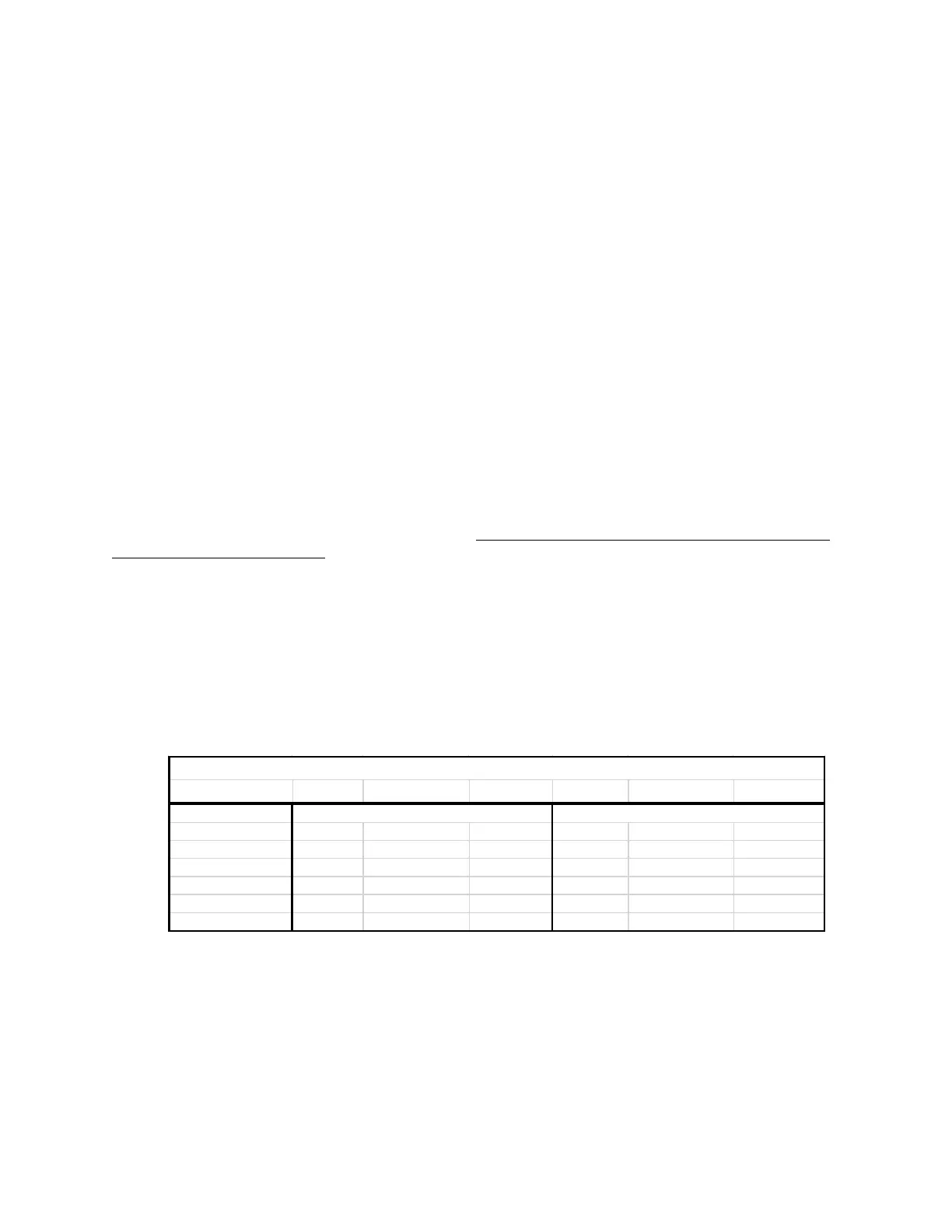
Unlimited CurrentLimited Collablimit Unlimited CurrentLimited Collablimit
Zaxis 314 140 60 314 140 60
J2atelbow 33 33 33 64 64 18
J3atwri st 18 18 18 25 25 9
J4atgripper 11 11 11 17 17 9
Gri ppersqueeze 23 23 23 23 23 23
PF4003kgPF400500gm
PF400MaximumForces,Newton
2. Estop circuit for 500gm payload PF400. For the 500gm payload PF400 plate handler, there is
a single Estop circuit. However, the forces applied by this machine are so low (less than 60N at
low speeds – see TUV test certification) that most users simply use their hand to stop the plate
handler and do not employ an Estop button or pendant. If the Estop circuit is interrupted the
robot will decelerate and stop in a Category 1 Estop (decelerate using motor power then turn off
motor power). The Estop circuit for the 500gm plate handler is not CAT 3 in that there are not
two redundant external Estop circuits. However, a redundant Estop method is available for this
low power robot: users can very easily stop it with their hand by grabbing the gripper or links. For
TUV testing the forces required to stop the robot and trigger an Estop are measured with a NIST


 To Next Page