7-6 SELOGIC Control Equations Date Code 20010518
SEL-2020 Instruction Manual
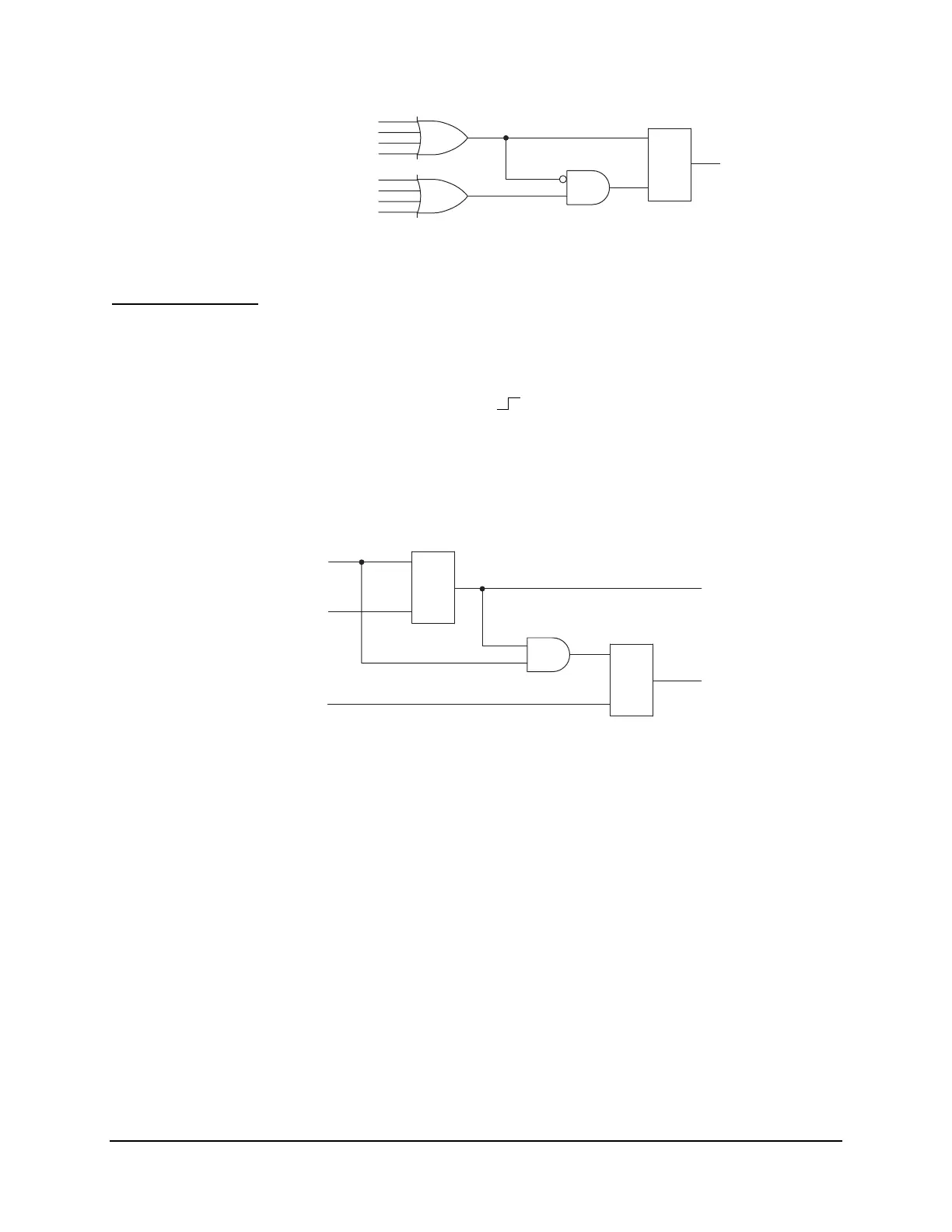
BR1
CBR1
SBR1
S
R
Q
SBR1 Equation Result
Fast Operate Command
Modbus Force Single Coil
DNP Binary Output Operate
CBR1 Equation Result
Fast Operate Command
Modbus Force Single Coil
DNP Binary Output Operate
Figure 7.2: Example of Latch Operation
Message Triggers
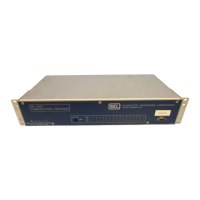
On all used ports, you can set the Port to send a message based on a trigger condition. These
trigger conditions, which are defined using SEL
OGIC Control Equations, are processed every
15.6 milliseconds.
Whenever the SEL-2020 detects a rising edge (
) of a trigger condition (ISSUEx setting), it
sets the corresponding Dx or ARCHx element. Once the message has been issued and any corre-
sponding data collection is completed, the Dx or ARCHx is cleared. If a rising edge of a trigger
condition is detected but the corresponding Dx or ARCHx element is already set, then the corre-
sponding DLYx or DLYAx bit will be set to indicate that an auto-message operation has been
missed. You can clear DLYx and DLYAx bits by executing a STATUS command. Figure 7.3
illustrates this logic.
ISSUE x
Rising-Edge
Operation
Completion
STATUS
Command
AND
SET
RESET
Q
SET
DLYx or
DLYAx
Dx or
ARCHx
RESET
Q
Figure 7.3: Message Triggering Logic
A typical trigger sequence starts with a trigger condition being satisfied. For example, consider
the SEL
OGIC Control Equation ISSUE1 = P00:00:10.0. This trigger condition will have a rising
edge every 10 seconds. Figure 7.4 illustrates the relative timing of this issue condition and its
corresponding message element (D1).


 To Next Page