Date Code 20010518 Database 9-3
SEL-2020 Instruction Manual
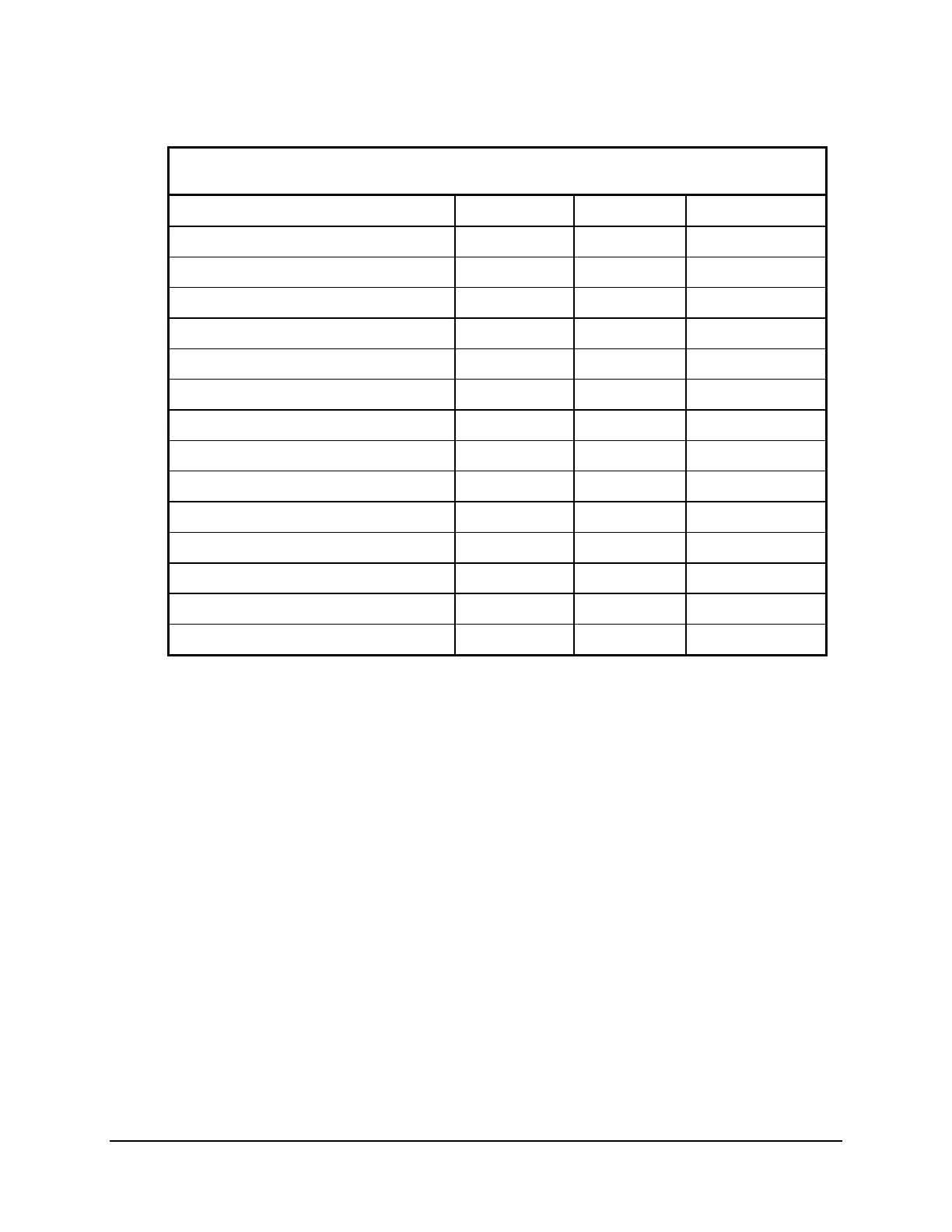
Table 9.1: Database Regions for a Single Port
Address
Region From To Register Size
Global Data 0000h 07FFh 2 k
Local Data 0800h 0FFFh 2 k
BUF (Unsolicited Message Queue) 1000h 1FFFh 4 k
Data Region 1 2000h 27FFh 2 k
Data Region 2 2800h 2FFFh 2 k
Data Region 3 3000h 47FFh 6 k
Data Region 4 4800h 4FFFh 2 k
Data Region 5 5000h 57FFh 2 k
Data Region 6 5800h 5FFFh 2 k
Data Region 7 6000h 67FFh 2 k
Data Region 8 6800h 6FFFh 2 k
Archive Data Region 1 7000h 77FFh 2 k
Archive Data Region 2 7800h 7FFFh 2 k
Archive Data Region 3 8000h F7FFh 30 k
User-Defined Data Region F800h FFFFh 2 k
Archive regions are only available if the SEL-2020 is equipped with optional nonvolatile Flash
memory. The nonvolatile nature of these data regions, combined with the unique capability to
contain multiple records, make them ideally suited to long-term data collection and storage. You
can use the VIEW command to view the data associated with any record in the Archive region
queue; all other commands read only the oldest record. See the memory calculation procedure in
Appendix E: Planning Sheets for more information.
The SEL-2020 assigns Data and Archive regions alternate labels or names based on the data
stored in them. For instance, if you use the 20METER message to collect and store SEL relay
meter data in Data region D1, that region is assigned the alternate label “METER”. Use the
MAP command to view a list of regions on a port and any alternate labels associated with some
of the regions.
You can also use the MAP command to show the detailed structure of any region.
DATA STORAGE FORMATS
Data are contained within the SEL-2020 database in various formats. Character items and strings
are stored with each character requiring one register but only using the lower byte of the register;
the high byte is always zero. Any unused characters in a string are set to a value of zero. Integer
items require a complete register. Real numbers are stored in IEEE single-precision floating-
point format in two registers with the most-significant word stored in the lower-addressed


 To Next Page