6-4 Settings Date Code 20010518
SEL-2020 Instruction Manual
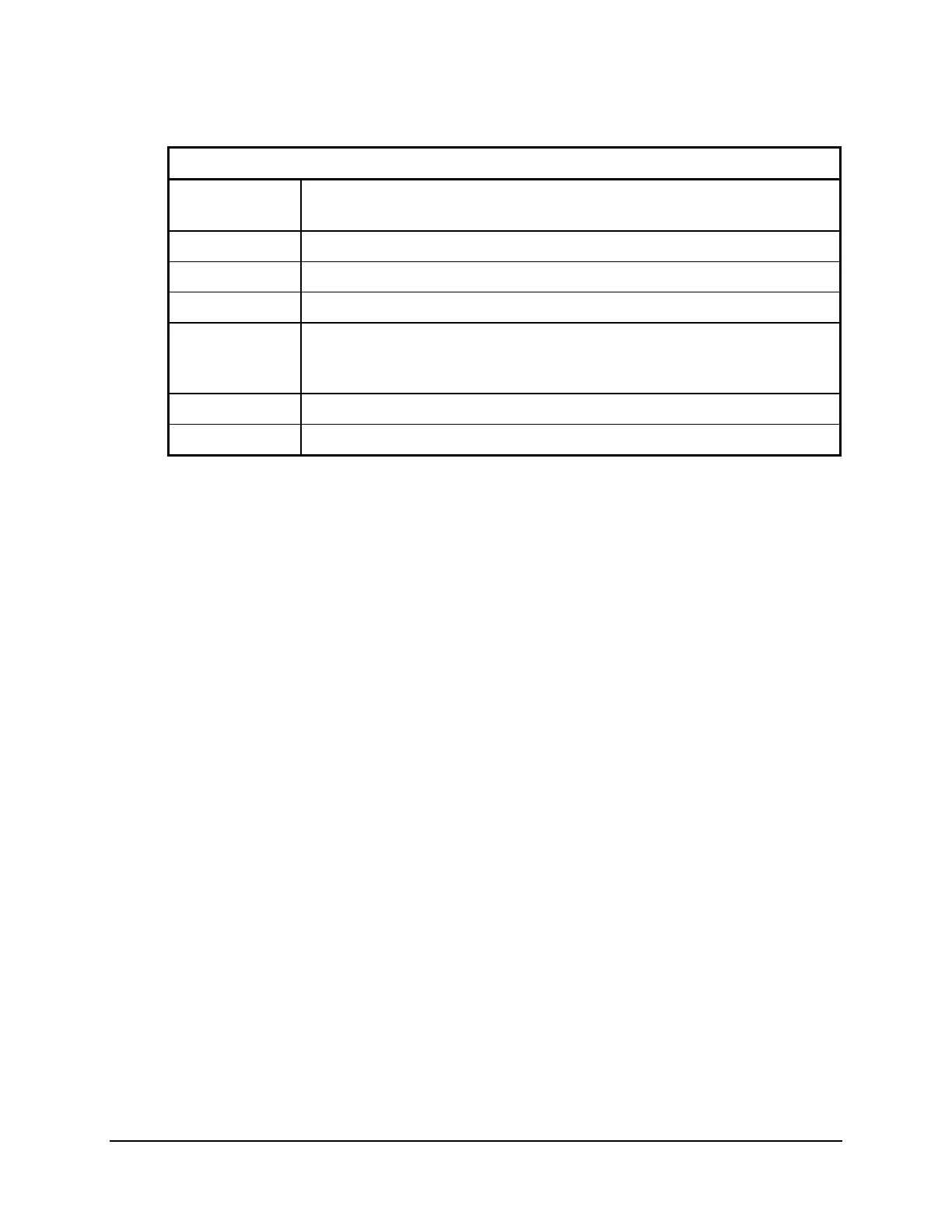
Table 6.2: Editing Keys for SET Commands
Press Key(s) Results
^ <ENTER>
Moves to previous entry in a setting category until you get to the first entry
in the category and then it moves to previous category.
< <ENTER> Moves to previous settings category.
> <ENTER> Moves to next settings category.
<ENTER> Accepts setting, then moves to next entry.
END<ENTER> Exits editing session and displays all settings. Prompts: "Accept settings
(Y/N)?". Type Y<ENTER> to save changes and exit, N<ENTER> to exit
without saving. Lower case letters (end, y, n) are also accepted.
<CTRL-X> Aborts editing session without saving changes.
OFF<ENTER> Flags a setting as not applicable. Lower case letters (off) are also accepted.
The SEL-2020 checks each entry to ensure that it is a valid choice. If it is not, an "Out of Range"
message is generated, and the SEL-2020 prompts for the setting.
After you enter all data, the SEL-2020 displays the new settings and asks to enable them.
Answer Y<ENTER> to approve the new settings. If you violate a rule for setting relationships,
an error message is displayed, and the settings prompt moves to the first setting that affects the
failure. If settings are acceptable, the SEL-2020 saves them. While the active settings are
updated, the SEL-2020 port being modified is disabled. On a settings change, the SEL-2020
pulses the SALARM bit to 1 for one second. On SEL-2020 Communications Processors without
an optional I/O board, the alarm contact will also close for one second.
When the settings change on a port, that port is reset. If you change the settings on the current
port, the settings become effective after being accepted. If you change the baud rate, you will
have to change the baud rate on your terminal to match in order to resume communicating with
the SEL-2020. You may not change the settings on a port that is currently communicating
transparently with another port. Also, only one setting session is permitted at one time; you will
receive a message that the SET command is not available if someone else is using one of the SET
commands at the time you send a SET command.
Use the COPY or SWAP commands to copy and move settings between ports. Always use the
SHOWSET command on ports you copied or swapped settings on to verify that all port
references and messages are correct.
SET P - PORT CONFIGURATION AND COMMUNICATION SETTINGS
Use the SET P command to:
• Configure each port you connect to a new device.
• Reconfigure a port you connect to a different device.
• Reconfigure a port connected to a device that has upgraded firmware.


 To Next Page