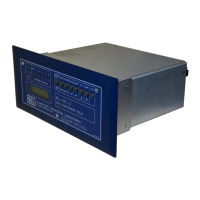
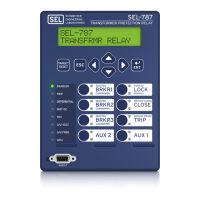
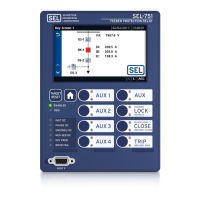
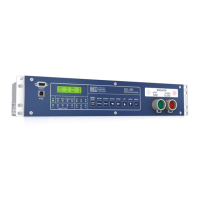
1-2 Introduction Date Code 970103
SEL-251, -2, -3 Instruction Manual
• Capability: Brings transmission relay features to distribution applications
• Economy: Low price and unique features make the relay an exceptional value
Plug-In Connector Model
• All features included in the standard terminal block model
• High current interrupting output contacts
• Quick connect/release hardware for rear-panel terminals
• Time code input access on all rear communications ports
GENERAL DESCRIPTION: CONVENTIONAL TERMINAL BLOCK MODEL
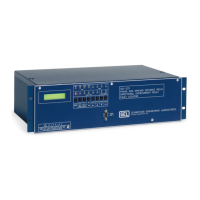
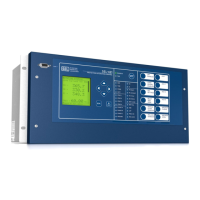
The SEL-251 Relay protects, controls, and monitors distribution feeders. It offers important new
and unique features, like user-programmable SELOGIC Control Equations, negative-sequence
overcurrent elements, and selectable setting groups. The advanced relay design enhances
security, reliability, sensitivity, and operation.
SELOGIC Control Equations: The Next Step in Programmable Relay Logic
In 1987, SEL invented Programmable Mask Logic. The SEL-251 Relay offers SELOGIC Control
Equations, the next step in user-programmability. SELOGIC Control Equations include ANDing,
ORing, and inverting functions, timing, and programmable inputs and outputs. SELOGIC Control
Equations add power and flexibility while simplifying programming.
Phase, Ground, and Negative-Sequence Overcurrent Protection
Phase and negative-sequence overcurrent elements detect phase faults. Negative-sequence
overcurrent elements reject three-phase load to provide more sensitive coverage of
phase-to-phase faults. Phase overcurrent elements are needed only for three-phase faults where
negative-sequence quantities are not produced.
On heavily-loaded feeders, undervoltage torque control of phase overcurrent elements adds
security. Choose between three-phase and single-phase-pair undervoltage torque control. When
phase overcurrent elements are used only for three-phase faults, the three-phase undervoltage
option enhances security.
Ground/Residual overcurrent elements detect ground faults, and external inputs can torque
control selected overcurrent elements.
There are two reset characteristic choices for the time-overcurrent elements. One choice resets
the elements if current drops below pickup for at least one cycle. The other choice emulates
electromechanical induction disc elements where the reset time depends on the time dial setting,
the percentage of disc travel, and the amount of current between zero and pickup.


 To Next Page