Date Code 970103 Introduction 1-1
SEL-251, -2, -3 Instruction Manual
SECTION 1: INTRODUCTION
GETTING STARTED
If you are not familiar with this relay, we suggest that you read this introduction, then perform
the Initial Checkout Procedure in Section 7: Maintenance & Testing.
OVERVIEW
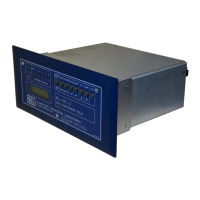
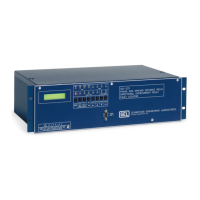
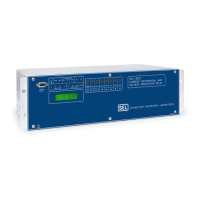
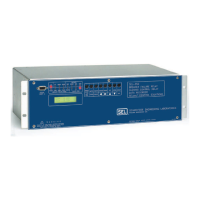
Conventional Terminal Block Model
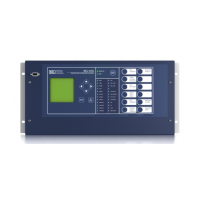
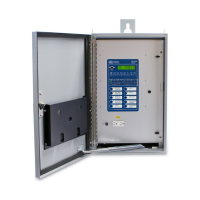
The SEL-251 Relay is designed to protect distribution lines for all fault types. The following list
outlines protective features, performance, and versatility gained when applying the SEL-251
Relay to your installations.
• Develop traditional and advanced schemes using flexible SELOGIC
TM
Control Equations
• Phase-overcurrent elements have voltage control for load security
• Negative-sequence elements reject load for more sensitive phase fault protection
• Ground and residual overcurrent elements cover ground faults
• Choose fast or electromechanical reset characteristic for time-overcurrent elements
• Overcurrent elements inhibit recloser reset to prevent nuisance "trip-reclose" cycling
• Sequence coordination avoids unnecessary tripping for faults beyond line reclosers
• Undervoltage logic detects high-side transformer fuse operations
• Six selectable setting groups cover all feeder protection contingencies
• Circuit breaker monitor sums interrupted current in each pole to aid maintenance
• Fault locator reduces line patrol and outage time for increased service reliability
• Eleven-cycle event report simplifies fault and system analysis
• Comprehensive voltage, current, power, unbalance, and demand metering
• Connects to SEL-RD Relay Display for easy information access
• Improved Fast Meter
• Improved Fast Operate
The SEL-251 Relay improves every aspect of feeder protection.
• Security: Undervoltage supervision and negative-sequence avoid load encroachment
• Reliability: Field-proven hardware; new backup concepts
• Sensitivity: Negative-sequence overcurrent elements for better phase fault coverage
• Flexibility: SELOGIC Control Equations handle virtually every conceivable scheme


 To Next Page