OM-610-1002-1 Operator’s Manual Rev 37
PDS-2010 SECTION 5 OPERATION page 33
5.14 OPERATING CONSIDERATIONS
The purpose of the 2010 Parylene Deposition System is to provide the user with a means to apply a clear,
uniform, and smooth Parylene coating to the required thickness on a substrate. The machine operator must
understand the coating variables that affect this and choose the controlling parameters that will achieve the
desired results. It is essential to be familiar with the variables that affect the deposition process. This section
discusses the coating variables that can affect deposition.
5.14.1 Deposition Rate
How fast Parylene deposits onto a substrate is of primary concern. The proper deposition rate will give an
acceptable coating in the shortest possible time. Generally, the slower the deposition, the more uniform and
clear the Parylene will be. From the standpoint of coating quality, you cannot coat too slowly, but coating too
quickly can cause cloudy or whitish Parylene and uneven coating thickness. For Parylene C, the deposition
rate will typically be about .0002" per hour; for Parylene N, .00003" per hour. The deposition rate is indirectly
controlled by regulating the pressure in the deposition chamber during the deposition process.
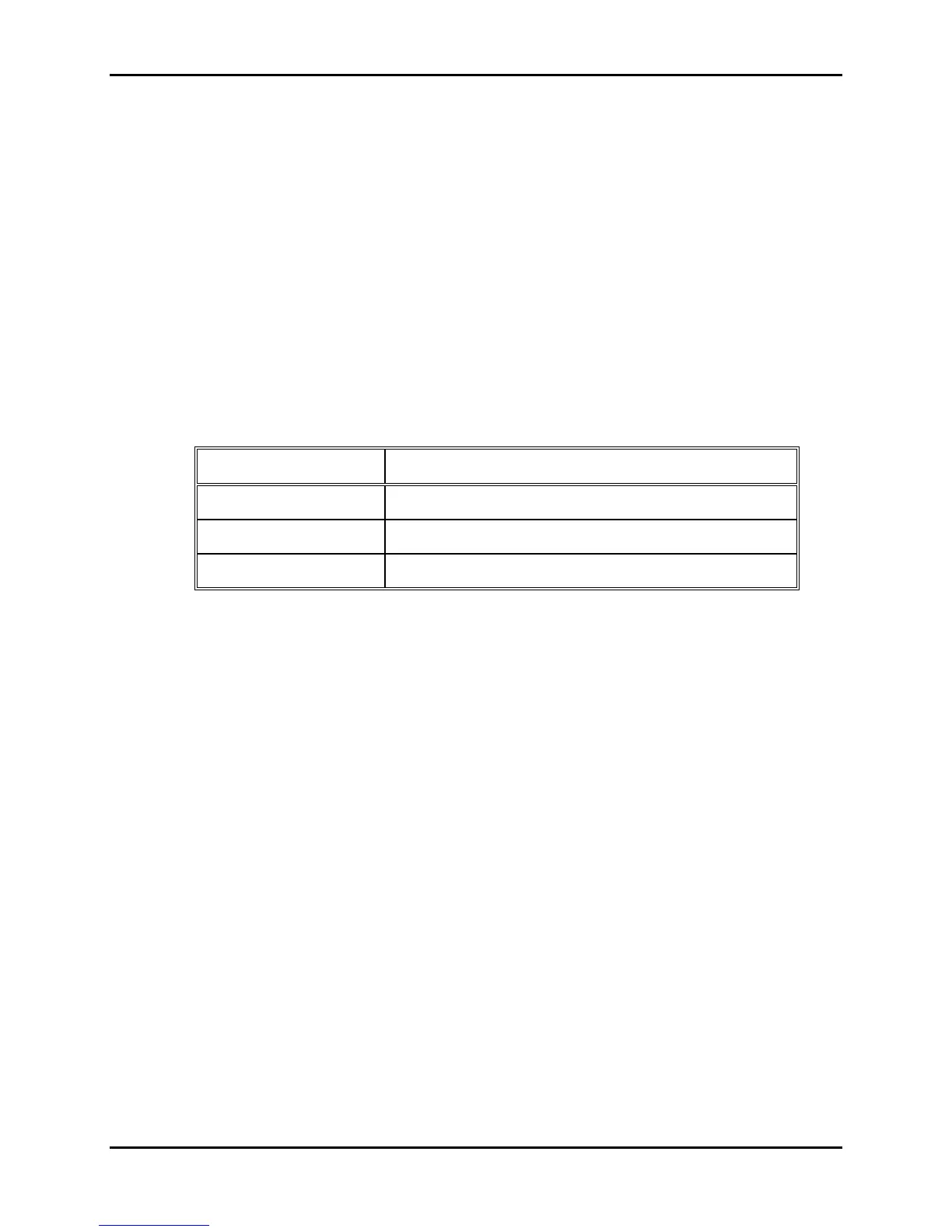
Parylene Type Recommended Pressure Over System Base Pressure
C 15 vacuum units over System Base
N 50 vacuum units over System Base
D 5 vacuum units over System Base
5.14.2 Amount of Substrate
Consider the total amount of coating surface area when determining the amount of Parylene dimer needed to
achieve a given coating thickness. In addition to the substrate, the chamber walls, baffle, and fixturing are part
of the total surface area. Therefore, doubling the amount of substrate in the deposition chamber does not
double the area being coated. The total surface area within the Deposition Chamber is the primary
consideration when calculating the amount of dimer needed to achieve a required coating thickness.
EXAMPLE: The chamber surface area = ~678 in
2
; baffle and rotating plate = 188 in
2
, and assume that the
fixture = 34 in
2
, for a total area of 900 in
2
. If the substrate is doubled from 40 in
2
to 80 in
2
, that actually
is an increase in total area from 940 in
2
to 980 in
2
(or only about 4.25%).
5.14.3 Type of Substrate
The type of substrate being coated has little effect. Parylene will coat onto any type of substrate that is vacuum
compatible. However, if the material to be coated exhibits abnormally high outgassing, a protracted pump
down will be required to reduce the number of interfering gas molecules that could affect the even deposition
of Parylene onto the substrate surface.
5.14.4 Orientation of Substrate
It is best to distribute the substrate evenly within the Deposition Chamber. Relatively large spaces with little or
no surface area will tend to result in Parylene coating that is cloudy. This is most evident when the upper half
of the Deposition Chamber is not loaded with any substrate. Substrate coating near these large empty volumes
can be cloudy while substrate with more surface area nearby will have a clear coating.


 To Next Page