SP395 SoundPro Audio Integrator Form7492 Operation Manual
24
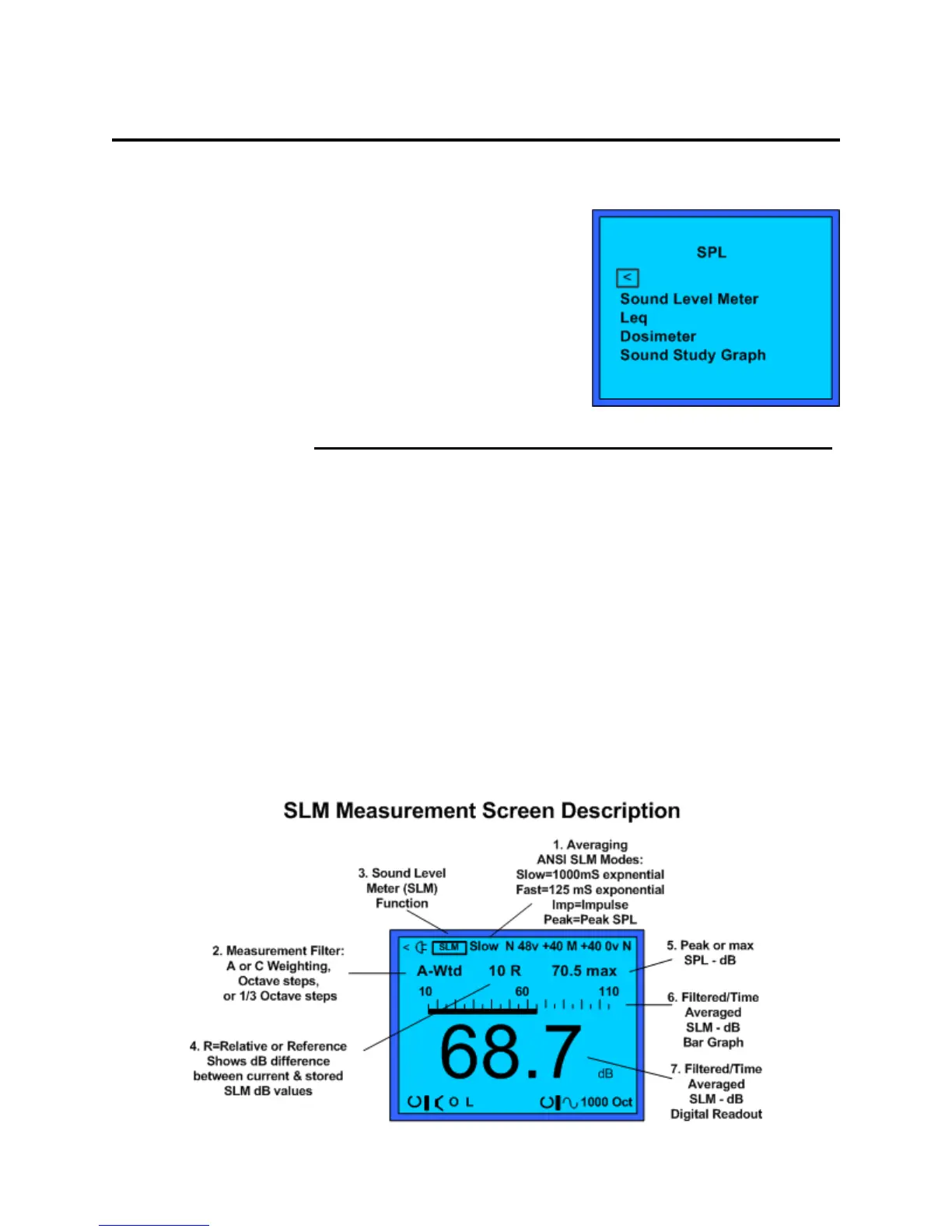
SPL
The SPL main menu selection provides several functions that are used in measuring Sound
Pressure Level (SPL). SPL typically uses a microphone as an input. The standard input for the
SPL tests in the left (L) input.
The SPL tests that are available on the SP395 include:
Sound Level Meter: Measures sound pressure level in dB.
Leq: Measures linear averaged sound pressure level over
time.
Dosimeter: Measures sound dosage according to ANSI or
ASA specifications.
Sound Study Graph: Graphs sound level changes over
time.
Sound Level Meter
A sound pressure level meter measures the
changes in air pressure created by sound
waves and displays this pressure as a dB level,
relative to the threshold of hearing sound
pressure. Weighting curves are added to SPL
measurements to make SPL readings
correspond to perceived loudness. The
SP395’s Sound Pressure Level function
measures the loudness of the ambient sound
level in standard dB SPL measurement units,
auto ranged from 30 to 130 dB (A-weighted).
Use the SLM function when you need to know
objective sound volume, such as when
checking for sound level uniformity, balancing
speaker output levels, or adjusting room sound
levels.
The SPL level is a true-RMS measurement,
using ANSI Type 1 standard display time
averages, ANSI Type 1 standard A and C
weighting networks, ANSI Class 1 octave and
1/3 octave band filters, and ANSI Slow, Fast,
and Impulse averaging. SPL measurements are
made using the supplied microphone
connected to the Microphone Input. The large,
digital display shows the ambient sound level
in standard units of dB SPL and the level is
also shown on an analog bar graph meter (one
pixel equals one dB).
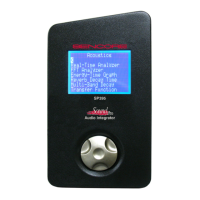
The SLM measurement screen.


 To Next Page