To Next PageTo Next Page
 Need help?
Do you have a question about the Siemens Simatic series and is the answer not in the manual?
 General
| Brand | Siemens |
|---|---|
| Model | Simatic series |
| Category | Industrial PC |
| Language | English |
Outlines the fundamental knowledge needed to understand the manual.
States the applicability of the manual to all SIMATIC IPC547G versions.
Details the different sections included in the SIMATIC IPC547G documentation.
Explains the terminology and conventions used throughout the manual.
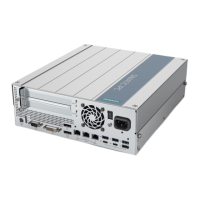
General description of the SIMATIC IPC547G industrial PC and its suitability.
Identifies the target industries and applications for the SIMATIC IPC547G.
Lists the key features and benefits of the SIMATIC IPC547G.
Provides detailed technical and physical features of the device.
Describes the physical layout and components of the device.
Details all available ports and connection interfaces on the device.
Explains the function of buttons, switches, and indicators on the device.
Describes the meaning of the device's status LEDs and indicators.
Lists optional accessories that can be used with the device.
Critical safety warnings and precautions for handling the device and its environment.
Guidelines and important notes for safe and proper device operation.
Steps to prepare for the physical installation of the device.
Instructions for securely installing the device in its intended location.
Procedures for connecting power, data, and peripherals.
Requirements and basic steps before commissioning the device.
Guide for powering on the device for the first time.
Configuration for the device's behavior during power failures.
Specific operational notes for different device configurations.
Information on using the Windows Action Center for system security.
Procedures for safely shutting down and disconnecting the device.
Details on the device's monitoring capabilities and software tools.
Information on remote management and maintenance features.
Explanation of the TPM security chip and its functionality.
Overview of permissible expansions and their requirements.
Procedure for accessing the device by opening the front door.
Steps required to open the main enclosure of the device.
Instructions for upgrading the device's memory modules.
Guide for installing additional expansion cards into the device.
Information and procedures for installing and managing internal and external drives.
General guidelines and safety precautions for performing repairs.
Recommendations for routine maintenance tasks and intervals.
Procedures for managing the device's onboard RAID system.
Step-by-step instructions for replacing hardware components.
Guide for installing operating systems, drivers, and application software.
Information on the proper recycling and disposal of the device.
Details on product certifications and regulatory compliance.
Information regarding applicable directives and compliance statements.
Explanation of the CE marking and its significance.
Precautions for handling electrostatic sensitive devices to prevent damage.
Technical drawings showing the physical dimensions of the device and its parts.
Comprehensive data on the device's electrical, environmental, and performance specs.
Detailed technical data applicable under specific conditions.
Electrical specifications for voltage, current, and power consumption.
Details on connecting and requirements for the AC power supply.
Specifications for the redundant power supply system.
Specifications for the telescopic rail mounting system.
Overview of the device's internal hardware components and layout.
Detailed description of the motherboard and its ports.
Information on hardware addresses, interrupts, and DMA channels.
Details on interrupt assignments for slot connectors.
Explanation of BIOS settings and configuration options.
Details on the AMT feature for remote management and diagnostics.
Fundamental information about Intel Active Management Technology.
Describes the measures and settings for remote IPC control.
Step-by-step guide to enable and configure AMT.
Information on making advanced configuration settings for AMT.
Procedure to reset AMT settings to default.
How to find and set the network address for AMT connectivity.
Configuration options for user consent prompts in KVM viewer.
Maps IPC expansion slots to TIA Portal software labels.
Resources and contact information for obtaining technical assistance.
Solutions for common operational problems and issues with the device.
Troubleshooting specific issues related to RAID and system startup.
Troubleshooting common problems encountered with expansion cards.
Introduction to the symbols and markings used on the device.
Explanation of safety-related symbols found on the device.
Symbols associated with device controls and buttons.
Symbols representing different types of device interfaces.