P003948 Uscan User Manual Page | 46
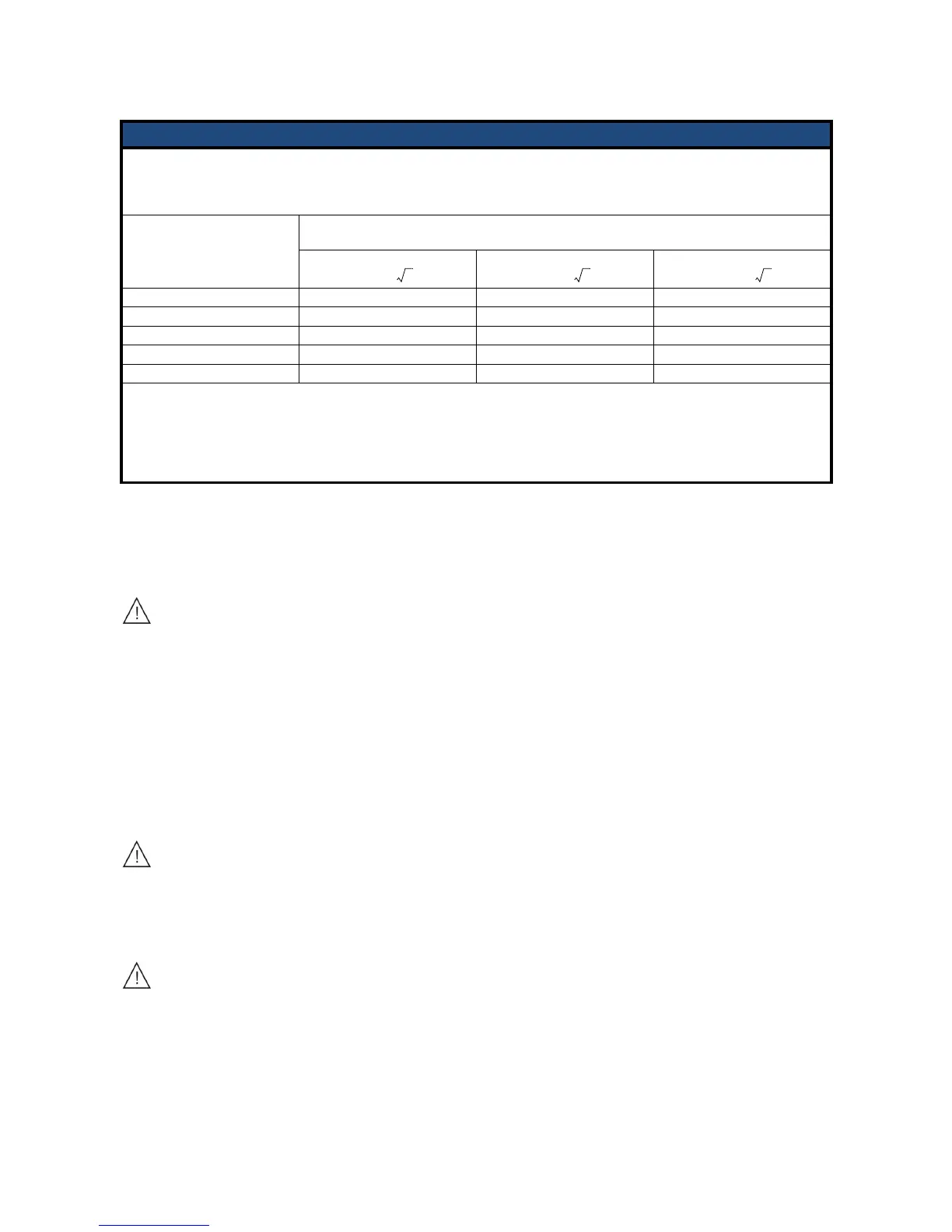
Table 8.3 Separation Distances
Recommended separation distances between portable and mobile RF communications equipment and the Uscan
The Uscan is intended for use in an electromagnetic environment in which radiated RF disturbances are controlled. The customer or
the user of the Uscan can help prevent electromagnetic interference by maintaining a minimum distance between portable and mobile
RF communications equipment (transmitters) and the Uscan as recommended below, according to the maximum output power of the
communications equipment.
Rated maximum output
powe
r of transmitter
W
Separation distance according to frequency of transmitter
m
150 kHz to 80 MHz
d=1.2
0.01 0.12 0.12 0.23
0.1 0.38 0.38 0.73
1 1.2 1.2 2.3
10 3.8 3.8 7.3
100 12 12 23
For transmitters rated at a maximum output power not listed above, the recommended sepa
ration distance d in meters (m) can be
estimated using the equation applicable to the frequency of the transmitter, where P is the maximum output power rating of the
transmitter in watts (W) according to the transmitter manufacturer.
NOTE 1: At 80 MHz and 800 MHz, the separation distance fo
r the higher frequency range applies.
NOTE 2: These guidelines may not apply in all situations. Electromagnetic propagation is affected by absorption and reflection from
structures, objects and people.
Power Supplies (Chargers)
The external Signostics power supplies (chargers) comply with the requirements of IEC 60601-1. The display
power supply (charger) complies with IEC 60950-1.
Warning
Do
not open or modify the Signostics Power Supply P003198 or any other supplied power supplies -
Risk of electric shock
Biological safety
The device can be disinfected for re-use on immunocompromised and non-immunocompromised patients
after:
Frequent contact with healthy skin (frequent low risk).
Occasional contact with mucous membra
nes or contamination with particularly virulent or readily
transmissible organisms (occasional intermediate risk).
Warning
Neurologic
al use on patients with Creutzfeld-Jacob disease must not be performed. The device is
unable to be disinfected after such use.
Acoustic Output
Warning
The ALARA principle (As Low As Reasonably Achievable) should be employed for all medical
ultrasound exposure
Ultrasound imaging has been in regular use for over 20 years and ha
s an excellent safety record. Even though
there are no known risks of ultrasound imaging, it heats the tissues slightly and may produce small pockets of
gas in body fluids or tissues (cavitation). The long-term effects of tissue heating and cavitation are not known.


 To Next Page