10.2.5 Bipolar Method
Bipolar Method is used with contact bipolar accessories to promote limited depth coagulation
and is often used with coaptation techniques.
When Bipolar Method is selected, a default power setting appears on the power setting bar
and may be changed by pressing the UP or DOWN arrow keys. The Tap a Tool™ option
works in the same way as in all methods giving the user an alternate default power setting
based on the accessory being used.
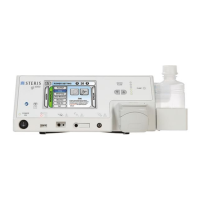
The gi4000 Bipolar Method is designed to provide a bipolar output ideal for flexible endoscopic
bipolar hemostasis probes. The unit is designed with a standard GI bipolar single jack
receptacle.
WARNING: Dispersive Electrode. Safe electrosurgery requires the proper
placement of the dispersive electrode. Consult the dispersive electrode
manufacturer’s Instructions for Use for information regarding proper use of the patient
dispersive electrode. Failure to place the patient dispersive electrode correctly may
result in electrosurgical burns at the patient dispersive electrode site.
→ DO NOT cut a patient dispersive electrode to reduce its size as this may
result in patient burns due to high current density in the smaller patient
dispersive electrode.
→ Place dispersive electrodes in the most suitable position that is closest to
the operating site.
→ Choose a site that is muscular and well vascularized.
→ Never attach the dispersive electrode over implants, metal, bony
protuberances, broken skin or scar tissue. Circumstances may require
the skin to be cleaned or shaved to get even contact.
→ Use ONLY fresh disposable patient dispersive electrodes as conductive
gels may dry out over time impacting function which may result in the
return electrode disconnecting from the patient during use.
→ If reusable dispersive electrode cables are used be sure they are
properly attached. Be sure that the attachment clip covers the gel free
connecting lugs or tabs so that they do not contact the patient’s skin.
→ Ensure the patient dispersive electrode makes complete contact with the
patient’s skin. The user should continuously check the dispersive
electrode throughout the procedure and during the procedure if the
patient is repositioned, is in a deep anesthetic sleep, or during
procedures involving long periods of electrosurgery activation.






 To Next Page