EasyManua.ls Logo

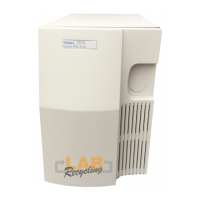
Waters 1525M - User Manual

Waters 1525M
111 pages
Print Icon
To Next Page IconTo Next Page
Loading...
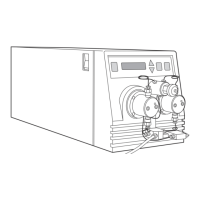
Waters 1525µ and
1525EF HPLC Pump
Installation and Maintenance Guide
34 Maple Stre
et
Milford, MA 0175
7
71500152504, Revision
A

Table of Contents

Questions and Answers

  • G
    Gail HunterSep 12, 2025
    Why Waters 1525M baseline noise cycling, long-term (for 1 hour)?
    • R
      riverajeffreySep 12, 2025
      Long-term (for 1 hour) cycling baseline noise in your Waters Water Pump can be caused by ambient temperature fluctuations; stabilize the ambient temperature. It can also be due to a faulty integrator or recorder; check the integrator or recorder for excessive baseline noise.
  • L
    lesliepetersonAug 25, 2025
    How to fix Waters 1525M Water Pump when it does not run?
    • A
      Alexander BrownAug 25, 2025
      If your Waters Water Pump does not run, first ensure the power cable is properly connected to both the power source and the pump. Then, check the outlet by connecting another electrical unit known to be working. If that unit does not work, relocate the pump to a functioning electrical outlet. Finally, check for a blown fuse and replace it if necessary.
  • J
    Jessica MooreAug 27, 2025
    What causes high system pressure due to Waters 1525M?
    • O
      omurphyAug 28, 2025
      High system pressure due to the Waters Water Pump can be caused by the pump flow parameter being set too high. To resolve this, set the correct flow parameter value.
  • M
    Miss Valerie Underwood DDSAug 29, 2025
    How to troubleshoot a leak from Waters Water Pump head?
    • S
      Sarah CastroAug 29, 2025
      A leak from the Waters Water Pump head can stem from several issues. The pump plunger seals might be worn, in which case you should replace the defective plunger seals. A worn plunger itself can also cause leaks; replace the plunger. If the pump head is loose, tighten the pump head screws, ensuring both screws are tightened equally to prevent uneven seal wear. Do not overtighten. Also, check for loose inlet or outlet check valves and tighten them, again being careful not to overtighten. Check fittings and ferrules for wear and replace if necessary.
  • A
    Anthony HillAug 31, 2025
    Why does Waters Water Pump have erratic retention times?
    • M
      Monica CarneyAug 31, 2025
      Erratic retention times in your Waters Water Pump can be caused by several factors. There might be an air bubble in the pump head; degas all eluents and prime the pump. The check valves could be malfunctioning; replace the pump check valves. Leaking pump seals can also cause this issue; replace the pump seals. Check for leaks around fittings and tighten them. Also, check the eluent and column. Clogged eluent filters can also contribute to erratic retention times; replace the filters.
  • W
    william77Sep 1, 2025
    Why Waters 1525M Water Pump has increased retention times?
    • T
      Tiffany MullinsSep 1, 2025
      Increased retention times in your Waters Water Pump can occur due to several reasons. The flow rate might be incorrect; change the flow rate. The eluent composition could be incorrect; change the eluent composition. Ensure the column heater is turned on. Verify that you are using the correct eluent. The column might be contaminated; clean or replace it. Make sure you are using the correct column. An air bubble in the pump head can also cause this issue; degas all eluents and prime the pump. Finally, a clogged eluent filter can contribute to increased retention times; replace the filter.
  • D
    Darryl MoranNov 20, 2025
    What to do if Waters Water Pump is not delivering eluent?
    • J
      Jillian MaldonadoNov 20, 2025
      If your Waters Water Pump is not delivering eluent, there are several potential causes. The draw-off valve may be open or leaking; close the valve, and if the leak continues, replace it. The low-pressure limit could be set higher than the operating pressure; set the correct low-pressure limit. The flow rate might be set to zero; set the desired pump flow rate. The pump may not be primed; prime the pump. Immiscible eluents in the pump head can also cause this issue; purge the pump with appropriate eluents and verify miscibility. A dirty or malfunctioning inlet or outlet check valve could be the problem; replace the check valves. A damaged plunger seal, indicated by eluent leaking, may be the cause; verify if both pump heads can maintain pressure and replace the plunger seal if needed. Pump ...
  • B
    butlersarahNov 25, 2025
    Why Waters 1525M Water Pump has erratic flow rate or pump pulsations?
    • V
      Victor ShawNov 25, 2025
      Erratic flow rate or pump pulsations in your Waters Water Pump can be due to several reasons. The pump may not be primed; prime it. If using a volatile eluent, prime the pump with a miscible, less volatile eluent. Ensure the reservoir isn't low or out of eluent; refill it, filtering and degassing the eluent. An air bubble in the pump head can cause this issue; prime the pump to remove the bubble and degas eluents. Dirty or malfunctioning check valves can also lead to erratic flow; replace them. Check for blockages in the inlet filter or lines and replace the inlet filter frit if needed. A leaking pump plunger seal can be the cause; replace the pump plunger seal. Worn pump plunger can also cause this; replace the plunger. Immiscible eluents in the pump head or pump cavitation can also cause...
  • A
    Amanda CollinsSep 12, 2025
    Why Waters 1525M baseline noise cycling, short-term (30 to 60 sec)?
    • C
      Carlos CarterSep 12, 2025
      Short-term (30 to 60 sec) cycling baseline noise in your Waters Water Pump can be caused by a fluctuating flow rate. Degas the eluent and try repriming the pumps. If necessary, check the flow accuracy of the pumps. Inadequate eluent blending can also cause this issue; install a mixer. Power source issues can also contribute to cycling noise; disconnect other instruments on the power line, try a different wall outlet, have the line voltage checked, or use the power conditioner. Radio frequency noise can also be a factor; eliminate interference.
  • S
    Scott ValdezSep 7, 2025
    What causes baseline drift, slow, in Waters Water Pump?
    • D
      Diana AlvaradoSep 8, 2025
      Slow baseline drift in your Waters Water Pump can be caused by contaminated eluent. To resolve this, use fresh eluent. Ambient temperature fluctuations can also cause slow drift; stabilize the operating environment temperature enough to allow full equilibration.

Summary

Chapter 1 Overview

1.1 Fluid-Handling Components

Details the fluidic pathways and components within the HPLC pump system.

1.2 Electronic Components

Describes the various electronic parts and connections on the rear panel of the HPLC pump.

1.3 1525µ and1525 EF Pump Control

Explains how Waters software monitors and controls the 1525µ and 1525EF HPLC pumps.

Chapter 2 Installing the 1525 Pump

2.1 Selecting the Site

Lists installation requirements for the HPLC pump, including temperature, humidity, and space.

2.2 Unpacking the Pump

Provides a step-by-step guide for safely unpacking the HPLC pump and its accessories.

2.3 Making Electrical Connections

Details the process of connecting the HPLC pump to a power supply and setting up IEEE-488 communication.

2.4 Making Fluidic Connections

Guides users through connecting eluent supply, waste lines, and other fluidic components to the HPLC pump.

Chapter 3 Preparing for Operation

3.1 Powering On and Selecting the Pump

Explains how to power on the HPLC pump and select it within the MassLynx software.

3.2 Preparing the Pump

Covers essential pump preparation procedures, including priming and equilibrating the system.

3.3 Powering Off the Pump

Describes the correct procedure for safely powering down the HPLC pump.

Chapter 4 Maintaining the 1525 Pump

4.1 Maintenance Considerations

Outlines important safety, handling, and operating procedures for pump maintenance.

4.2 Diagnostic Tests

Details diagnostic tests to monitor HPLC pump performance and identify potential issues.

4.3 Replacing 1525µ Plunger Seals and Plungers

Provides detailed instructions for removing, cleaning, and replacing plungers and seals in the 1525µ pump.

4.4 Replacing 1525µ Check Valves

Explains how to replace inlet, outlet, and restrictor tee check valves for the 1525µ HPLC pump.

4.5 Replacing 1525 EF Plunger Seals and Plungers

Provides detailed instructions for removing, cleaning, and replacing plungers and seals in the 1525EF pump.

4.6 Replacing 1525 EF Check Valves

Explains how to replace inlet and outlet check valves for the 1525EF HPLC pump.

4.7 Replacing a Draw-Off Valve

Guides users on how to remove and replace a draw-off valve if it shows signs of leakage.

4.8 Replacing Fuses

Details the procedure for identifying and replacing faulty fuses in the HPLC pump.

Chapter 5 Troubleshooting

5.1 Troubleshooting Pump Problems

Offers solutions for common pump issues, including high pressure, low pressure, and pump not running.

5.2 Troubleshooting Noises

Helps identify and correct noises such as clicks, snaps, and squeaks from the HPLC pump.

5.3 Troubleshooting Chromatographic Problems

Addresses chromatographic issues like erratic retention times, baseline drift, and sensitivity loss.

Appendix A Specifications

A.1 Physical Specifications for 1525 Pumps

Lists physical dimensions, weight, and wetted surface materials for the 1525 Pumps.

A.2 Physical Specifications for the Column Heater

Provides physical dimensions and weight specifications for the optional column heater.

A.3 Environmental Specifications

Details environmental operating conditions such as temperature, humidity, and noise levels.

A.4 Electrical Specifications

Outlines electrical requirements, including protection class, power, and fuses.

A.5 Performance Specifications for the 1525µ Pump

Specifies performance parameters like flow rate range, pressure limits, and gradient accuracy for the 1525µ pump.

A.6 Performance Specifications for the 1525 EF Pump

Specifies performance parameters like flow rate range, pressure limits, and gradient accuracy for the 1525EF pump.

Appendix B Spare Parts and Accessories

B.1 Spare Parts for the 1525µ Pump

Lists recommended spare parts with quantities and part numbers for the 1525µ pump.

B.2 Spare Parts for the 1525 EF Pump

Lists recommended spare parts with quantities and part numbers for the 1525EF pump.

B.3 Accessories for the 1525µ Pump

Lists optional accessories available for the 1525µ HPLC pump.

B.4 Accessories for the 1525 EF Pump

Lists optional accessories available for the 1525EF HPLC pump.

B.5 Maintenance and Operation Kits and Tools

Details kits and tools required for common maintenance and operation procedures.

Appendix C Solvent Considerations

C.1 Introduction

Introduces the importance of clean solvents, solvent quality, and preparation guidelines.

C.2 Solvent Compatibility

Discusses which solvents are compatible with the 1525 HPLC Pump materials and which to avoid.

C.3 Solvent Miscibility

Provides information on solvent miscibility and how to use miscibility numbers (M-Numbers).

C.4 Buffered Solvents

Offers guidance on using buffer solutions with the HPLC system.

C.5 Head Height

Specifies the correct positioning of solvent reservoirs.

C.6 Solvent Viscosity

Explains the impact of solvent viscosity on HPLC system pressure, especially during gradients.

C.7 Mobile Phase Solvent Degassing

Details why solvent degassing is important and lists various degassing methods.

C.8 Wavelength Selection

Provides UV cutoff values for common solvents to aid in selecting appropriate wavelengths.

Waters 1525M Specifications

General IconGeneral
Number of Channels2
Compressibility CompensationYes
Seal WashOptional
TypeHPLC
Maximum Pressure6000 psi
Maximum Flow Rate10.0 mL/min
Flow Accuracy±1%
CompatibilityHPLC

Related product manuals