WEILER E1250
1-23
General Information
1
MACHINE TRANSPORTING
SHIPPING
Investigate the travel route for overpass clearances. Make sure there will be adequate clearance for the machine.
Check state and local laws governing weight, width, and length of load.
To prevent the machine from slipping while loading or shifting in transit, remove ice, snow, or other slippery material
from the loading dock and the truck bed before loading.
NOTE: Make sure the cooling system has proper antifreeze if moving machine to a colder climate.
Obey all state and local laws governing the weight, width, and length of a load.
Observe all regulations governing wide loads.
1. Choose as flat of ground as possible for loading or unloading the machine.
2. Block the trailer or rail car wheels before loading the machine.
3. When using loading ramps, be sure there is adequate length, width, firmness, and slope.
4. Maintain the slope of loading ramps within 15 degrees of the ground.
5. Block the ramp to support the operating weight of the machine (including water, fuel, lubricants, and operator.)
UNLOADING AND LOADING INSTRUCTIONS
Before attempting to unload the machine from the trailer or other shipping vehicle, study the following information.
Be certain you understand the functions of the controls before starting the engine and moving the machine, as serious
damage to the equipment and injury to personnel could occur if you are unable to control the machine during the
unloading procedure.
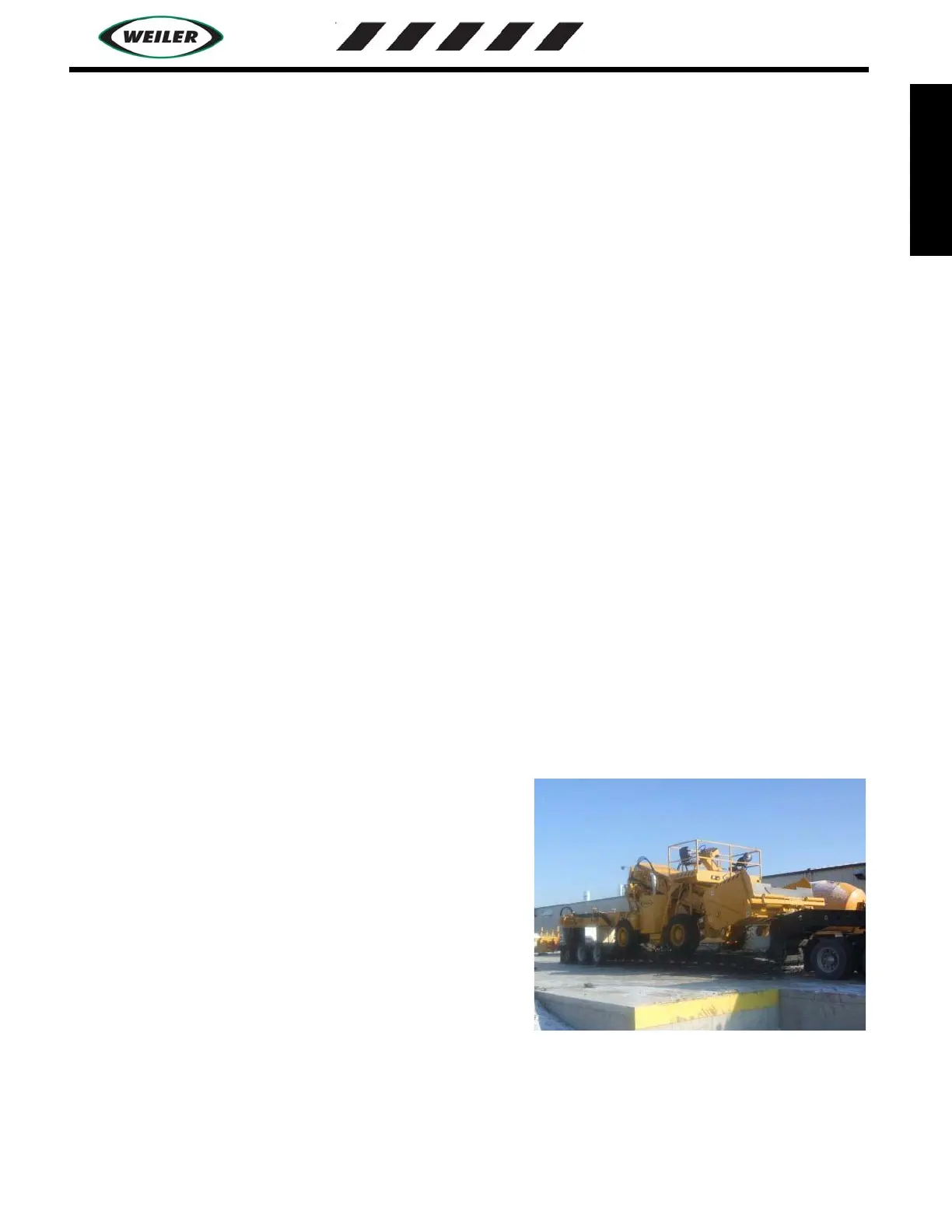
The most common method of shipping the transfer vehicle is by
removable goose neck (RGN) trailer. Side extensions will most
likely be needed for transport of the machine, due to its wide
wheelbase. Make certain that side extensions are sturdy enough
to support the weight of the machine.
NOTE: It may be necessary for the elevator to be raised in
order to make the machine short enough to abide by height
restrictions(raising the front hopper off the ground causes the top
of the elevator to ‘fold’ down). If the elevator is raised up off of
the floor of the trailer, the front must be supported or machine
damage may result. One method is to place the front of the
elevator on the trailer’s gooseneck. The conveyor must also be
supported if it is not layed down onto the trailer.


 To Next Page